Sunday 17 May, 2026
[email protected]
Resilience Media
  • About
  • News
  • Resilience Conference
    • Resilience Conference Warsaw 2026
    • Resilience Conference Copenhagen 2026
    • Resilience Conference London 2026
  • Guest Posts
    • Author a Post
  • Subscribe
No Result
View All Result
  • About
  • News
  • Resilience Conference
    • Resilience Conference Warsaw 2026
    • Resilience Conference Copenhagen 2026
    • Resilience Conference London 2026
  • Guest Posts
    • Author a Post
  • Subscribe
No Result
View All Result
Resilience Media
No Result
View All Result

Resilience Conference 2025: The Real Lessons From Ukraine

John BiggsbyJohn Biggs
November 11, 2025
in Resilience Conference
Share on Linkedin

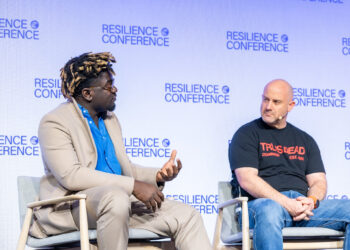
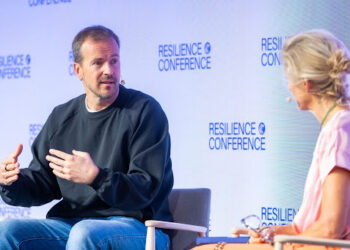
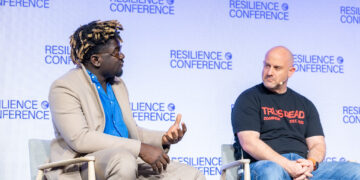
The war in Ukraine has produced a hard, practical record of how defense innovation actually happens. Urgency, short feedback loops, and direct contact with end users shape the entire stack. A recent discussion at the Resilience Conference 2025 with builders and funders working in Ukraine makes the case plain. The lesson is not a single product but it is a process that joins procurement, testing, software, and people into one cycle.

You Might Also Like

Jacek Siewiera: a future NATO conflict will be fought against civilian targets

Sten Tamkivi: Poland’s defence start-ups should be seen as future GDP drivers

Where are Poland’s defence unicorns?

This panel, featured:

  • Oleksii Dorohan, CEO, Better Regulation Delivery Office (BRDO)

  • Alex Kinash, European Partnerships Director, Vermeer

  • Serhii Kupriienko, Founder & CEO, SWARMER

  • Tim Mak, Founder, Counteroffensive Pro

  • Moderator: Dr Tobias Stone, Co-founder, Resilience Media

The panelists knew exactly how defence in Ukraine worked. For example, they noted that brigades in Ukraine can spend their own funds on experimental drones, jammers, and related gear. That freedom matters. Units try tools on real missions, compare outcomes, and double down on what works. Startups, in turn, can get real revenue, real service calls, and real deadlines. If a system fails, the team fixes it in days, not quarters. This model forces accountability and speeds the loop between field feedback and a new build.

Here are some key takeaways from this wide-ranging conversation:

Combat exposes the gap between lab claims and field truth. The only answer is constant iteration with the end user. Companies building in Ukraine deploy with units, collect data, and push fixes on a weekly rhythm. Budgets must reflect that reality. Buy the core system, then reserve funds to update hardware, firmware, and tactics as threats change.

Culture is a force multiplier. On the Ukrainian front, the best ideas rise without regard to rank. Many builders were not in defense four years ago. They now mix software skills, fabrication, and operations inside regiments and brigades. This lowers the cost of trying new concepts and removes the fear of speaking up. Western militaries should protect rank for command, while opening space for engineers, operators, and analysts to test and argue on the merits.

Governance is lean and horizontal. Units talk directly to developers. Testing sites are booked through simple digital flows. Clearances and results move through the same channels. Paper is rare. The rule is speed with accountability, not permission for its own sake. That is how small firms get from concept to certified test, then to field use, without losing a year in forms.

Ukraine’s civilian digital stack is part of the story. Identity, payments, and service portals built for daily life now support mobilization, logistics, and marketplaces. Soldiers select proven kit online. The state verifies users and pays vendors. Points earned by effective units can be spent on more gear, which creates a clear link between results and resources. Civil systems and defense systems meet at well defined touchpoints. The effect is a faster kill chain and a lighter burden on staff.

The close is simple: Europe will not win on price. It can win on skill, scale, and speed. It needs to more engineers and technicians, automate production, and produce key parts at home. It must budget for continuous updates, build test beds that are easy to use, and tie procurement to results seen in the field. And, most of all, it has to keep innovating to win.

Tags: Alex KinashBRDOOleksii DorohanSerhii KupriienkoSwarmer AITim MakVermeer
Previous Post

Resilience Conference 2025: What is Defence Innovation?

Next Post

Resilience Conference 2025: From Impossible to Inevitable: Building Hypersonics That Work

John Biggs

John Biggs

John Biggs is an entrepreneur, consultant, writer, and maker. He spent fifteen years as an editor for Gizmodo, CrunchGear, and TechCrunch and has a deep background in hardware startups, 3D printing, and blockchain. His work has also appeared in Men’s Health, Wired, and the New York Times. He has written nine books including the best book on blogging, Bloggers Boot Camp, and a book about the most expensive timepiece ever made, Marie Antoinette’s Watch. He lives in Brooklyn, New York. He runs the Keep Going podcast, a podcast about failure. His goal is to share how even the most confident and successful people had to face adversity.

Related News

Jacek Siewiera: a future NATO conflict will be fought against civilian targets

Jacek Siewiera: a future NATO conflict will be fought against civilian targets

byResilience Media
April 24, 2026

The wars in Iran and Ukraine have underscored how civilian infrastructure will become a feature of future conflicts. And Poland’s...

Sten Tamkivi: Poland’s defence start-ups should be seen as future GDP drivers

Sten Tamkivi: Poland’s defence start-ups should be seen as future GDP drivers

byResilience Media
April 24, 2026

Sten Tamkivi, a partner at Plural and an early Skype executive, joined Resilience Media publisher Leslie Hitchcock on stage during...

Where are Poland’s defence unicorns?

Where are Poland’s defence unicorns?

byResilience Media
April 24, 2026

"Where are the Polish unicorns in defence?" asked Marcin Hejka, managing partner at OTB Ventures, one of Poland's largest deep-tech...

Klaus Hommels of Lakestar talks about defence consolidation and the future of procurement

Klaus Hommels of Lakestar talks about defence consolidation and the future of procurement

byJohn Biggs
April 15, 2026

Investor and entrepreneur Klaus Hommels, founder of Lakestar, sees a new era of European defence spending and investment. His comment?...

Serhii Kupriienko to speak at Resilience Conference Warsaw

Karl Rosander (Nordic Air Defence) and Maciej Klimczak (Tantalit) to speak at Resilience Conference Warsaw

byLeslie Hitchcock
April 9, 2026

Resilience Conference Warsaw takes place on April 15 for a gathering of the defence tech ecosystem in Poland. The event...

Weekly Digest: Battlefield to Nasdaq – Inside Swarmer’s public listing; CEO Serhii Kupriienko to speak at Resilience Conference Warsaw

Weekly Digest: Battlefield to Nasdaq – Inside Swarmer’s public listing; CEO Serhii Kupriienko to speak at Resilience Conference Warsaw

byLeslie Hitchcock
March 26, 2026

This is a copy of our Weekly Digest newsletter. Subscribe for free here to receive this newsletter in your inbox. ...

Serhii Kupriienko to speak at Resilience Conference Warsaw

Serhii Kupriienko to speak at Resilience Conference Warsaw

byLeslie Hitchcock
March 26, 2026

Resilience Conference Warsaw is fast approaching on April 15. The one-day event will convene the defence tech ecosystem in Poland...

Announcing the Resilience Conference Warsaw Agenda

byLeslie Hitchcockand1 others
March 19, 2026

We are excited to announce the agenda for Resilience Conference Warsaw, 15 April 2026. This is the first conference of...

Load More
Next Post

Resilience Conference 2025: From Impossible to Inevitable: Building Hypersonics That Work

The Fault in Our Data

The Fault in Our Data

Most viewed

InVeris announces fats Drone, an integrated, multi-party drone flight simulator

Uforce raises $50M at a $1B+ valuation to build defence tech for Ukraine

Auterion, the drone software startup, eyes raising $200M at a $1.2B+ valuation

Palantir and Ukraine’s Brave1 have built a new AI “Dataroom”

Senai exits stealth to help governments harness online video intelligence

Twentyfour Industries emerges from stealth with $11.8M for mass-produced drones

Resilience Media is an independent publication covering the future of defence, security, and resilience. Our reporting focuses on emerging technologies, strategic threats, and the growing role of startups and investors in the defence of democracy.

  • About
  • News
  • Resilence Conference
    • Resilience Conference Copenhagen 2026
    • Resilience Conference Warsaw 2026
    • Resilience Conference 2026
  • Guest Posts
  • Subscribe
  • Privacy Policy
  • Terms & Conditions

© 2026 Resilience Media

No Result
View All Result
  • Home
  • About
  • Subscribe
  • Events
  • Guest Posts
  • Interview
  • News
  • Resilience Conference London 2026
  • Resilience Conference Copenhagen 2026
  • Resilience Conference Warsaw 2026

© 2026 Resilience Media

This website uses cookies. By continuing to use this website you are giving consent to cookies being used. Visit our Privacy and Cookie Policy.