Sunday 17 May, 2026
[email protected]
Resilience Media
  • About
  • News
  • Resilience Conference
    • Resilience Conference Warsaw 2026
    • Resilience Conference Copenhagen 2026
    • Resilience Conference London 2026
  • Guest Posts
    • Author a Post
  • Subscribe
No Result
View All Result
  • About
  • News
  • Resilience Conference
    • Resilience Conference Warsaw 2026
    • Resilience Conference Copenhagen 2026
    • Resilience Conference London 2026
  • Guest Posts
    • Author a Post
  • Subscribe
No Result
View All Result
Resilience Media
No Result
View All Result

Resilience Conference 2025: From Impossible to Inevitable: Building Hypersonics That Work

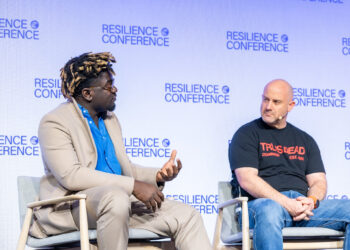
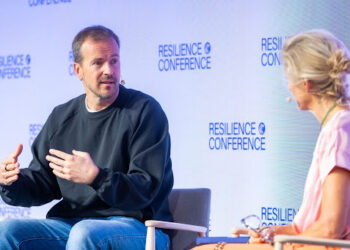
Resilience hosted a fireside chat on hypersonic technology with Zach Shore, Chief Revenue Officer at Hermeus, interviewed by Leslie Hitchcock. The discussion addressed timelines, economics, and the cultural barriers that shape adoption inside the U.S. Department of Defense.

John BiggsbyJohn Biggs
November 11, 2025
in Resilience Conference
Share on Linkedin

Hermeus is building reusable hypersonic aircraft for defense. The company’s mission is to build the world’s fastest aircraft using rapid, hardware-heavy iteration with modern computing and autonomy. Its Chimera engine is a turbine-based combined cycle, running as a jet at low speed, then routing flow to a ramjet at high speed. In short, they’re building reusable, multi-mission hypersonic UAVs for national security use, something that Shore believes is the key to next-generation long-range weapons.

You Might Also Like

Jacek Siewiera: a future NATO conflict will be fought against civilian targets

Sten Tamkivi: Poland’s defence start-ups should be seen as future GDP drivers

Where are Poland’s defence unicorns?

Shore framed the strategic context: the great-power competition has returned, and distance drives risk. The central operational question is time to target, he said, and hypersonics are one answer.

“I mean, think one of the things we know right now is that the world is sort of in a geopolitical rebalancing,” he said. ”The world has shrunk, one of the big challenges is time to target. How quickly can you affect the enemy so that they have to respond to you?”

The United States, he said, is isolated by the Pacific and the Atlantic. Europe doesn’t have those benefits. His economic thesis is precise, and he believes that reuse bends the cost curve in long-range weapons and makes these weapons useful in long-range wars.

“You need to return the propulsion system,” Shore said, meaning that once a weapon drops its payload, it has to return to base. This means Hermeus is pursuing reusable hypersonic aircraft to capture those unit-cost gains, and because they are hypersonic, it takes less time to reach the target and less time to return.

Use cases are broad, including precious strikes, electronic attacks, and logistics runs. Shore set clear targets. The team is aiming for the supersonic flight in the first quarter of 2026 and hopes to reach Mach 3 in the first quarter of 2027. It wants to hit Mach 5 before the end of the decade.

The biggest issue is convincing those with cash to spend it on hypersonic.

“It’s really not an engineering challenge,” he said. “The biggest challenge that faces us is really systemic. I’d say it’s a large cultural barrier,” he said. “Let’s take a step back historically.”

He pointed out that the scientists who built the Manhattan Project and NASA were all young and very motivated. Currently, many Departments of Defence are sclerotic.

“You’ve seen this sort of development in the last ten years of people who’ve been working on these problems who don’t necessarily work in tech, they don’t work at SpaceX, they don’t work in Silicon Valley, they’ve only worked in the government,” he said. While that’s not bad, it does lead to slower innovation.

Shore also pointed to the Anduril model, which involved demonstrating in the field.

“PowerPoints don’t solve problems,” he said.

Capital can accelerate this path. Shore urged leaders to treat venture investment as additive. A contract dollar can unlock three to five private dollars, expanding the effective program pool in a flat top line. This dynamic explains why software and lower-cost hardware have led recent gains. Heavy systems remain harder to finance, but the impact is material if successful.

The session closed on first principles. Shore said that reuse changes unit economics and that demonstration is better than planning. Finally, he said to respect the record of past high-stakes programs that moved fast with clear authority. The world, he said, needs that kind of clarity when facing today’s threats.


Tags: HermeusZachary Shore
Previous Post

Resilience Conference 2025: The Real Lessons From Ukraine

Next Post

The Fault in Our Data

John Biggs

John Biggs

John Biggs is an entrepreneur, consultant, writer, and maker. He spent fifteen years as an editor for Gizmodo, CrunchGear, and TechCrunch and has a deep background in hardware startups, 3D printing, and blockchain. His work has also appeared in Men’s Health, Wired, and the New York Times. He has written nine books including the best book on blogging, Bloggers Boot Camp, and a book about the most expensive timepiece ever made, Marie Antoinette’s Watch. He lives in Brooklyn, New York. He runs the Keep Going podcast, a podcast about failure. His goal is to share how even the most confident and successful people had to face adversity.

Related News

Jacek Siewiera: a future NATO conflict will be fought against civilian targets

Jacek Siewiera: a future NATO conflict will be fought against civilian targets

byResilience Media
April 24, 2026

The wars in Iran and Ukraine have underscored how civilian infrastructure will become a feature of future conflicts. And Poland’s...

Sten Tamkivi: Poland’s defence start-ups should be seen as future GDP drivers

Sten Tamkivi: Poland’s defence start-ups should be seen as future GDP drivers

byResilience Media
April 24, 2026

Sten Tamkivi, a partner at Plural and an early Skype executive, joined Resilience Media publisher Leslie Hitchcock on stage during...

Where are Poland’s defence unicorns?

Where are Poland’s defence unicorns?

byResilience Media
April 24, 2026

"Where are the Polish unicorns in defence?" asked Marcin Hejka, managing partner at OTB Ventures, one of Poland's largest deep-tech...

Klaus Hommels of Lakestar talks about defence consolidation and the future of procurement

Klaus Hommels of Lakestar talks about defence consolidation and the future of procurement

byJohn Biggs
April 15, 2026

Investor and entrepreneur Klaus Hommels, founder of Lakestar, sees a new era of European defence spending and investment. His comment?...

Serhii Kupriienko to speak at Resilience Conference Warsaw

Karl Rosander (Nordic Air Defence) and Maciej Klimczak (Tantalit) to speak at Resilience Conference Warsaw

byLeslie Hitchcock
April 9, 2026

Resilience Conference Warsaw takes place on April 15 for a gathering of the defence tech ecosystem in Poland. The event...

Weekly Digest: Battlefield to Nasdaq – Inside Swarmer’s public listing; CEO Serhii Kupriienko to speak at Resilience Conference Warsaw

Weekly Digest: Battlefield to Nasdaq – Inside Swarmer’s public listing; CEO Serhii Kupriienko to speak at Resilience Conference Warsaw

byLeslie Hitchcock
March 26, 2026

This is a copy of our Weekly Digest newsletter. Subscribe for free here to receive this newsletter in your inbox. ...

Serhii Kupriienko to speak at Resilience Conference Warsaw

Serhii Kupriienko to speak at Resilience Conference Warsaw

byLeslie Hitchcock
March 26, 2026

Resilience Conference Warsaw is fast approaching on April 15. The one-day event will convene the defence tech ecosystem in Poland...

Announcing the Resilience Conference Warsaw Agenda

byLeslie Hitchcockand1 others
March 19, 2026

We are excited to announce the agenda for Resilience Conference Warsaw, 15 April 2026. This is the first conference of...

Load More
Next Post
The Fault in Our Data

The Fault in Our Data

After Europe’s worst fire season, dual-use startups enlist to shore up climate resilience

Most viewed

InVeris announces fats Drone, an integrated, multi-party drone flight simulator

Uforce raises $50M at a $1B+ valuation to build defence tech for Ukraine

Auterion, the drone software startup, eyes raising $200M at a $1.2B+ valuation

Palantir and Ukraine’s Brave1 have built a new AI “Dataroom”

Senai exits stealth to help governments harness online video intelligence

Twentyfour Industries emerges from stealth with $11.8M for mass-produced drones

Resilience Media is an independent publication covering the future of defence, security, and resilience. Our reporting focuses on emerging technologies, strategic threats, and the growing role of startups and investors in the defence of democracy.

  • About
  • News
  • Resilence Conference
    • Resilience Conference Copenhagen 2026
    • Resilience Conference Warsaw 2026
    • Resilience Conference 2026
  • Guest Posts
  • Subscribe
  • Privacy Policy
  • Terms & Conditions

© 2026 Resilience Media

No Result
View All Result
  • Home
  • About
  • Subscribe
  • Events
  • Guest Posts
  • Interview
  • News
  • Resilience Conference London 2026
  • Resilience Conference Copenhagen 2026
  • Resilience Conference Warsaw 2026

© 2026 Resilience Media

This website uses cookies. By continuing to use this website you are giving consent to cookies being used. Visit our Privacy and Cookie Policy.