Thursday 9 July, 2026
[email protected]
Resilience Media
  • News
    • Events
    • Interview
    • Startups
    • Venture
    • Weekly Digest
  • Resilience Conference
    • Resilience Conference Warsaw 2026
    • Resilience Conference Copenhagen 2026
    • Resilience Conference London 2026
  • About
  • Guest Posts
    • Author a Post
  • Subscribe
No Result
View All Result
  • News
    • Events
    • Interview
    • Startups
    • Venture
    • Weekly Digest
  • Resilience Conference
    • Resilience Conference Warsaw 2026
    • Resilience Conference Copenhagen 2026
    • Resilience Conference London 2026
  • About
  • Guest Posts
    • Author a Post
  • Subscribe
No Result
View All Result
Resilience Media
No Result
View All Result

Helsing unveils AI-powered acoustic detection system to ward off naval threats

Resilience MediabyResilience Media
May 13, 2025
in News, Startups
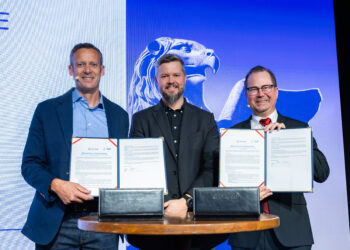
Image courtesy of Helsing

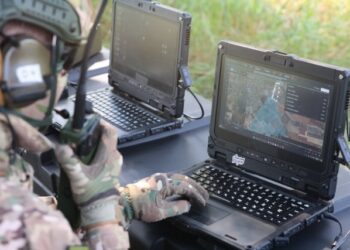
Image courtesy of Helsing

Share on Linkedin

German defence AI developer Helsing has introduced a novel acoustic detection system to autonomously track adversary ships and submarines with an accuracy surpassing any previously developed detection technology.

You Might Also Like

Ukraine 2025 defence tech investment topped $57.2M, but the ‘funded market’ is $6.8B says PitchBook

IQM becomes first European quantum computing company to list on NASDAQ

Proxima Fusion raises €411m to accelerate Europe’s fusion power ambitions

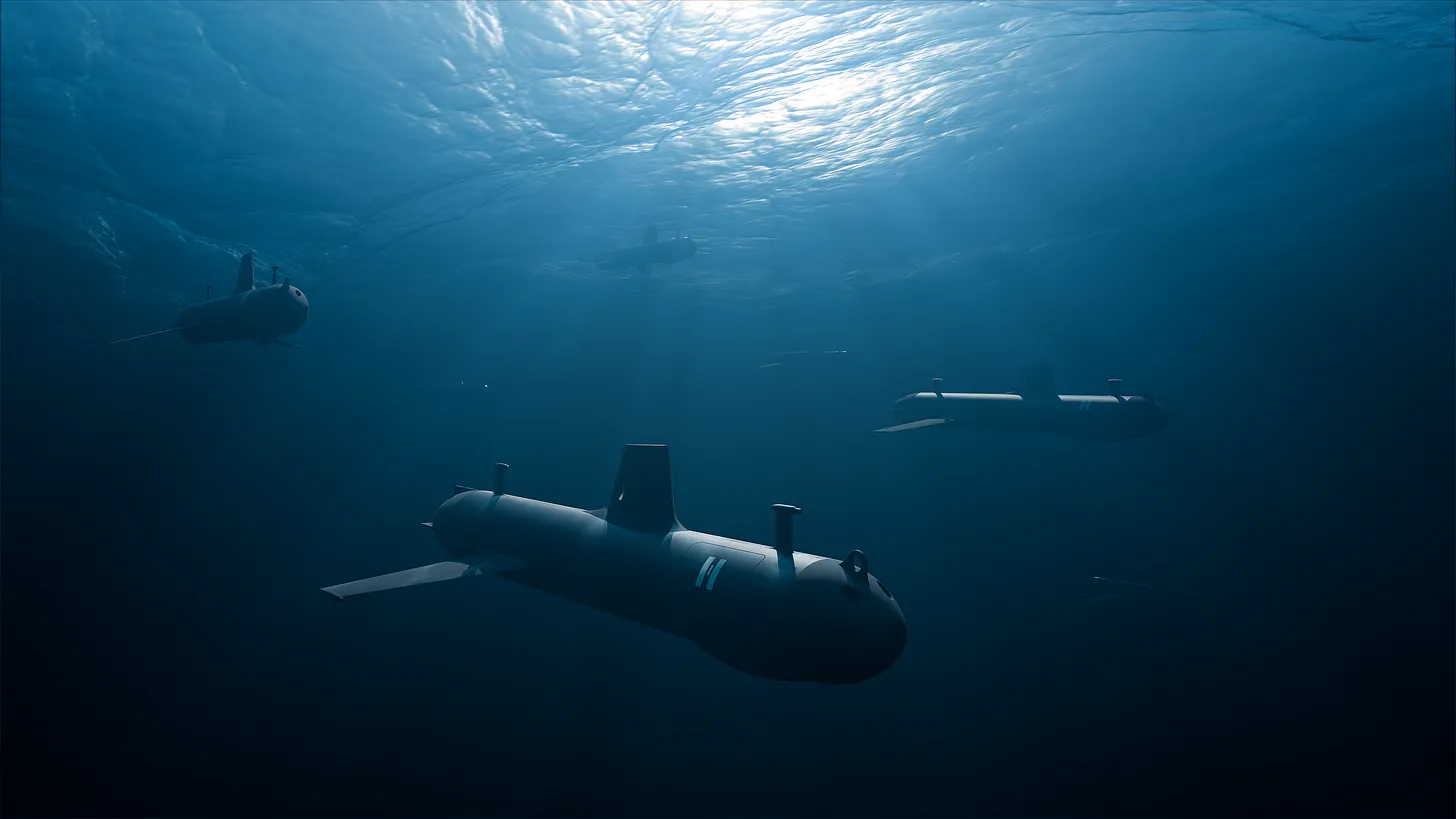
The AI system, called Lura, will analyse measurements obtained by sensors placed on a fleet of brand-new underwater drones also developed by Helsing.

The autonomous gliders, called SG-1 Fathom, can roam the contested regions of the world’s oceans in large numbers, using their sensors to listen for approaching threats. Helsing said in a statement that Lura will hear signals ten times fainter than any previously developed AI-based detection system and will detect threats forty times faster than human operators.

“We must harness new technologies to keep pace with the threats against our critical infrastructure, national waters, and way of life,” Gundbert Scherf, Helsing’s co-founder and co-CEO, said in the statement. “Deploying AI to the edge of underwater constellations will illuminate the oceans and deter our adversaries for a strong Europe.”

The technology at the heart of the Lura system is akin to large language models such as ChatGPT. Lura, however, detects and classifies noise produced by marine vessels and localises the source of those acoustic signatures.

A fleet of hundreds of SG-1 Fathom gliders can be tasked and monitored by a single human operator, reducing the cost of maritime surveillance to about one tenth of that required to run crewed ship and submarine patrols.

The mass-produceable SG-1 Fathoms are “cheaper than any other gliders available in the market,” according to Helsing, and capable of roaming the seas for up to three months at a time.

“To protect ourselves from increasing threats, especially underwater, we must do defence differently,” Amelia Gould, general manager at Helsing Maritime, said in the statement. “At Helsing, we know how important it is to learn and adapt from each mission.”

While the gliders roam the oceans, the data they gather are sent to edge computers on shore in real time for processing and classification.

Helsing showed off the technology during a demonstration at HM Naval Base Portsmouth last week, hailing the system as a “new approach” to underwater battlespace and the beginning of the digitalisation of the world’s oceans.

Tags: Amelia GouldGermanyGundbert ScherfHelsing
Previous Post

Germany acquires loitering munitions as drone doctrine evolves

Next Post

ARX Robotics brings combat-tested UGV to British soil

Resilience Media

Resilience Media

Start Ups. Security. Defense.

Related News

blue and yellow striped country flag

Ukraine 2025 defence tech investment topped $57.2M, but the ‘funded market’ is $6.8B says PitchBook

byLuke Smith
July 8, 2026

Ukraine's defense tech sector has proven its products on the battlefield. But the question for investors is whether any of...

IQM becomes first European quantum computing company to list on NASDAQ

IQM becomes first European quantum computing company to list on NASDAQ

byJohn Biggs
July 7, 2026

Finland's IQM Quantum Computers, a manufacturer of quantum computers, went public on the NASDAQ on July 2 under the stock...

Proxima Fusion raises €411m to accelerate Europe’s fusion power ambitions

Proxima Fusion raises €411m to accelerate Europe’s fusion power ambitions

byCarly Page
July 7, 2026

Europe's bid to commercialise fusion energy received a major boost on Tuesday after German startup Proxima Fusion announced a €411...

Trinity Robotics raises more than €500,000 to expand production of autonomous combat vehicles

Trinity Robotics raises more than €500,000 to expand production of autonomous combat vehicles

byJohn Biggs
July 7, 2026

In Ukrainian, Konyk means “horse," and that's exactly what Kyiv-based Trinity Robotics has built: an autonomous pack vehicle to support...

Expeditions closes its latest fund at €197M, smashing through its original target

Expeditions closes its latest fund at €197M, smashing through its original target

byIngrid Lunden
July 7, 2026

The war in Ukraine has put a spotlight on innovation in defence, not just how it can be used to...

Nordic Air Defence demonstrates a super-fast, super-light drone designed to destroy other drones

Nordic Air Defence demonstrates a super-fast, super-light drone designed to destroy other drones

byJohn Biggs
July 6, 2026

Swedish aerospace startup Nordic Air Defence has publicly demonstrated its K100XR counter-drone interceptor for the first time, showing the system...

Touchwaves' founders Martin Romero and Charlotte Kjellander

How Touchwaves moved from academia into the cockpit

byJohn Biggs
July 6, 2026

Touchwaves, a Dutch company building wearable haptic systems for aerospace and defence, has been selected by General Atomics Aeronautical Systems...

Nexus by Intelic

Software before drones: Dutch defence ministry bets on interoperability

byPaul Sawers
July 3, 2026

Most militaries buy hardware first and work out how to make it talk to everything else afterwards. The Dutch Ministry...

Load More
Next Post
ARX Robotics brings combat-tested UGV to British soil

ARX Robotics brings combat-tested UGV to British soil

Finnish satellite maker ICEYE announces plans to scale up production to meet defence needs

Finnish satellite maker ICEYE announces plans to scale up production to meet defence needs

Most viewed

InVeris announces fats Drone, an integrated, multi-party drone flight simulator

Uforce raises $50M at a $1B+ valuation to build defence tech for Ukraine

Auterion, the drone software startup, eyes raising $200M at a $1.2B+ valuation

Palantir and Ukraine’s Brave1 have built a new AI “Dataroom”

Twentyfour Industries emerges from stealth with $11.8M for mass-produced drones

Senai exits stealth to help governments harness online video intelligence

Resilience Media is an independent publication covering the future of defence, security, and resilience. Our reporting focuses on emerging technologies, strategic threats, and the growing role of startups and investors in the defence of democracy.

  • About
  • News
  • Resilence Conference
    • Resilience Conference Copenhagen 2026
    • Resilience Conference Warsaw 2026
    • Resilience Conference 2026
  • Guest Posts
  • Subscribe
  • Privacy Policy
  • Terms & Conditions
  • Mission Statement & Code of Practice
  • Press

© 2026 Resilience Media

No Result
View All Result
  • Home
  • About
  • Subscribe
  • Events
  • Guest Posts
  • Interview
  • News
  • Resilience Conference London 2026
  • Resilience Conference Copenhagen 2026
  • Resilience Conference Warsaw 2026

© 2026 Resilience Media

This website uses cookies. By continuing to use this website you are giving consent to cookies being used. Visit our Privacy and Cookie Policy.