Sunday 3 May, 2026
[email protected]
Resilience Media
  • About
  • News
  • Resilience Conference
    • Resilience Conference Warsaw 2026
    • Resilience Conference Copenhagen 2026
    • Resilience Conference London 2026
  • Guest Posts
    • Author a Post
  • Subscribe
No Result
View All Result
  • About
  • News
  • Resilience Conference
    • Resilience Conference Warsaw 2026
    • Resilience Conference Copenhagen 2026
    • Resilience Conference London 2026
  • Guest Posts
    • Author a Post
  • Subscribe
No Result
View All Result
Resilience Media
No Result
View All Result

Helsing unveils AI-powered acoustic detection system to ward off naval threats

Resilience MediabyResilience Media
May 13, 2025
in News, Startups
Image courtesy of Helsing

Image courtesy of Helsing

Share on Linkedin

German defence AI developer Helsing has introduced a novel acoustic detection system to autonomously track adversary ships and submarines with an accuracy surpassing any previously developed detection technology.

You Might Also Like

Spiral Hydrogen raises €2.7M to pilot its new hydrogen tech at the Port of Rotterdam

Report maps Russia’s hybrid war on Poland

Report: Europe’s reliance on imported energy and technology presents both risk and opportunity

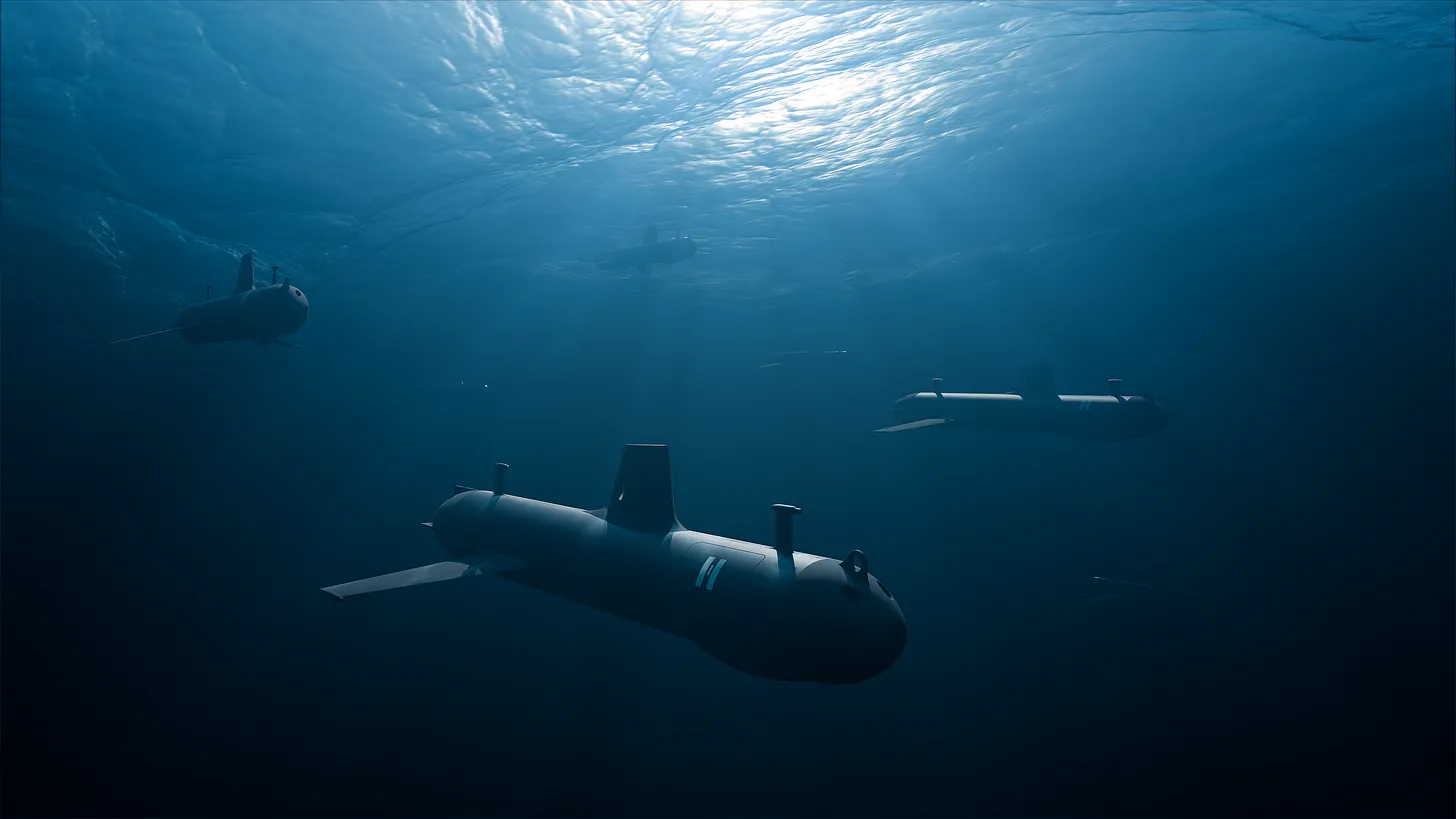
The AI system, called Lura, will analyse measurements obtained by sensors placed on a fleet of brand-new underwater drones also developed by Helsing.

The autonomous gliders, called SG-1 Fathom, can roam the contested regions of the world’s oceans in large numbers, using their sensors to listen for approaching threats. Helsing said in a statement that Lura will hear signals ten times fainter than any previously developed AI-based detection system and will detect threats forty times faster than human operators.

“We must harness new technologies to keep pace with the threats against our critical infrastructure, national waters, and way of life,” Gundbert Scherf, Helsing’s co-founder and co-CEO, said in the statement. “Deploying AI to the edge of underwater constellations will illuminate the oceans and deter our adversaries for a strong Europe.”

The technology at the heart of the Lura system is akin to large language models such as ChatGPT. Lura, however, detects and classifies noise produced by marine vessels and localises the source of those acoustic signatures.

A fleet of hundreds of SG-1 Fathom gliders can be tasked and monitored by a single human operator, reducing the cost of maritime surveillance to about one tenth of that required to run crewed ship and submarine patrols.

The mass-produceable SG-1 Fathoms are “cheaper than any other gliders available in the market,” according to Helsing, and capable of roaming the seas for up to three months at a time.

“To protect ourselves from increasing threats, especially underwater, we must do defence differently,” Amelia Gould, general manager at Helsing Maritime, said in the statement. “At Helsing, we know how important it is to learn and adapt from each mission.”

While the gliders roam the oceans, the data they gather are sent to edge computers on shore in real time for processing and classification.

Helsing showed off the technology during a demonstration at HM Naval Base Portsmouth last week, hailing the system as a “new approach” to underwater battlespace and the beginning of the digitalisation of the world’s oceans.
Tags: Amelia GouldGermanyGundbert ScherfHelsing
Previous Post

Germany acquires loitering munitions as drone doctrine evolves

Next Post

ARX Robotics brings combat-tested UGV to British soil

Resilience Media

Resilience Media

Start Ups. Security. Defense.

Related News

Spiral Hydrogen raises €2.7M to pilot its new hydrogen tech at the Port of Rotterdam

Spiral Hydrogen raises €2.7M to pilot its new hydrogen tech at the Port of Rotterdam

byFiona Alston
April 30, 2026

Estonian-Dutch dual-use startup Spiral Hydrogen will be taking its centrifugal bubble-free electrolysis technology from the lab to the Port of...

Report maps Russia’s hybrid war on Poland

Report maps Russia’s hybrid war on Poland

byJohn Biggs
April 30, 2026

A new report from Defence24 has outlined the role of Russia in a number of cyberattacks and acts of sabotage....

Line illustration showing trucks, cars and a cyclist, alongside a wind turbine, solar panel, power lines, buildings and a data centre, depicting energy infrastructure

Report: Europe’s reliance on imported energy and technology presents both risk and opportunity

byPaul Sawers
April 29, 2026

Europe’s reliance on external technology and infrastructure faces growing scrutiny, as policymakers and industry leaders confront the risks of depending...

Weekly Digest: The mystery of the British unicorn – the story of our dealings with Roark Aerospace

Inside the case of Roark Aerospace: The British defence unicorn no one can verify

byIngrid Lunden
April 28, 2026

On Boxing Day 2025, we received a press release from Roark Aerospace. The UK startup, which makes anti-drone systems, reported...

German military uniform (Touko Aikioniemi from Unsplash)

Europe’s armed forces are too reliant on US cloud providers, report finds

byPaul Sawers
April 28, 2026

Europe’s defence systems depend heavily on US cloud infrastructure, leaving key military functions exposed to potential service disruptions during geopolitical...

ACUA Ocean completes three contracts with its UK-made autonomous boat

ACUA Ocean completes three contracts with its UK-made autonomous boat

byJohn Biggs
April 24, 2026

ACUA Ocean has completed three contracts under the Atlantic Net Technology Demonstrator programme, marking a step forward in the UK’s...

UNIVITY raises €27 million to build a 5G satellite constellation that can expand European communication networks

UNIVITY raises €27 million to build a 5G satellite constellation that can expand European communication networks

byJohn Biggs
April 24, 2026

UNIVITY has raised €27 million to transition its space-based telecom infrastructure from a demonstration phase to an early industrial stage....

Jacek Siewiera: a future NATO conflict will be fought against civilian targets

Jacek Siewiera: a future NATO conflict will be fought against civilian targets

byResilience Media
April 24, 2026

The wars in Iran and Ukraine have underscored how civilian infrastructure will become a feature of future conflicts. And Poland’s...

Load More
Next Post
ARX Robotics brings combat-tested UGV to British soil

ARX Robotics brings combat-tested UGV to British soil

Finnish satellite maker ICEYE announces plans to scale up production to meet defence needs

Finnish satellite maker ICEYE announces plans to scale up production to meet defence needs

Most viewed

InVeris announces fats Drone, an integrated, multi-party drone flight simulator

Uforce raises $50M at a $1B+ valuation to build defence tech for Ukraine

Auterion, the drone software startup, eyes raising $200M at a $1.2B+ valuation

Palantir and Ukraine’s Brave1 have built a new AI “Dataroom”

Senai exits stealth to help governments harness online video intelligence

Twentyfour Industries emerges from stealth with $11.8M for mass-produced drones

Resilience Media is an independent publication covering the future of defence, security, and resilience. Our reporting focuses on emerging technologies, strategic threats, and the growing role of startups and investors in the defence of democracy.

  • About
  • News
  • Resilence Conference
    • Resilience Conference Copenhagen 2026
    • Resilience Conference Warsaw 2026
    • Resilience Conference 2026
  • Guest Posts
  • Subscribe
  • Privacy Policy
  • Terms & Conditions

© 2026 Resilience Media

No Result
View All Result
  • Home
  • Subscribe
  • About
  • Events
  • Guest Posts
  • Interview
  • News
  • Resilience Conference London 2026
  • Resilience Conference Copenhagen 2026
  • Resilience Conference Warsaw 2026
  • Startups
  • Venture
  • Weekly Digest

© 2026 Resilience Media

This website uses cookies. By continuing to use this website you are giving consent to cookies being used. Visit our Privacy and Cookie Policy.