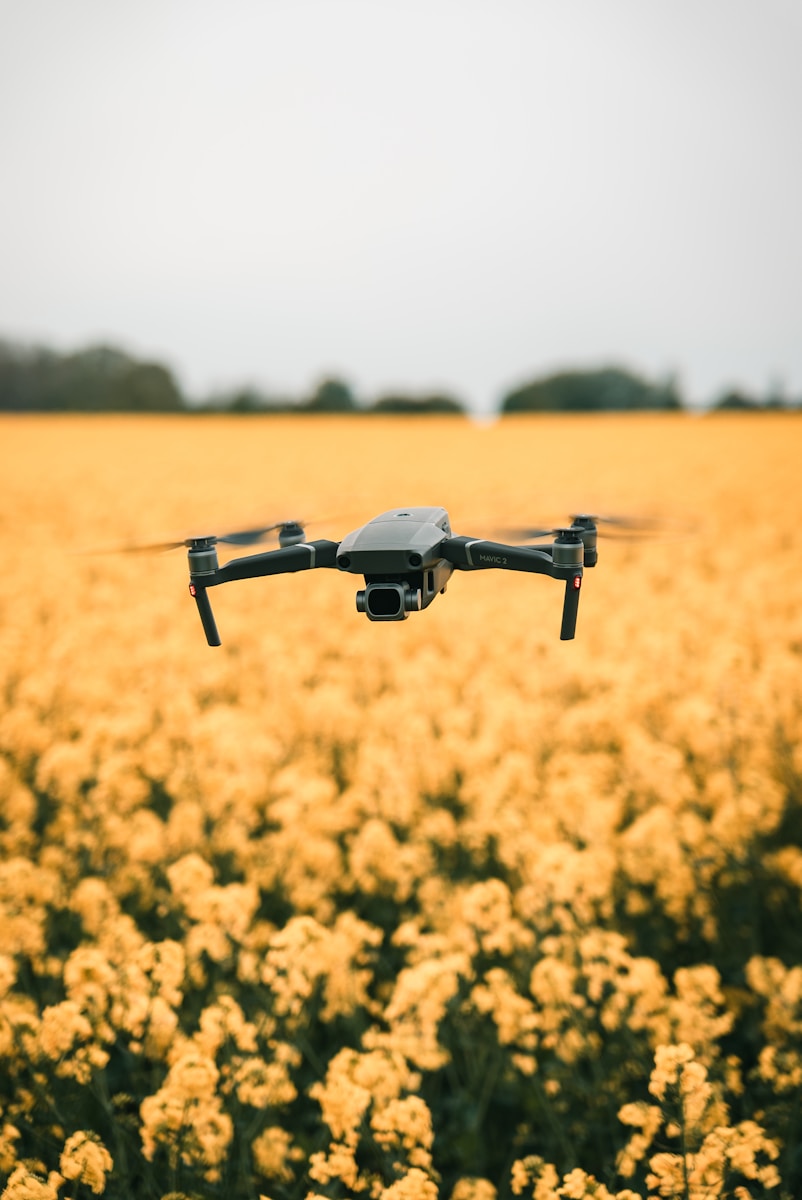
No weapon has shaped the Russia-Ukraine War like the first-person-view drone. Commonly known as FPVs, these unmanned aircraft stream live footage directly to a pilot’s goggles or screen, turning hobbyist technology into a ubiquitous military vehicle for strikes, interception, and reconnaissance.
Before Russia’s full-scale invasion began just over four years ago, FPVs were little more than niche racing toys. Today, they’re a weapon of choice on both sides of the conflict. Favoured for their low unit cost, versatility, and manoeuvrability, they provide a practical alternative to pricier precision-guided munitions and artillery systems. A Javelin anti-tank missile, for instance, can cost well over $200,000 per shot, while a combat-ready FPV is often assembled for under $500.
Around 70% of Russian and Ukrainian frontline casualties are caused by FPV drones, according to Michael Horowitz at the Council on Foreign Relations. The scale of production is also staggering. This year, Kyiv aims to produce around 19,000 FPVs per day, mirroring Moscow’s estimated capacity.
As the numbers grow, however, the current generation of FPVs is reaching a technical ceiling. A combination of electronic warfare saturation, pilot shortages, personnel costs, and limited precision is pushing the drones to their limits. To expand them, the industry is eyeing extra autonomy — in Ukraine and beyond.
One key factor behind the push for autonomy is the dizzying number of specialists required to operate existing FPVs. A single FPV strike team typically requires three to six personnel – including a pilot, navigator, technician, and security detail. This means that for Ukraine to operate 19,000 FPVs, Ukraine’s military would require tens of thousands of trained specialists.
And by this rate, specialists are already in perilously short supply. According to Ukraine’s Ministry of Defence, more than 5,000 operators of unmanned aerial systems (UAS) were trained last year, with only 437 receiving the highest professional certification. The supply of human talent can’t keep up with the hardware pipeline.
Michael Kofman, a military analyst and leading authority on the war in Ukraine, expects the impact to extend into future conflicts. This pinch point is where FPV makers are hoping to step in with autonomy fuelled by AI.
“Defence companies are working to automate much of what the pilot currently does on the FPV team, reducing manpower requirements, so there’s a good chance we will see a much more advanced and mature form of this technology fielded after the Russia-Ukraine war,” he said in an interview with Resilience Media.
The jamming factor
Arguably, an even bigger driver for autonomy is electronic warfare (EW). In areas of high-intensity EW, manual FPVs are being neutralised at a rate of roughly nine out of 10.
The failures stem from the radio-frequency link between the pilot and drone. Because FPVs typically rely on a narrow and predictable set of frequencies, they’re easily identified, jammed, and spoofed. Consequently, manual flights have diminishing returns.
By replacing the radio link to the pilot with autonomous navigation software, FPVs can avoid this vulnerability. Doing this can improve the success rate by up to three to four times, according to a 2025 report by the Centre for Strategic and International Studies (CSIS).
As the report’s author, Kateryna Bondar, a fellow with the Wadhwani AI Centre at CSIS, puts it: “By removing the need for constant manual control and stable communications — both vulnerable to EW and human stress — autonomous drones raise the target engagement success rate from around 10% to 20% to around 70 to 80%.”
Bondar adds that with these capabilities, operators can achieve mission objectives using just one or two drones per target rather than eight or nine in succession.
It is therefore unsurprising that the push for autonomous FPVs is a priority for Ukraine’s military leadership. Speaking to Resilience Media a few months before his appointment as defence secretary, Mykhailo Fedorov picked three autonomous drone technologies as his favourite AI innovations: swarm drones, advanced UAV targeting, and pixel‑lock, which uses computer vision to automatically track a specific object, even if the pilot loses the remote signal.
Ukraine has gained unique experience of battle-testing FPV automation, and we are now seeing some of the learnings being applied in conflicts around the world: the US is using Ukraine-tested Merops counter-FPV technology in Iran; and Taiwan has been overhauling its drone strategy based on the Ukrainian experience.
Precise mass autonomy
Worryingly, however, Ukraine and its allies are not the only ones leveling up with autonomy. In the Middle East, Iran and Hezbollah’s FPVs exhibit increasingly autonomous navigation, directional stability, and fail-safe behaviours. On the other side of the conflict, US and Israeli FPVs have added automation for flight assistance and mission support.
Analysts at the Council on Foreign Relations position these developments as part of a broader transition towards an “era of precise mass” in warfare. The path to victory, they argue, is shifting from high-end individual aircraft — commonly described as ‘exquisite’ — towards large numbers of low-cost, autonomous units. Kofman echoes their point. “FPVs are an early version of mass precision on the battlefield,” he said.
FPV developers are already capitalising on the trend, embedding autonomous functions including environmental perception, target recognition, and navigation.
Ukraine’s Sine.Engineering, for instance, touts a visual odometry system that enables UAVs to make real-time decisions about their flight path without a human or a GPS signal telling them where to go. The startup has also built a platform, Pasika, that allows a single operator to command a swarm of drones. As they fly, the software keeps them moving as a cohesive unit.
Last month, the US-Ukraine Reconstruction Investment Fund (URIF) highlighted Sine’s autonomous features after awarding the company its inaugural investment.
Andriy Chulyk, the startup’s CEO and co-founder, argues that the value of these systems isn’t terrain-dependent. The speed, cost-efficiency, and scalability proven in Ukraine apply equally to maritime and air-centric theatres.
“The real takeaway isn’t about FPVs as a one-off tool — it’s about a shift toward modular, scalable, semi-autonomous strike systems,” Chulyk told Resilience Media.
Autonomous limitations
There is a proven way for current FPV systems to bypass EW while keeping a human in the loop: fibre-optic drones. By unspooling a physical cable, these units maintain a secure link that nullifies jamming and spoofing. However, they fail to address the critical shortage of skilled pilots. They also introduce new constraints: their cables can snag on obstacles, limit flight radius, and lead the enemy to the pilot.
More fundamentally, each unit requires a dedicated operator, meaning they cannot scale to the large, coordinated swarms envisioned in the era of precise mass. At the same time, they leave behind a patchwork of cabling, creating environmental and logistical challenges that will persist long after the fighting has ceased.
Autonomous FPVs solve all these problems. But some defence tech firms argue that other autonomous aerial weapons offer superior choices.
The FPV future
Mihai Filip, CEO and founder of Oves Enterprise, a Romanian developer of defence software, views FPVs as a stopgap driven by scarcity. He argues that a true conflict between peer superpowers will require long-range systems that can operate at operational depths without human pilots or vulnerable signals. To that end, his company is developing a low-cost autonomous cruise missile, the AI-driven SAHARA.
“You’re going to launch the missile, and the AI is going to fly it, identify the targets, change the trajectory, change the habits, learn from the environment, and efficiently hit the target,” Filip said.
Kofman takes a more balanced view, envisioning a coexistence between systems that solve specific problems at different ranges.
While longer-range strike systems will be optimised to hit deep behind enemy lines and overwhelm defences, he said they “will not replace first-person-view drones,” which remain highly effective against individual soldiers and the smallest targets. Advances in autonomy will further strengthen their role.
“With AI-enabled targeting and navigation, they will mature,” he predicted.
Chulyk also expects them to remain a valuable weapon in future conflicts. He points to their adaptability: “As the battlefield evolves, so do FPVs.”
Note: a previous version of this story contained a citation from an unverified source and it has been removed.