Wednesday 1 July, 2026
[email protected]
Resilience Media
  • News
    • Events
    • Interview
    • Startups
    • Venture
    • Weekly Digest
  • Resilience Conference
    • Resilience Conference Warsaw 2026
    • Resilience Conference Copenhagen 2026
    • Resilience Conference London 2026
  • About
  • Guest Posts
    • Author a Post
  • Subscribe
No Result
View All Result
  • News
    • Events
    • Interview
    • Startups
    • Venture
    • Weekly Digest
  • Resilience Conference
    • Resilience Conference Warsaw 2026
    • Resilience Conference Copenhagen 2026
    • Resilience Conference London 2026
  • About
  • Guest Posts
    • Author a Post
  • Subscribe
No Result
View All Result
Resilience Media
No Result
View All Result

JLR hack attribution turns spotlight on Britain’s offensive cyber capability

A report tying the Jaguar Land Rover attack to Russia has reignited debate over Britain's offensive cyber capabilities

Carly PagebyCarly Page
July 1, 2026
in Cyber, Interview, News
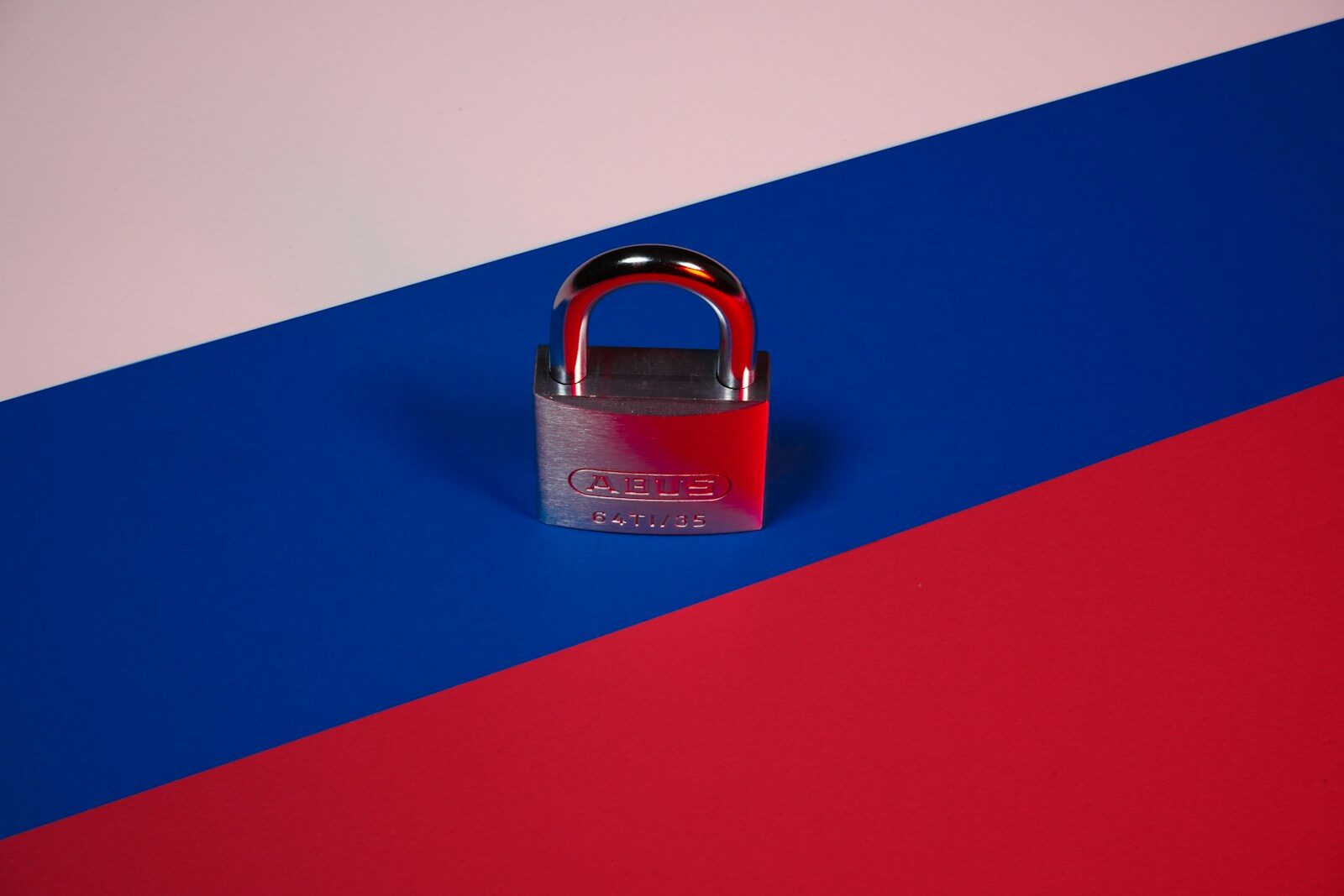
a padlock on a red, blue, and pink background
Share on Linkedin

The UK has quietly mounted offensive cyber operations against Russia, according to former British and American intelligence officials cited by The New York Times, in one of the clearest public indications yet that Britain’s cyber campaign against Moscow extends beyond defence and into active disruption.

You Might Also Like

The UK DIP Shows why the tech sector matters

Israel says Iranian cyberattacks triple as hacking groups unite

Dominion Dynamics raises $100M at a $400M valuation to build defence tech for arctic environments

The report, which attributes the 2025 cyberattack on Jaguar Land Rover to Russian hackers, also claims Britain has conducted covert cyber-intrusion and sabotage operations against Moscow. The UK has never publicly confirmed targeting Russia, although ministers and intelligence chiefs have become more willing to discuss the National Cyber Force’s offensive role in recent years.

Earlier this year, GCHQ Director Anne Keast-Butler said the NCF delivers “high-impact cyber operations every single day”, although officials have consistently stopped short of discussing individual missions or naming state targets.

The New York Times’ report marks a notable shift, placing Russia at the centre of Britain’s alleged offensive cyber activity at a time when relations between the two countries remain at their lowest point in decades.

The report also casts the Jaguar Land Rover attack in a different light. The breach forced the carmaker to halt production after shutting down its IT systems in August 2025. At the time, it looked like another major cybercrime incident, but if the reported attribution is correct, it may instead have been intended to damage a key British manufacturer rather than make money.

Paul Reynolds, a senior security architect with 25 years’ experience across UK central government, critical national infrastructure, and regulated enterprise, said the absence of a ransom demand made the reported attribution more believable.

“The NYT attribution is credible, but whether Russian hackers were directed, tolerated, or simply unleashed by the state is an important distinction,” he told Resilience Media. “Profit-motivated criminal groups do not walk away from the largest ransomware hit in British history without asking for money, and no ransom was ever demanded. That makes a state-sponsored attack a much more likely explanation.”

Reynolds pointed to comments made by the UK’s Security Minister earlier this year, describing Russia’s strategy as seeking to “quietly hollow us out” through cyber operations and other hostile activity that remain below the threshold of armed conflict.

“The JLR attack fits that model precisely,” he said.

The reported disclosure that Britain has itself conducted offensive operations against Russia should not come as a surprise, Reynolds added, given the government’s increasingly open discussion of the NCF’s role.

“The UK does not comment on specific targets, but it is well known that the capability exists, and it would be unusual not to use it against a sustained adversary,” he said. 

Not everyone believes public attribution alone tells the full story. While Reynolds believes the circumstances make a state-backed explanation more likely, Kaveh Ranjbar, co-founder and CEO of Whisper Security, said publicly available evidence rarely tells the whole story when attributing sophisticated cyberattacks.

“Attribution at this level is rarely a single smoking gun,” he told Resilience Media. “What you can actually observe from the outside is infrastructure: the hosting, the routing, the domains, the reuse of tooling across incidents. That can place an attack inside a known cluster with real confidence. Tying that cluster to a specific government is a much harder step, and it usually rests on intelligence the public never sees rather than on the infrastructure alone.”

He argued that Russia’s cyber ecosystem is rarely as clear-cut as state versus criminal, making attribution more nuanced than a simple question of who gave the order.

“With Russia in particular, the sharper question is often not whether the state pressed the button but whether it created the conditions,” Ranjbar said. “A large part of the Russia-nexus threat runs as a tolerated criminal ecosystem: financially motivated crews left alone as long as they hit Western targets. Whether you call that state-sponsored or state-aligned matters, because it changes how you defend and how you deter.”

Whatever the precise relationship between criminal groups and the Russian state, both experts agreed that the implications extend well beyond a single manufacturer.

“The part that should worry people is the pattern, not the one carmaker,” Ranjbar said. “Halting a production line imposes real economic cost without a shot being fired, so manufacturing and automotive are now strategic targets.”

Reynolds echoed that warning, arguing the attack demonstrates how commercial organisations increasingly find themselves on the front line of geopolitical competition.

“The implication for business is the one that should concern us all,” he said. “JLR is a car manufacturer, not a defence contractor. If the threshold for economic targeting is now ‘country that supports Ukraine’, the attack surface is every significant British employer, as well as their suppliers.”

Tags: CybersecurityRussiauk government
Previous Post

Israel says Iranian cyberattacks triple as hacking groups unite

Next Post

The UK DIP Shows why the tech sector matters

Carly Page

Carly Page

Carly Page is a freelance journalist and copywriter with 10+ years of experience covering the technology industry, and was formerly a senior cybersecurity reporter at TechCrunch. Bylines include Forbes, IT Pro, LeadDev, The Register, TechCrunch, TechFinitive, TechRadar, TES, The Telegraph, TIME, Uswitch, WIRED, & more.

Related News

Big Ben, London

The UK DIP Shows why the tech sector matters

byLeslie Hitchcockand1 others
July 1, 2026

The long-awaited UK Defence Investment Plan (DIP) was announced yesterday morning at a drone manufacturing centre in Swindon. Keir Starmer's...

black flat screen computer monitor

Israel says Iranian cyberattacks triple as hacking groups unite

byCarly Page
June 30, 2026

Iranian cyberattacks against Israel have tripled since last year, according to the country's cyber chief, who says Tehran has turned...

Dominion Dynamics raises $100M at a $400M valuation to build defence tech for arctic environments

Dominion Dynamics raises $100M at a $400M valuation to build defence tech for arctic environments

byIngrid Lunden
June 30, 2026

Dominion Dynamics, the fast-growing Canadian startup building defence tech for extreme climates, is doubling down on the opportunity with a...

UK puts drones at the centre of its next defence investment plan

UK puts drones at the centre of its next defence investment plan

byJohn Biggs
June 29, 2026

The UK government will commit more than £5 billion over four years to a major drone and autonomous systems integration...

Exclusive: Osney Capital closes £60M cyber fund to back UK’s next generation of security startups

Exclusive: Osney Capital closes £60M cyber fund to back UK’s next generation of security startups

byCarly Page
June 29, 2026

Osney Capital has closed its debut cybersecurity fund at a £60 million hard cap after investors piled in beyond its...

Nokia resurfaces to help build Finland’s border guard anti-drone capability

Nokia resurfaces to help build Finland’s border guard anti-drone capability

byJohn Biggs
June 26, 2026

Nokia announced its participation in an industrial consortium led by the Finnish Border Guard to build anti-drone systems for government...

a chinese flag hanging from the side of a building

Sanctioned Chinese cyber giant claims AI can rival Anthropic’s Mythos

byCarly Page
June 26, 2026

A Chinese cybersecurity company sanctioned by the US claims it has developed an artificial intelligence system capable of hunting software...

SE3 Labs unveils its spatial AI tools for defence backed by Lakestar and Sequoia Scouts

SE3 Labs unveils its spatial AI tools for defence backed by Lakestar and Sequoia Scouts

byIngrid Lunden
June 26, 2026

Large Language Models are changing how non-technical people engage with AI, and those learnings are permeating into the world of...

Load More
Next Post
Big Ben, London

The UK DIP Shows why the tech sector matters

Most viewed

InVeris announces fats Drone, an integrated, multi-party drone flight simulator

Uforce raises $50M at a $1B+ valuation to build defence tech for Ukraine

Auterion, the drone software startup, eyes raising $200M at a $1.2B+ valuation

Palantir and Ukraine’s Brave1 have built a new AI “Dataroom”

Twentyfour Industries emerges from stealth with $11.8M for mass-produced drones

Senai exits stealth to help governments harness online video intelligence

Resilience Media is an independent publication covering the future of defence, security, and resilience. Our reporting focuses on emerging technologies, strategic threats, and the growing role of startups and investors in the defence of democracy.

  • About
  • News
  • Resilence Conference
    • Resilience Conference Copenhagen 2026
    • Resilience Conference Warsaw 2026
    • Resilience Conference 2026
  • Guest Posts
  • Subscribe
  • Privacy Policy
  • Terms & Conditions
  • Mission Statement & Code of Practice
  • Press

© 2026 Resilience Media

No Result
View All Result
  • Home
  • About
  • Subscribe
  • Events
  • Guest Posts
  • Interview
  • News
  • Resilience Conference London 2026
  • Resilience Conference Copenhagen 2026
  • Resilience Conference Warsaw 2026

© 2026 Resilience Media

This website uses cookies. By continuing to use this website you are giving consent to cookies being used. Visit our Privacy and Cookie Policy.