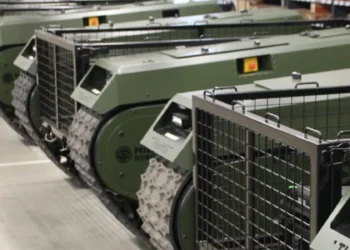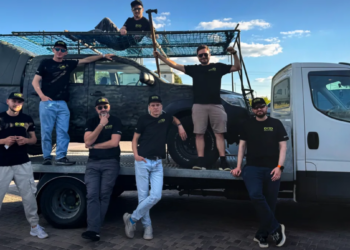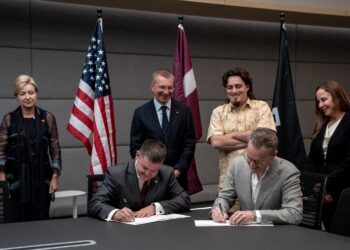
The long-awaited UK Defence Investment Plan (DIP) was announced yesterday morning at a drone manufacturing centre in Swindon. Keir Starmer’s last policy announcement as Prime Minister was made under political duress, following the resignation of John Healey and Al Cairns, and with the newly-elected MP Andy Burnham on the cusp of assuming the role of PM. Despite emphasising innovation, autonomy, and AI, the DIP had zero direct mentions of startups, scale-ups, and venture capital. The government is putting money behind technologies that are endemic to that ecosystem: drones, AI, quantum, and autonomy, and manufacturing.
We asked founders, investors, and military leadership for their thoughts on the DIP and what it means for the UK. Most declined to comment on the record or replied with canned statements. The silence is understandable. When compared to Germany, Estonia, and Poland, the DIP is underwhelming. The feedback we did get was a general sense that it is too little, too slow, and lacks a real focus on innovation.
What the DIP does show is that the tech sector matters in defence. The government cannot find the tax revenue they need to fund defence the way it has been done so far, where the taxpayer shoulders the cost and risk of product development through Primes. In the simplest terms, the tech sector deploys private capital to pay for R&D and product development so startups can produce products and offer them to government customers. The risk of delays and budget over-runs lies with the startups and their investors, not the tax payer. If the products are not good enough, or fail to be relevant in the fast-changing defence technology landscape, again the risk falls on the private sector.
Startups have shown they can move fast, build innovative new products, and be agile enough to keep up with the fast pace of change in tech enabled defence. It is really encouraging to see the Royal Navy recognise this and start to build out a Hybrid Navy, but overall we think a lot more is needed.
For this flywheel to work the UK public sector needs to start buying products from the tech sector quickly and decisively. Demonstrating market demand, and available budgets, is essential to create the market dynamics that will trigger and sustain venture capital investment into defence tech startups, and will prevent startups simply moving to other markets that can buy from them more effectively. This why we founded Resilience Conference, so we’re passionate about this and will continue to platform these discussions.
Meanwhile, the leaders in the ecosystem who were willing to publicly comment on the DIP told us the following:
Sam Burrell, Partner, Expeditions
The resignations of John Healey and Al Cairns were not in vain. The previous DIP failed to fund the future of defence. It failed to invest in new technologies. The re-allocation of money to drones and autonomous technologies, at the expense of Type 83 destroyers, was the right decision. Albeit a very difficult one. Instead, the Hybrid Navy will replace that capability in the aggregate. It is a bet on technology, which has always been at the heart of military capability.
Nicola Sinclair, Founding Partner, Twin Track Ventures
Getting the Defence Investment Plan published and ending ten months of speculation on its content is positive. I’m glad to see the voices calling for a greater emphasis on autonomy have been listened to and that the plan now includes specific intent to aggressively adopt autonomous systems across the armed forces. This adoption goes beyond embodied systems, i.e. drones, and into autonomy for faster decision-making which I think will prove far sighted.
But the outcome although hard won, is modest, bringing a 5-6% uplift or as a share of GDP, rising from about 2.6% to 2.7%. And the plan arguably raises more questions than it answers. It doesn’t fully explain how it will pay for itself in the short or the long-term. Of the £3.8 bn a year added, the IFS calculates about £1.2 bn a year currently has no funding source. Too often unfunded commitments get kicked into the long grass once the announcement cycle moves on or other issues rise in visibility.
And the plan is heavily backloaded. Everything from 2030 to 2035 is unallocated. As the DIP says, this will allow flexibility to respond to evolving threats, but practically, this means some of the headline figures, for the most ambitious front line capabilities, are not committed, but aspirational capital.
So the announcement is good news today for ambitious startups building relevant technologies today but single customer risk is still a big consideration. Many of us in the sector will continue to wait and see if the unfunded and back-loaded portions survive contact with the Budget and the next spending review.
Ned Baker, Managing Director, Helsing UK
In the past we have relied solely on highly exquisite expensive platforms to deter aggressors, but the character of warfare has changed. The Defence Investment Plan’s shift toward combining these with AI-enabled autonomous ‘mass’ is vital and transformative.
General Sir Richard Barrons, Chairman, Universal Defence
We’re not keeping up with our allies, we’re certainly not keeping up with our enemies, and we know that the US is no longer going to come and save European security in the face of a Russian threat. So until we come to terms with the fact that we have to find more money for defence sooner, it will be at the cost of other things we like more, we are simply not going to be ready to defend this country properly.
In order to defend the UK sufficiently well, sufficiently quickly, more has to be done sooner and that requires more money than is currently on the table. If the demand was for £28bn over the first four years and the settlement might be around £15bn over four years, that means either some things are not going to be bought or will be delayed, and it will mean that some forms of activity like training and infrastructure maintenance and logistics, things that cost real cash, will be done less well or perhaps not even done at all. The good news is that today’s British armed forces know perfectly well what they have to do, they understand this transformation, and all three services have really very good models for what they need to do.
Their challenge is that in order to do it well enough and fast enough, they’ll need more money sooner. And what they see in the DIP today is a struggle, not just for the first four years, but until the government can articulate how the UK gets to spend 3.5% of GDP … by 2035. Until that trajectory is clear we don’t have a four-year slowdown, we have a 10-year slowdown.
If you look at most of our European allies in Nato, they are spending more money much faster on revitalising and beginning to transform their armed forces, and they’re looking at the UK, who were once an exemplar of a European nation in Nato, and we’re now about halfway down the spending table in Nato.
At Resilience Media, our mission from the start was to bring the tech sector into defence. This meant learning real lessons from Ukraine, and from places like Estonia and the Nordics. It meant convincing more VCs and LPs to invest in defence, and it required more startups to understand that they have a role to play in the defence of our democracies. But that all looks to the private sector side of the equation.
When we look at countries along the Eastern Flank, and when you listen to our own military and intelligence leaders, the immediate threat to our way of life is clear. We worry that our politicians are still unwilling to have that debate with the public. As one MP told us, ‘defence doesn’t win votes.’ That underpins the political struggle we have seen with the DIP.
As successes in Swindon, where the DIP was announced, have shown, developing a vibrant defence and dual use tech sector can also create jobs, develop economies, and raise tax revenues so funding defence is not just about taking money away from other budgets.
We welcome the DIP being announced. We will be watching to see how much of this really leads to a change in how the money is spent, and whether it is spent wisely and creatively.