Wednesday 17 December, 2025
Resilience Media
  • About
  • News
  • Resilience Conference
  • Guest Posts
    • Author a Post
  • Subscribe
No Result
View All Result
  • About
  • News
  • Resilience Conference
  • Guest Posts
    • Author a Post
  • Subscribe
No Result
View All Result
Resilience Media
No Result
View All Result

Inside the drone revolution: How war has changed and what that means for modern armies

The use of drones in warfare has ushered in a new wave of technology on the battlefield that is disrupting the expensive equipment of yesterday. It's adapt or die, writes Srdjan Kovacevic

Srdjan KovacevicbySrdjan Kovacevic
November 25, 2025
in Guest Posts
Share on Linkedin

Reports from the Ukraine front line make clear the tactics and equipment deployed by both sides are unlike those used in any previous major conflict. What’s less obvious is the exact nature of the transformation: what’s driving it, where it’ll go next, and – crucially – what lessons we can learn.

You Might Also Like

Guest Post: Where are Europe’s female defence tech leaders?

The Chinese GTG-1002 espionage campaign is an AI security wake-up call

The evolution of state sovereignty and national security in the digital age

The war in Ukraine has dramatically transformed modern warfare, and it would not be an overstatement to compare it with the major revolutionary advancements in military history.

At the heart of this transformation is a deep integration of unmanned aerial systems (UAS) which provides a step change in cost-effectiveness, intelligence gathering capabilities, precision strikes, and force multiplication, all while reducing human risk.

An army that has embraced these capabilities will have a decisive edge over one that has not, making the outcome of a clash between the two almost inevitable.

During the war in Ukraine, both Ukrainian and Russian militaries have undergone profound transformations adopting unmanned systems, fundamentally altering the nature of their military operations.

Both sides significantly changed the types of unmanned assets they deploy and the way they employ them. The paradigm has shifted from having a handful of expensive unmanned platforms operated at higher echelons of command (typically for reconnaissance or strategic strike), to deploying an overwhelming mass of attritable UAS operated at the battalion level or below, enabling persistent presence, precision effects, rapid reaction, and tactical autonomy.

The impact of this transformation on the Ukrainian battlefield is undeniable: a staggering 78% of Russian equipment losses over the last three years are attributed to drone strikes.

There are five main reasons why this transformation had such a dramatic impact.

First, given their relatively small logistical footprint, drones and other unmanned systems can be easily deployed at the fundamental tactical level – the battalion.

Second, a layered and systematic employment of small multicopters for short-range reconnaissance, combined with hand-launched fixed-wing assets for medium-range surveillance, can provide the battalion command with real-time situational awareness across the battlespace, almost like in a video game.

Third, assets such as First Person View (FPV) strike drones enable the battalion to employ a formidable volume of precision fires at ranges previously available only at a brigade or division-level.

Fourth, most of these assets are light and man-portable, allowing high mobility and dispersion – a critical quality on a transparent battlefield where precision at range is pervasive.

Fifth, and most important: unmanned assets enable the battalion commander to engage the enemy while significantly reducing the risk to the lives of the battalion’s soldiers.

Combined, this enables detecting enemy manoeuvre tens of kilometers in depth, rapidly engaging with precision fires, and sustaining this effect by maintaining a dispersed and highly fluid posture that blends into the terrain.

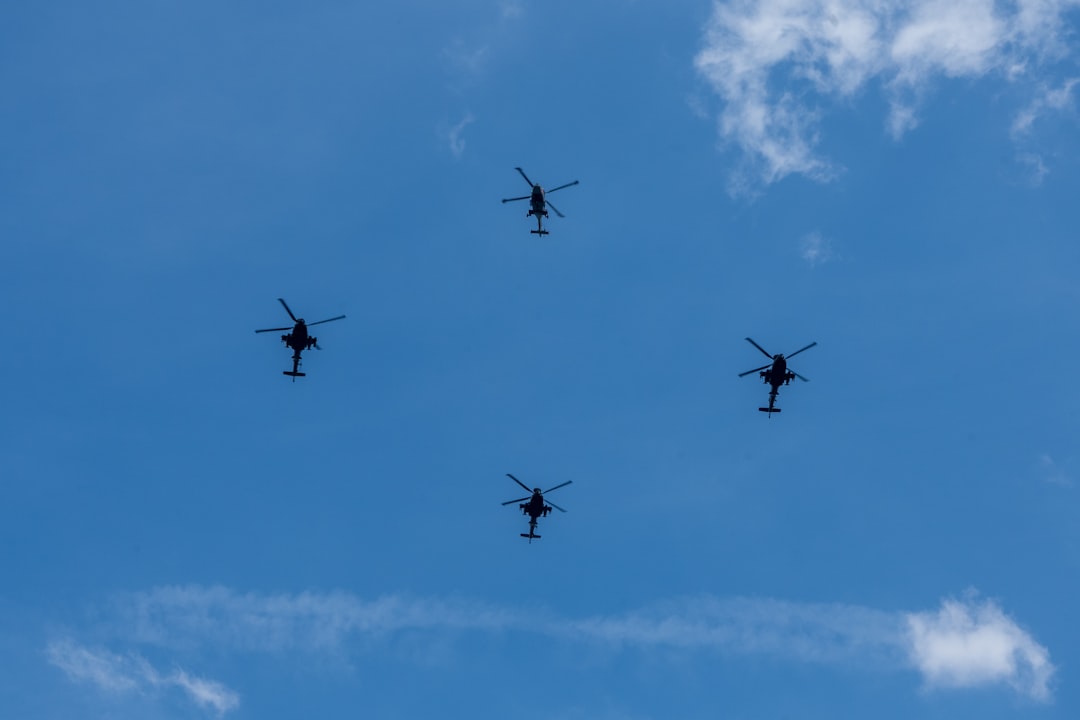
This has been so disruptive because the presence of such capabilities on the battlefield profoundly alters the risk calculus for deploying high-value assets such as tanks, air defense systems, artillery, or helicopters close to the front – a lesson allegedly delivered to the Colombian National Police, who tragically lost at least 12 officers in August this year, reportedly due to an FPV drone attacking their Black Hawk helicopter during an anti-narcotics raid. (As this story notes, the exact cause of the helicopter’s destruction was never confirmed, but nevertheless, drones destroying costly equipment has become a recurring theme.)

Over in Europe, Ukraine has widely integrated these new capabilities down to the lowest echelons of tactical command, but other European defense forces have yet to start adopting this capability at any meaningful scale.

If Europe were to face a Russian invasion today, we would be unprepared to confront an adversary that has thoroughly transformed its military operations through the integration of unmanned technologies.

Transforming our defense forces by implementing unmanned capabilities is therefore critical for European security.

Srdjan Kovacevich is the co-founder and CEO of Orqa, a startup based out of Croatia building first-person-view (FPV) headset technology.

Tags: Orqa FPVSrdjan Kovacevich
Previous Post

Dual-use hydrogen firm PowerUp tops up with another €10M in the tank

Next Post

Rheinmetall and VR-maker Varjo team up to build low-cost, easy-to-deploy training simulators

Srdjan Kovacevic

Srdjan Kovacevic

Related News

Photo by Daniel Romero on Unsplash

Guest Post: Where are Europe’s female defence tech leaders?

byBenjamin Lussert
December 12, 2025

Kraken Technology recently hired Erica Dill-Russell as its new chief commercial officer – a potential “trailblazer“ of a move in the market, given how...

Photo by Anthony Cantin on Unsplash

The Chinese GTG-1002 espionage campaign is an AI security wake-up call

byBen Van Roo
December 12, 2025

In September, a Chinese state-sponsored group ran a cyber-espionage campaign where off-the-shelf artificial intelligence tooling was believed to have performed...

The evolution of state sovereignty and national security in the digital age

byHugo Jammes
December 11, 2025

Over the last two decades, the nature of sovereignty and warfare has been fundamentally transformed by digital technologies and the...

Photo by Eren Demir on Unsplash

Five Months After Launch, UK Defence Innovation is Still Missing in Action

byResilience Media
December 5, 2025

On 1 July 2025, the Ministry of Defence (MOD) launched UK Defence Innovation (UKDI), backed by a £400 million ring-fenced...

Funeral of Dmytro Kotsiubailo in Kyiv (credit)

Killing is the core function of ‘defense technology’

byCharles Eberly von Szecsey
December 2, 2025

I am sure most of us have spent considerable time this year moving through industry conferences where the talk always...

Photo by JESHOOTS.COM on Unsplash

What business school teaches us about Ukraine’s geopolitical chessboard

byResilience Media
December 1, 2025

In business, two parties negotiate when each has something the other wants, even though the value each assigns to what...

Photo by Christian Lue on Unsplash

Europe Doesn’t Need Sovereignty. It Needs Control.

byNicola Sinclair
November 28, 2025

Nationalism is deepening Europe’s fragmentation. Today, defence ministries buy tech like Apple customers: powerful hardware, closed ecosystem, someone else’s rules....

Critical infrastructure is the new front line

byResilience Media
November 24, 2025

Modern conflict is no longer confined to war zones, with technology advances enabling adversaries to reach far beyond border regions....

Load More
Next Post

Rheinmetall and VR-maker Varjo team up to build low-cost, easy-to-deploy training simulators

Photo by Raphael Andres on Unsplash

Report: Nordic defence money is going into space and quantum while the shells come from abroad

Most viewed

UK launches undersea surveillance programme to counter growing Russian threat

Helsing teams up with Kongsberg to boost its space strategy

Quantum Systems closes a €180 million Series C extension, hits a €3 billion valuation

We Are Already Living in a World at War—It’s Time to Act Like It

Can the UK counter Russian laser threats?

When Data Loss Means Lives: HyperBunker Pitches Offline Vault to Militaries

Resilience Media is an independent publication covering the future of defence, security, and resilience. Our reporting focuses on emerging technologies, strategic threats, and the growing role of startups and investors in the defence of democracy.

  • About
  • News
  • Resilence Conference
  • Guest Posts
  • Subscribe
  • Privacy Policy
  • Terms & Conditions

© 2025 Resilience Media

No Result
View All Result
  • About
  • News
  • Resilence Conference
  • Guest Posts
  • Subscribe
  • Privacy Policy
  • Terms & Conditions

© 2025 Resilience Media

This website uses cookies. By continuing to use this website you are giving consent to cookies being used. Visit our Privacy and Cookie Policy.