Nearly a month after Resilience Media broke the news that Frankenburg Technologies had raised more funding, today the Baltics-based startup officially confirmed details: it has closed a Series A of €30 million (around $35 million) led by Plural with participation from SmartCap, the Estonian publicly-funded VC.
Notably, the announcement comes on the 4-year anniversary of Russia’s invasion of Ukraine and the anniversary of Estonia’s independence (Frankenburg has roots in both Estonia and Latvia), as well as another funding round for a another company building interceptors: Tytan Technologies also announced a €30 million fundraise today.
Resilience Media reported in January that Frankenburg, according to details from sources, had raised up to $50 million at a valuation of around $400 million, large numbers for a company had had up to then raised relatively little funding. We also noted in the piece that Plural was likely involved. The difference in numbers could indicate future follow-on funding. We have asked to speak to the CEO later today and will update this piece as more information comes in.
Frankenburg’s goal: 200 missiles per day
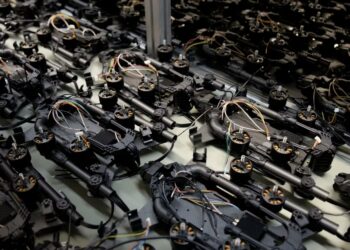
Frankenburg’s big pitch is that it has developed a new class of more affordable missiles, and today it said that the fresh capital will be used to scale production of those systems. Its goal is to establish production facilities in Germany and in the UK (where it has inked a partnership to work with Babcock and others) that can produce 100 missiles each, per day.
Producing 200 missiles daily over an extended period addresses what Frankenburg has identified as a couple of the critical bottlenecks in the European air-defence ecosystem: producing defence systems at scale and speed; and developing production in multiple allied locations, in its case Germany and the UK. Adding in these two, Frankenburg now has a presence in eight countries, including Estonia, Latvia, Lithuania, Denmark, Poland and Ukraine.
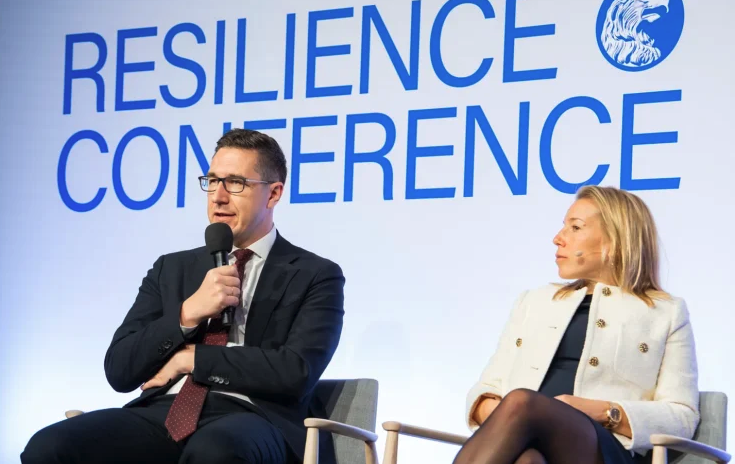
“Europe’s deterrence problem is not just about budgets, it’s about availability,” said Kusti Salm, CEO of Frankenburg Technologies, in a statement. “You cannot deter with systems that are too scarce, too slow to replace, or too expensive to use at scale. Frankenburg was built to restore speed, scale and sustainability to missile defence. This funding allows us to put real industrial capacity behind that mission and build missile systems Europe can actually afford to fire and produce at scale.”
The Mark I short-range drone interceptor is Frankenburg’s flagship product. However, with this investment round, the company hopes to expand its product range to a broader, full-spectrum missile portfolio, to include additional air- and surface-launched capabilities.
Lean production as a UVP
Frankenburg’s value proposition is manufacturing missiles in a cost-efficient manner. The company says that they are able to keep costs down by keeping supply chains short, combining modular manufacturing, commercially available components and rapid qualification cycles.
“In a world where an adversary can deploy tens of thousands of autonomous attack drones, staying safe is not rocket science: defence must be cheap, fast and count in millions of units available,” said Sten Tamkivi, a partner at Plural, in a statement. “Frankenburg is tackling one of Europe’s most urgent defence challenges by building credible deterrence with missiles, at startup speed. The team combines deep defence expertise with a fundamentally different manufacturing mindset, and we believe this approach can have a lasting impact on Europe’s security and industrial resilience.”
Funding a star-studded team
The startup claims that this funding round brings them up to a total of €40 million in investment. Previously, more than €5M at a €160 million valuation had been disclosed in seed funding, indicating that additional funds had been secured quietly between that seed and Series A.
The team is stacked with well-connected individuals, which has helped it open doors.
In addition to being the CEO of Frankenburg, Salm is a director at the NATO Innovation Fund, the alliance’s mega tech investment arm, and previously he was the permanent secretary in Estonia’s Ministry of Defence, among other roles.
And as we noted before, Taavi Madiberk — the CEO and founder of next-generation energy storage/battery startup Skeleton Technologies — is credited as Frankenberg’s sole founder. Frankenburg’s board members and advisors meanwhile include Marko Virkebau, a serial entrepreneur and co-founder of Stargate Hydrogem; Martin Herem, ex-Estonian military commander; and Kuldar Väärsi, founder of Milrem Robotics.