Sunday 8 March, 2026
[email protected]
Resilience Media
  • About
  • News
  • Resilience Conference
    • Resilience Conference Warsaw 2026
    • Resilience Conference Copenhagen 2026
    • Resilience Conference London 2026
  • Guest Posts
    • Author a Post
  • Subscribe
No Result
View All Result
  • About
  • News
  • Resilience Conference
    • Resilience Conference Warsaw 2026
    • Resilience Conference Copenhagen 2026
    • Resilience Conference London 2026
  • Guest Posts
    • Author a Post
  • Subscribe
No Result
View All Result
Resilience Media
No Result
View All Result

Group 14 Technologies is betting on silicon batteries for super fast charging

John BiggsbyJohn Biggs
February 24, 2026
in News
Share on Linkedin

For decades, silicon batteries were a pipe dream. The product, a cross between a standard lithium battery and a form of silicon, has long been a goal for electrical engineers and materials scientists, but various issues, including physical stability, held the technology back.

You Might Also Like

Ukrainian autonomy company The Fourth Law unveils an anti-Shahed drone

Ukraine’s autonomous weapons makers push for industrial scale

MSC got the urgency right. The hard part comes next

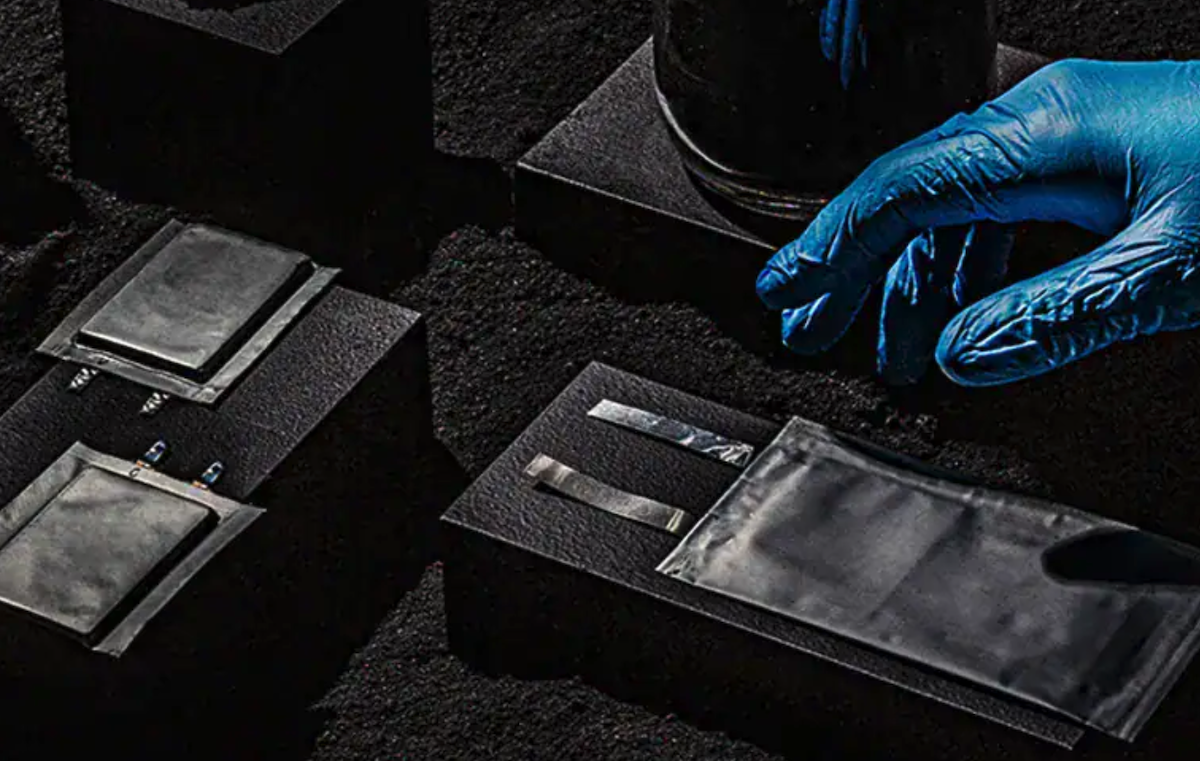
Now, silicon battery company Group 14 is shipping millions of working batteries, a move that could change the face of both civilian and military EVs and mobile devices.

I sat down with Rick Luebbe, CEO of Group 14 Technologies, a company commercializing silicon anode material that replaces graphite in traditional lithium-ion batteries.

“Here at Group 14, we are commercializing silicon battery technology,” Luebbe told me. “We make a silicon carbon composite that replaces graphite in a traditional lithium-ion battery, turning it into a silicon battery, delivering significantly higher energy. And what’s especially exciting is extremely fast charging.”

A silicon battery is a lithium-ion battery that replaces the traditional graphite anode with silicon. When charging, lithium ions move into the anode. In graphite, they slip between carbon layers, which limits how much lithium can be stored. In silicon, they form an alloy with the silicon atoms, allowing far more lithium to be packed into the same space, which increases energy density. The main challenge is that silicon expands dramatically as it absorbs lithium and contracts when it releases it, which can damage the battery over time. In fact, Luebbe noted that older batteries only had a few dozen charge cycles. Modern designs solve this by embedding silicon in a carbon scaffold that stabilizes the material, enabling higher capacity, faster charging, and strong cycle life. Luebbe said that his batteries now offer thousands of cycles.

“We’ve invented this composite with carbon that effectively stabilizes the silicon in a carbon scaffold and allows it to expand and contract without really affecting the rest of the cell,” Luebbe said. “And so we get thousands of cycles, as good, if not better in many cases than traditional graphite.”

“One silicon atom can hold four lithium atoms,” he said. “You get a 10 to 1 improvement in capacity using silicon over graphite, and that’s really what lends to this much higher energy density.”

In practical terms, that means up to 50 percent more energy in the same battery footprint. For EVs, that translates directly into more range. For consumer electronics, it means thinner devices or longer life.

But the more disruptive claim is charging speed.

“We’ve got customers today demonstrating batteries they claim can be charged from 0 to 100 percent in 90 seconds,” Luebbe said. “It’s almost flash charging.”

Ninety seconds sounds like hype until you understand what it does to infrastructure. Faster charge and discharge rates also matter for high-power applications. Luebbe noted that drone takeoff needs a massive battery discharge along with AI servers, which need surges of power to perform difficult calculations. Both of these technologies can be improved with silicon.

“The silicon batteries can respond fast enough and provide that peak shifting required to allow you to not have excess power connected to all your servers,” Luebbe explained.

Then there is the supply chain angle. About 90 percent of battery-grade graphite is processed in China. That creates both economic and security risks. Silicon anodes make it easy for the U.S. and Europe to build their own batteries at scale.

“One ton of our material displaces five tons of Chinese graphite,” Luebbe said. “There’s a really interesting supply chain security play here as well.”

Group 14 is scaling manufacturing in Korea, Washington State, and Germany. Right now, they are building factories where cars are being built. The company has already raised significant capital and is in roughly 20 million mobile phones. The next wave is EVs, aviation, defense, and data infrastructure.

Energy storage has always been a quiet constraint on modern life. Group 14 is betting that silicon removes that constraint. If they are right, the next decade of electrification looks very different from the last.

“When you think about this kind of transformational capability to charge and discharge so quickly, I think it’s going to change the way we do a lot of things with the electrification of everything,” he said.


 

Tags: Batteriesmobilestartups
Previous Post

Frankenburg confirms €30M funding to build more EU-made rockets

Next Post

Germany set to formally announce Stark and Helsing strike-drone contracts this week

John Biggs

John Biggs

John Biggs is an entrepreneur, consultant, writer, and maker. He spent fifteen years as an editor for Gizmodo, CrunchGear, and TechCrunch and has a deep background in hardware startups, 3D printing, and blockchain. His work has also appeared in Men’s Health, Wired, and the New York Times. He has written nine books including the best book on blogging, Bloggers Boot Camp, and a book about the most expensive timepiece ever made, Marie Antoinette’s Watch. He lives in Brooklyn, New York. He runs the Keep Going podcast, a podcast about failure. His goal is to share how even the most confident and successful people had to face adversity.

Related News

Ukrainian autonomy company The Fourth Law unveils an anti-Shahed drone

Ukrainian autonomy company The Fourth Law unveils an anti-Shahed drone

byJohn Biggs
March 6, 2026

Ukraine-based autonomy company The Fourth Law has unveiled Zerov, an autonomous interceptor drone built to engage long-range strike UAVs in...

Ukraine’s autonomous weapons makers push for industrial scale

Ukraine’s autonomous weapons makers push for industrial scale

byLuke Smith
March 6, 2026

In the past five months in Ukraine, Major Maksym Gromov's unit launched 608 autonomous Lupynis drones against Russian adversaries. Four...

asphalt road between trees

MSC got the urgency right. The hard part comes next

byRobin Dechant
March 6, 2026

A few weeks on from the Munich Security Conference, something many of the Resilience Media community no doubt attended, I...

NATO Innovation Fund appoints a president, Ari Kristinn Jónsson

NATO Innovation Fund appoints a president, Ari Kristinn Jónsson

byIngrid Lunden
March 5, 2026

The NATO Innovation Fund, the VC formed out of the strategic alliance of NATO countries that counts most (but not...

SkySafe Wants to Be the Air Traffic Control for Drones

SkySafe partners with major energy sector player to build out drone defence

byJohn Biggs
March 5, 2026

Southern States LLC and SkySafe announced a partnership to integrate real time drone detection and airspace intelligence into Southern States’...

Uforce raises $50M at a $1B+ valuation to build defence tech for Ukraine

Uforce raises $50M at a $1B+ valuation to build defence tech for Ukraine

byIngrid Lunden
March 5, 2026

The United Kingdom and Ukraine look like they may have minted their first defence tech ‘unicorn’. Uforce (stylised ‘UFORCE’) —...

Anthropic, OpenAI, and the new rules of Defence AI

Anthropic, OpenAI, and the new rules of Defence AI

byCarly Pageand1 others
March 3, 2026

Anthropic is facing the prospect of being frozen out of US government work after refusing to relax safeguards on how...

Periphery CEO Toby Wilmington

Periphery and Midgard partner to secure robots against capture and reverse engineering

byPaul Sawers
March 2, 2026

Modern conflict has pushed autonomous machines into some of the most hostile operating environments. Drones are intercepted mid-flight, ground robots...

Load More
Next Post
Europe’s Defence Renaissance Gets a VTOL Boost: STARK Launches AI-Enabled Strike Drone

Germany set to formally announce Stark and Helsing strike-drone contracts this week

Mikolaj Firlej, Aleksander Mokrzycki, and Patrick Schneider-Sikorsky to speak at Resilience Conference Warsaw

Mikolaj Firlej, Aleksander Mokrzycki, and Patrick Schneider-Sikorsky to speak at Resilience Conference Warsaw

Most viewed

InVeris announces fats Drone, an integrated, multi-party drone flight simulator

Twentyfour Industries emerges from stealth with $11.8M for mass-produced drones

Senai exits stealth to help governments harness online video intelligence

Uforce raises $50M at a $1B+ valuation to build defence tech for Ukraine

Harmattan AI raises $200M at a $1.4B valuation from Dassault

Palantir and Ukraine’s Brave1 have built a new AI “Dataroom”

Resilience Media is an independent publication covering the future of defence, security, and resilience. Our reporting focuses on emerging technologies, strategic threats, and the growing role of startups and investors in the defence of democracy.

  • About
  • News
  • Resilence Conference
    • Resilience Conference Copenhagen 2026
    • Resilience Conference Warsaw 2026
    • Resilience Conference 2026
  • Guest Posts
  • Subscribe
  • Privacy Policy
  • Terms & Conditions

© 2026 Resilience Media

No Result
View All Result
  • About
  • News
  • Resilence Conference
    • Resilience Conference Copenhagen 2026
    • Resilience Conference Warsaw 2026
    • Resilience Conference 2026
  • Guest Posts
  • Subscribe
  • Privacy Policy
  • Terms & Conditions

© 2026 Resilience Media

This website uses cookies. By continuing to use this website you are giving consent to cookies being used. Visit our Privacy and Cookie Policy.