Saturday 7 March, 2026
[email protected]
Resilience Media
  • About
  • News
  • Resilience Conference
    • Resilience Conference Warsaw 2026
    • Resilience Conference Copenhagen 2026
    • Resilience Conference London 2026
  • Guest Posts
    • Author a Post
  • Subscribe
No Result
View All Result
  • About
  • News
  • Resilience Conference
    • Resilience Conference Warsaw 2026
    • Resilience Conference Copenhagen 2026
    • Resilience Conference London 2026
  • Guest Posts
    • Author a Post
  • Subscribe
No Result
View All Result
Resilience Media
No Result
View All Result

Tytan raises €30M for drone defence, sources say at a ~€150M valuation

AI-powered interceptors are the necessary B-side to the huge gains made in drone warfare

Ingrid LundenbyIngrid Lunden
February 24, 2026
in News
Share on Linkedin

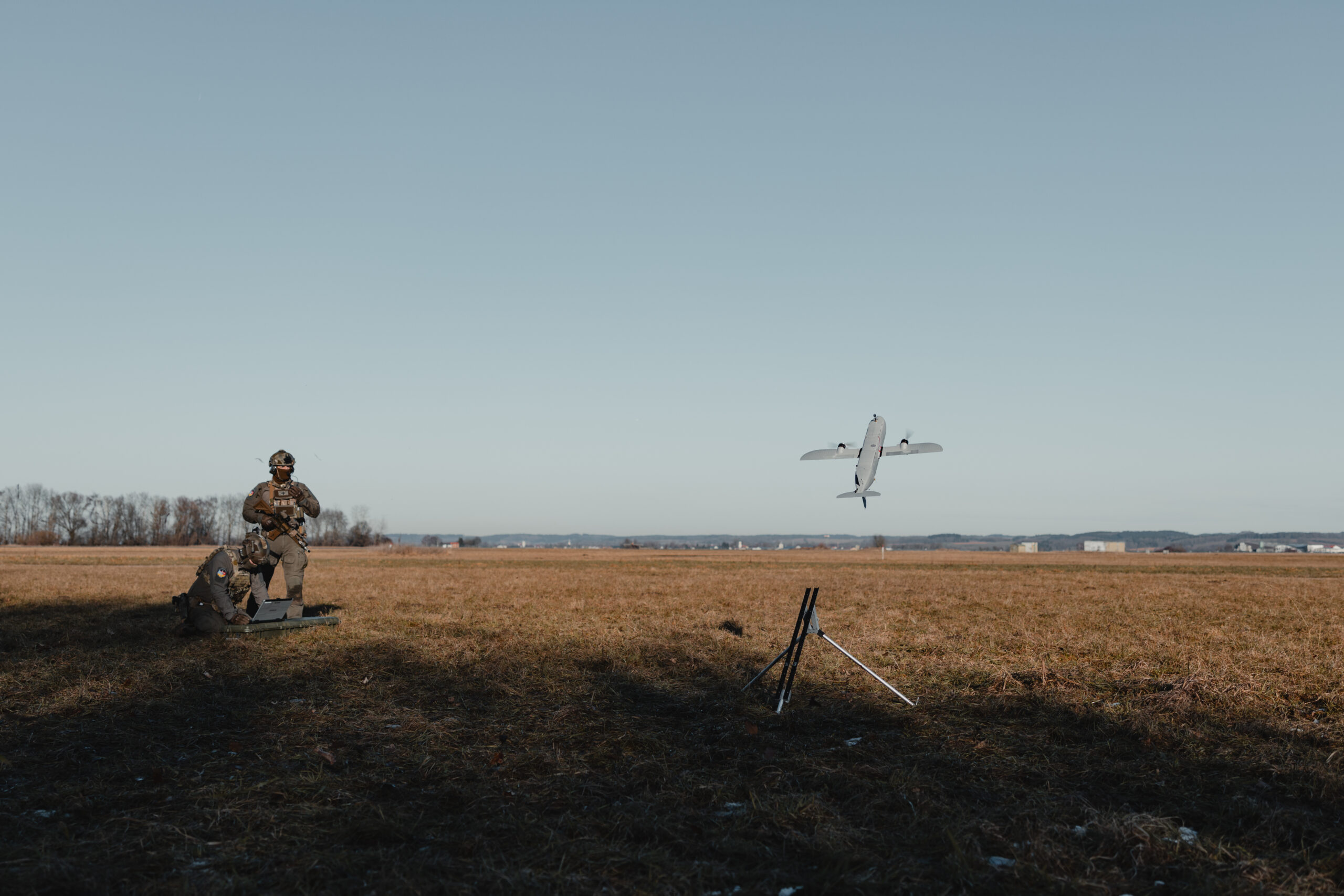
Drones have quickly become a cornerstone of modern warfare, and so has building better tools for those times when drones are used by adversaries. Tytan Technologies, one of the defence tech startups building drone interceptors, is rising to that challenge, and today it’s announcing a Series A of €30 million ($35 million) to expand its business. Sources tell us the round values Tytan just over €150 million (likely around $180 million). 

You Might Also Like

Ukrainian autonomy company The Fourth Law unveils an anti-Shahed drone

Ukraine’s autonomous weapons makers push for industrial scale

MSC got the urgency right. The hard part comes next

Munich-based Tytan said it will use the funding to help scale its manufacturing footprint across Germany and Ukraine, as well as other allied markets; to continue developing the next generation of its hardware, including missiles; and to continue building out its AI technology. Tytan’s system — comprised of software, ground stations and interceptor drones —  targets both UAVs used for reconnaissance and strike drones equipped with weapons. 

Tytan’s funding underscores the ongoing push from technology VCs to seek out and back an array of startups building for defence and related resilience categories. Tytan’s list includes defence-specific VCs alongside traditional tech VCs who are doing more in defence: German private equity firm Armira and the NATO Innovation Fund are co-leading the Series A, with previous backers Visionaries Club, OTB Ventures, Lakestar, Magnetic, D3 and 10x Group participating. Tytan had last raised funding in August 2025, but never disclosed the amount. Now it has confirmed it was €16 million, bringing the total raised now to €46 million.

The deal is significant also because of the climate right now in Europe.

Two weeks ago, at the Munich Security Conference, the overriding themes laid bare where Europe sees itself today geopolitically. The spectres of adversary states like Russia and China, but also the America-first stance of the US these days, are compelling countries to put more focus on their defence than they have since the Second World War. They are doing so at a time when warfare is evolving well beyond guns, tanks, bomber planes and lots of human troops. Meanwhile, Europe (like the rest of the world) is increasingly focused on how make their defences more “resilient”: not just stronger and more modern, but more sovereign and less dependent on third parties. 

Tytan essentially fits all of those briefs: it’s a company building defence technology against the threats of today and tomorrow, and it’s doing that on the ground in Europe. 

“Europe is entering a once-in-a-generation reset in how air defence is designed, produced and deployed,” said co-founders Balazs Nagy and Batuhan Yumurtaci in a statement. “This funding round is all about sustainably building the industrial and technological foundation for a sovereign, AI-enabled air defence architecture made in Europe for Europe.”

It is not the only defence tech startup coming out of an Eastern Flank country to be raising money right now. Frankenburg, a competitor to Tytan in the area of intercepting drones, today confirmed its latest fundraise, also coincidentally for €30 million. We broke the news several weeks ago that Frankenburg had raised funding, at a $400 million valuation.

Why interceptors?

The drone-heavy war in Ukraine and pernicious drone incursions in other parts of Europe have put a spotlight on building better drone defences, and Tytan has been in the eye of that storm. 

Along with Helsing, Stark, Auterion, ARX and many others, it’s been one of the defence tech companies out of Germany that has been very active in supporting Ukraine in its war against Russia. And as a company building AI-powered tooling, that experience is giving Tytan valuable data to improve its software systems as well as battle-test its hardware. It said today that it has supplied “thousands” of interceptor systems to militaries. 

Tytan has hit some other notable external milestones in the last several months. In October, it announced a partnership with US defence company Axon to develop “drone wall” technology; and in the same month it also revealed that it had signed a major deal with the German government, reportedly worth hundreds of millions of euros, to supply the Bundeswehr (Germany’s armed forces) with anti-drone kinetic defence systems. 

The initial agreement with the Bundeswehr covers only “class 2” drones weighing between 150 kg and 600 kg. It’s part of a broader push to bring more startup-built tech to the military in the country: other major deals include contracts with Stark and Helsing, due to be approved officially this week.

It’s not clear meanwhile what the status is of the Axon drone wall deal. Neither company is talking about that project much at the moment, and more generally drone wall investments and larger strategies by states are still in very early stages and undecided — including whether or not some countries even have the appetite for the investment that such a wall might need. 

But the presence of NATO in this round by way of NIF is a strong sign of how one approach is getting an endorsement.

“TYTAN’s air defence technology addresses an urgent capability gap for Ukraine and Allies alike, enabling them to defend their airspace, military bases and critical infrastructure against drone incursions cost-efficiently and at scale,” said Patrick Schneider-Sikorsky, a partner at NIF. “NIF is proud to partner with the TYTAN team to defend the airspace across the NATO Alliance.”
Tags: defence techDronesGermanyinterceptorsmunichTytanUkraine
Previous Post

IQM, the quantum startup from Finland, plans US listing on Nasdaq at $1.8B valuation

Next Post

Frankenburg confirms €30M funding to build more EU-made rockets

Ingrid Lunden

Ingrid Lunden

Ingrid is an editor and writer. Born in Moscow, brought up in the U.S. and now based out of London, from February 2012 to May 2025, she worked at leading technology publication TechCrunch, initially as a writer and eventually as one of TechCrunch’s managing editors, leading the company’s international editorial operation and working as part of TechCrunch’s senior leadership team. She speaks Russian, French and Spanish and takes a keen interest in the intersection of technology with geopolitics.

Related News

Ukrainian autonomy company The Fourth Law unveils an anti-Shahed drone

Ukrainian autonomy company The Fourth Law unveils an anti-Shahed drone

byJohn Biggs
March 6, 2026

Ukraine-based autonomy company The Fourth Law has unveiled Zerov, an autonomous interceptor drone built to engage long-range strike UAVs in...

Ukraine’s autonomous weapons makers push for industrial scale

Ukraine’s autonomous weapons makers push for industrial scale

byLuke Smith
March 6, 2026

In the past five months in Ukraine, Major Maksym Gromov's unit launched 608 autonomous Lupynis drones against Russian adversaries. Four...

asphalt road between trees

MSC got the urgency right. The hard part comes next

byRobin Dechant
March 6, 2026

A few weeks on from the Munich Security Conference, something many of the Resilience Media community no doubt attended, I...

NATO Innovation Fund appoints a president, Ari Kristinn Jónsson

NATO Innovation Fund appoints a president, Ari Kristinn Jónsson

byIngrid Lunden
March 5, 2026

The NATO Innovation Fund, the VC formed out of the strategic alliance of NATO countries that counts most (but not...

SkySafe Wants to Be the Air Traffic Control for Drones

SkySafe partners with major energy sector player to build out drone defence

byJohn Biggs
March 5, 2026

Southern States LLC and SkySafe announced a partnership to integrate real time drone detection and airspace intelligence into Southern States’...

Uforce raises $50M at a $1B+ valuation to build defence tech for Ukraine

Uforce raises $50M at a $1B+ valuation to build defence tech for Ukraine

byIngrid Lunden
March 5, 2026

The United Kingdom and Ukraine look like they may have minted their first defence tech ‘unicorn’. Uforce (stylised ‘UFORCE’) —...

Anthropic, OpenAI, and the new rules of Defence AI

Anthropic, OpenAI, and the new rules of Defence AI

byCarly Pageand1 others
March 3, 2026

Anthropic is facing the prospect of being frozen out of US government work after refusing to relax safeguards on how...

Periphery CEO Toby Wilmington

Periphery and Midgard partner to secure robots against capture and reverse engineering

byPaul Sawers
March 2, 2026

Modern conflict has pushed autonomous machines into some of the most hostile operating environments. Drones are intercepted mid-flight, ground robots...

Load More
Next Post
Frankenburg has raised up to $50M at a $400M valuation, say sources

Frankenburg confirms €30M funding to build more EU-made rockets

Group 14 Technologies is betting on silicon batteries for super fast charging

Group 14 Technologies is betting on silicon batteries for super fast charging

Most viewed

InVeris announces fats Drone, an integrated, multi-party drone flight simulator

Twentyfour Industries emerges from stealth with $11.8M for mass-produced drones

Senai exits stealth to help governments harness online video intelligence

Uforce raises $50M at a $1B+ valuation to build defence tech for Ukraine

Harmattan AI raises $200M at a $1.4B valuation from Dassault

Palantir and Ukraine’s Brave1 have built a new AI “Dataroom”

Resilience Media is an independent publication covering the future of defence, security, and resilience. Our reporting focuses on emerging technologies, strategic threats, and the growing role of startups and investors in the defence of democracy.

  • About
  • News
  • Resilence Conference
    • Resilience Conference Copenhagen 2026
    • Resilience Conference Warsaw 2026
    • Resilience Conference 2026
  • Guest Posts
  • Subscribe
  • Privacy Policy
  • Terms & Conditions

© 2026 Resilience Media

No Result
View All Result
  • About
  • News
  • Resilence Conference
    • Resilience Conference Copenhagen 2026
    • Resilience Conference Warsaw 2026
    • Resilience Conference 2026
  • Guest Posts
  • Subscribe
  • Privacy Policy
  • Terms & Conditions

© 2026 Resilience Media

This website uses cookies. By continuing to use this website you are giving consent to cookies being used. Visit our Privacy and Cookie Policy.