Wednesday 17 December, 2025
Resilience Media
  • About
  • News
  • Resilience Conference
  • Guest Posts
    • Author a Post
  • Subscribe
No Result
View All Result
  • About
  • News
  • Resilience Conference
  • Guest Posts
    • Author a Post
  • Subscribe
No Result
View All Result
Resilience Media
No Result
View All Result

Huless: The Ukrainian Startup Reinventing Battlefield Communication

John BiggsbyJohn Biggs
March 10, 2025
in News, Startups
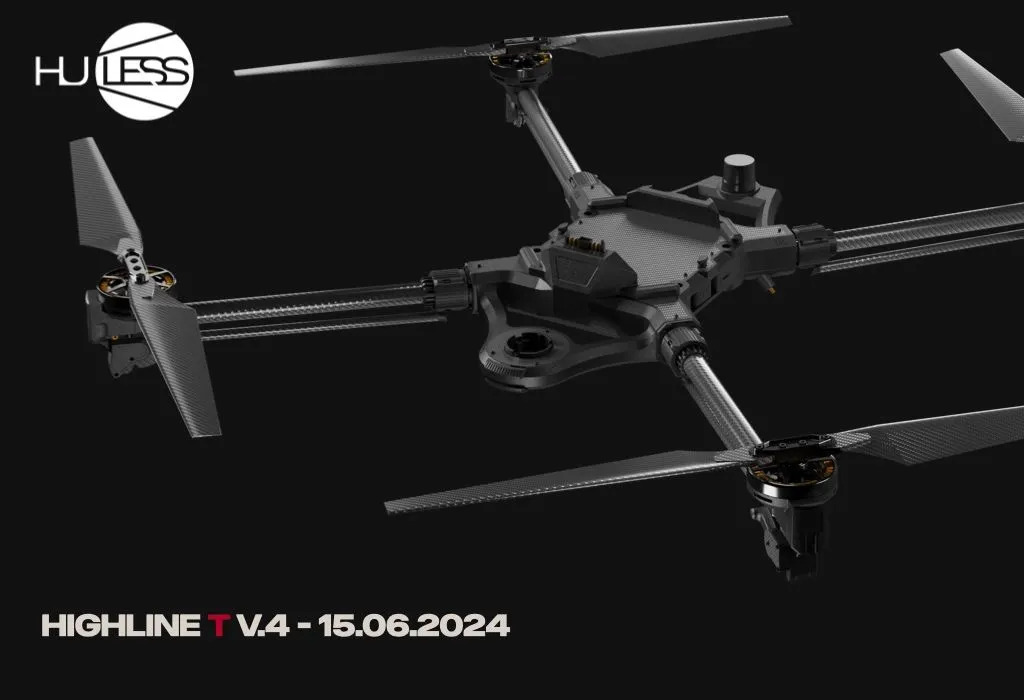
Highline-T V.4 via Huless

Highline-T V.4 via Huless

Share on Linkedin

War changes everything. It forces innovation, speeds up development cycles, and pushes determined founders to solve problems that bureaucracies can’t. That drive to expand and change is exactly what keeps the founders of Huless from losing their way as they build the next generation of tethered UAVs for battlefield communications.

You Might Also Like

CHAOS Industries joins U.S. Army G‑TEAD Marketplace

Quantum Systems teams up with Frontline to mass-produce Ukrainian combat drones in Germany

Skana wants to shore up coastal defence with amphibious vessel for shallow waters

Founded by Taras Semeniuk, a former dentist who pivoted into defence tech after Russia’s invasion of Ukraine, Huless is building drones that keep soldiers in the field connected. Their drones function as variable-height antennas, giving troops a persistent, stable signal in environments where traditional comms fail. In modern warfare, where electronic warfare (EW) is as critical as firepower, that’s a game-changer.

Modern war isn’t just about firepower. It’s about signal dominance. In Ukraine, drones, EW systems, and autonomous vehicles are reshaping the battlefield. But there’s a problem: connectivity. Controlling UGVs (unmanned ground vehicles), UAVs, and even infantry communication depends on a stable network.

The Tech: UAVs That Stay in the Air

Tethered drones might seem like an oxymoron but there’s a good reason to keep your drone connected to the ground. For example, Huless drones connect to a power source on the ground via a cable, allowing them to stay airborne indefinitely. The UAV platform acts as a signal relay, ensuring continuous connectivity for troops, ground vehicles, and command centres. The upcoming Highline-S model pushes this further, offering reconnaissance capabilities with endurance levels unheard of in typical drone systems.

“Our Highline UAV platform serves as a scalable solution that can integrate with existing battlefield networks,” said Semeniuk. “We are also working on Highline-S, a reconnaissance drone with unprecedented endurance, further enhancing battlefield situational awareness.”

Unlike consumer or military drones with limited battery life, tethered UAVs don’t have to land every 30 minutes. They create persistent battlefield networks, filling in the gaps where traditional radio signals are jammed or disrupted. In short, Huless can blanket the sky with network connectivity indefinitely.

Huless is obviously still a startup but they’re delivering battlefield-ready tech to the front. Further, they raised a total of $1.1 million, an impressive sum for a crowded market. This includes a $150,000 in grants from Brave1, Ukraine’s defense innovation initiative.

For a startup operating in an active war zone, these numbers signal something important: demand is real. Ukraine’s military needs better battlefield communication now, not five years from now.

Huless provides a simple but powerful solution: keep the signal in the air. Their tethered UAVs ensure troops, drones, and autonomous systems stay connected—even in the middle of a full-scale electronic warfare assault.

From Dentistry to Defence Tech

Semeniuk’s journey is straight out of a thriller. In 2022, while working as a dentist, he started thinking about remotely controlled pickup trucks—vehicles that could evacuate wounded soldiers or deliver supplies without risking human lives. The problem? Communication range. Controlling an unmanned vehicle over long distances required a stable, uninterrupted signal, something that didn’t exist on the battlefield.

That’s when he pivoted. The obvious solution was a drone-based signal relay, but standard drones had a fatal flaw: battery life. That led Semeniuk and his team to tethered UAVs, a proven technology abroad but nonexistent in Ukraine’s military landscape. Seeing the urgent need, they built their own.

What’s Next?

Huless isn’t just building drones; it’s building a battlefield communication ecosystem. The company is expanding fast, with plans to scale to hundreds of units and build new products for next-gen ISR (intelligence, surveillance, reconnaissance) UAVs. They also want to move out of Ukraine and into NATO markets and build a UK-based R&D hub to maintain defense system compatibility.

Semeniuk knows every second counts when it comes to growth.

“We don’t have the luxury of time. The battlefield is evolving every day, and we have to be faster than the enemy,” he said.

For now, Huless is focused on winning the war at home. But as NATO allies watch Ukraine’s tech-driven battlefield transformation, expect startups like this to reshape military technology far beyond Eastern Europe. The future of war is being built in Ukraine, and Huless plays a big part.

-John Biggs, Resilience Media

Tags: HulessTaras SemeniukUkraine
Previous Post

The Power of Private Initiative in Defence Tech should be Europe’s top import from Ukraine today

Next Post

The Role of Technology in Demining Ukraine: A Critical Path to Recovery

John Biggs

John Biggs

John Biggs is an entrepreneur, consultant, writer, and maker. He spent fifteen years as an editor for Gizmodo, CrunchGear, and TechCrunch and has a deep background in hardware startups, 3D printing, and blockchain. His work has also appeared in Men’s Health, Wired, and the New York Times. He has written nine books including the best book on blogging, Bloggers Boot Camp, and a book about the most expensive timepiece ever made, Marie Antoinette’s Watch. He lives in Brooklyn, New York. He runs the Keep Going podcast, a podcast about failure. His goal is to share how even the most confident and successful people had to face adversity.

Related News

CHAOS Industries joins U.S. Army G‑TEAD Marketplace

byJohn Biggs
December 16, 2025

CHAOS Industries says it has been added to the U.S. Army’s Global Tactical Edge Acquisition Directorate, or G-TEAD, Marketplace after...

Quantum Systems teams up with Frontline to mass-produce Ukrainian combat drones in Germany

byCarly Page
December 15, 2025

On the heels of raising €180 million earlier in December, German drone maker Quantum Systems has kicked off a new manufacturing operation...

The Alligator

Skana wants to shore up coastal defence with amphibious vessel for shallow waters

byPaul Sawers
December 15, 2025

In a year when the Baltic has turned into a geopolitical house of mirrors, with Russian “shadow fleet” tankers slipping through...

Arondite and Babcock partner to move the British Royal Navy closer to a autonomous fleet

byJohn Biggs
December 11, 2025

Arondite and Babcock have partnered to bring autonomy into the Royal Navy’s day to day operations. The two UK companies have agreed a...

Auterion demonstrates a multi-manufacturer drone strike under real conditions

byJohn Biggs
December 11, 2025

Munich-based Auterion ran what it calls the world’s first multi-manufacturer swarm strike with both FPV munitions and fixed-wing drones working as a...

Helsing teams up with Kongsberg to boost its space strategy

byIngrid Lunden
December 10, 2025

Defence startups that want to increase their chances of winning major government tenders are teaming up with primes. Today, Helsing...

No Anduril is an island: US defence unicorn teams with GKN Aerospace on the Isle of Wight

byIngrid Lunden
December 10, 2025

Anduril — the defence startup valued at over $30 billion earlier this year — has made a big push to position itself not...

Nu Quantum lands record $60M to build UK’s first scalable quantum-networking platform

byCarly Page
December 10, 2025

Cambridge-based Nu Quantum — which develops photonic technology used in quantum computing architectures — has secured a landmark $60 million in Series...

Load More
Next Post
Photo by Olga Subach on Unsplash

The Role of Technology in Demining Ukraine: A Critical Path to Recovery

Photo by Christian Lue on Unsplash

A sleeping Europe awakens

Most viewed

UK launches undersea surveillance programme to counter growing Russian threat

Helsing teams up with Kongsberg to boost its space strategy

Quantum Systems closes a €180 million Series C extension, hits a €3 billion valuation

We Are Already Living in a World at War—It’s Time to Act Like It

Can the UK counter Russian laser threats?

Inside the drone revolution: How war has changed and what that means for modern armies

Resilience Media is an independent publication covering the future of defence, security, and resilience. Our reporting focuses on emerging technologies, strategic threats, and the growing role of startups and investors in the defence of democracy.

  • About
  • News
  • Resilence Conference
  • Guest Posts
  • Subscribe
  • Privacy Policy
  • Terms & Conditions

© 2025 Resilience Media

No Result
View All Result
  • About
  • News
  • Resilence Conference
  • Guest Posts
  • Subscribe
  • Privacy Policy
  • Terms & Conditions

© 2025 Resilience Media

This website uses cookies. By continuing to use this website you are giving consent to cookies being used. Visit our Privacy and Cookie Policy.