Tuesday 20 January, 2026
[email protected]
Resilience Media
  • About
  • News
  • Resilience Conference
  • Guest Posts
    • Author a Post
  • Subscribe
No Result
View All Result
  • About
  • News
  • Resilience Conference
  • Guest Posts
    • Author a Post
  • Subscribe
No Result
View All Result
Resilience Media
No Result
View All Result

Huless: The Ukrainian Startup Reinventing Battlefield Communication

John BiggsbyJohn Biggs
March 10, 2025
in News, Startups
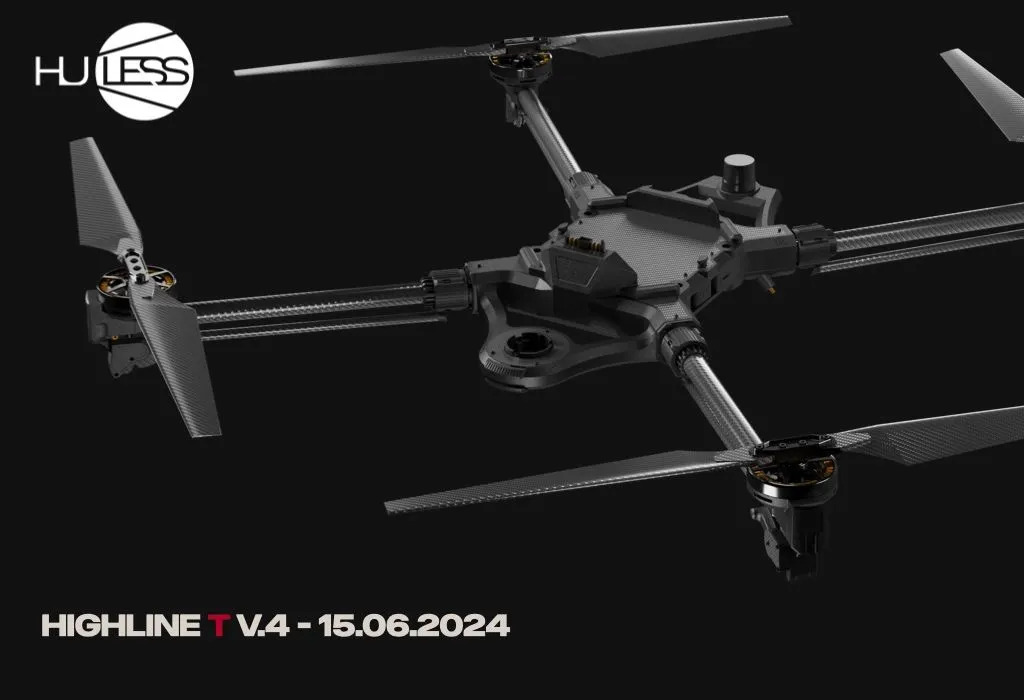
Highline-T V.4 via Huless

Highline-T V.4 via Huless

Share on Linkedin

War changes everything. It forces innovation, speeds up development cycles, and pushes determined founders to solve problems that bureaucracies can’t. That drive to expand and change is exactly what keeps the founders of Huless from losing their way as they build the next generation of tethered UAVs for battlefield communications.

You Might Also Like

Auterion conducts live fire swarm drone strike test

Palantir and Ukraine’s Brave1 have built a new AI “Dataroom”

Dominion Dynamics raises $15M to build a new arctic defence prime in Canada

Founded by Taras Semeniuk, a former dentist who pivoted into defence tech after Russia’s invasion of Ukraine, Huless is building drones that keep soldiers in the field connected. Their drones function as variable-height antennas, giving troops a persistent, stable signal in environments where traditional comms fail. In modern warfare, where electronic warfare (EW) is as critical as firepower, that’s a game-changer.

Modern war isn’t just about firepower. It’s about signal dominance. In Ukraine, drones, EW systems, and autonomous vehicles are reshaping the battlefield. But there’s a problem: connectivity. Controlling UGVs (unmanned ground vehicles), UAVs, and even infantry communication depends on a stable network.

The Tech: UAVs That Stay in the Air

Tethered drones might seem like an oxymoron but there’s a good reason to keep your drone connected to the ground. For example, Huless drones connect to a power source on the ground via a cable, allowing them to stay airborne indefinitely. The UAV platform acts as a signal relay, ensuring continuous connectivity for troops, ground vehicles, and command centres. The upcoming Highline-S model pushes this further, offering reconnaissance capabilities with endurance levels unheard of in typical drone systems.

“Our Highline UAV platform serves as a scalable solution that can integrate with existing battlefield networks,” said Semeniuk. “We are also working on Highline-S, a reconnaissance drone with unprecedented endurance, further enhancing battlefield situational awareness.”

Unlike consumer or military drones with limited battery life, tethered UAVs don’t have to land every 30 minutes. They create persistent battlefield networks, filling in the gaps where traditional radio signals are jammed or disrupted. In short, Huless can blanket the sky with network connectivity indefinitely.

Huless is obviously still a startup but they’re delivering battlefield-ready tech to the front. Further, they raised a total of $1.1 million, an impressive sum for a crowded market. This includes a $150,000 in grants from Brave1, Ukraine’s defense innovation initiative.

For a startup operating in an active war zone, these numbers signal something important: demand is real. Ukraine’s military needs better battlefield communication now, not five years from now.

Huless provides a simple but powerful solution: keep the signal in the air. Their tethered UAVs ensure troops, drones, and autonomous systems stay connected—even in the middle of a full-scale electronic warfare assault.

From Dentistry to Defence Tech

Semeniuk’s journey is straight out of a thriller. In 2022, while working as a dentist, he started thinking about remotely controlled pickup trucks—vehicles that could evacuate wounded soldiers or deliver supplies without risking human lives. The problem? Communication range. Controlling an unmanned vehicle over long distances required a stable, uninterrupted signal, something that didn’t exist on the battlefield.

That’s when he pivoted. The obvious solution was a drone-based signal relay, but standard drones had a fatal flaw: battery life. That led Semeniuk and his team to tethered UAVs, a proven technology abroad but nonexistent in Ukraine’s military landscape. Seeing the urgent need, they built their own.

What’s Next?

Huless isn’t just building drones; it’s building a battlefield communication ecosystem. The company is expanding fast, with plans to scale to hundreds of units and build new products for next-gen ISR (intelligence, surveillance, reconnaissance) UAVs. They also want to move out of Ukraine and into NATO markets and build a UK-based R&D hub to maintain defense system compatibility.

Semeniuk knows every second counts when it comes to growth.

“We don’t have the luxury of time. The battlefield is evolving every day, and we have to be faster than the enemy,” he said.

For now, Huless is focused on winning the war at home. But as NATO allies watch Ukraine’s tech-driven battlefield transformation, expect startups like this to reshape military technology far beyond Eastern Europe. The future of war is being built in Ukraine, and Huless plays a big part.

-John Biggs, Resilience Media

Tags: HulessTaras SemeniukUkraine
Previous Post

The Power of Private Initiative in Defence Tech should be Europe’s top import from Ukraine today

Next Post

The Role of Technology in Demining Ukraine: A Critical Path to Recovery

John Biggs

John Biggs

John Biggs is an entrepreneur, consultant, writer, and maker. He spent fifteen years as an editor for Gizmodo, CrunchGear, and TechCrunch and has a deep background in hardware startups, 3D printing, and blockchain. His work has also appeared in Men’s Health, Wired, and the New York Times. He has written nine books including the best book on blogging, Bloggers Boot Camp, and a book about the most expensive timepiece ever made, Marie Antoinette’s Watch. He lives in Brooklyn, New York. He runs the Keep Going podcast, a podcast about failure. His goal is to share how even the most confident and successful people had to face adversity.

Related News

Rheinmetall and Auterion Announce New NATO-Wide Military Hardware-Software Partnership

Auterion conducts live fire swarm drone strike test

byJohn Biggs
January 20, 2026

Munich- and Virginia-based Auterion says it has completed what it describes as a first for the small drone space in...

blue and yellow striped country flag

Palantir and Ukraine’s Brave1 have built a new AI “Dataroom”

byIngrid Lunden
January 20, 2026

Palantir, the US data analytics giant, has been a regular presence in Ukraine helping with its defence against Russia since...

us a flag on pole near snow covered mountain

Dominion Dynamics raises $15M to build a new arctic defence prime in Canada

byIngrid Lunden
January 19, 2026

The US has become a somewhat unpredictable neighbour to Canada, with President Trump’s threats of annexation and spiking tariffs looming...

Twentyfour Industries emerges from stealth with $11.8M for mass-produced drones

Twentyfour Industries emerges from stealth with $11.8M for mass-produced drones

byIngrid Lunden
January 19, 2026

Make way for another drone startup in the European defence tech ecosystem. Twentyfour Industries is today emerging from stealth armed...

Power outages and small checks: The perils of being a VC in Kyiv

Power outages and small checks: The perils of being a VC in Kyiv

byJohn Biggs
January 16, 2026

When I called Sasha Yatsenko, the power had just cut out. No sirens, no warning, just a few minutes of...

Equal1 Wants Quantum to Be as Simple as CPUs and GPUs — and It’s Raised $60m to Prove It

Equal1 Wants Quantum to Be as Simple as CPUs and GPUs — and It’s Raised $60m to Prove It

byFiona Alston
January 16, 2026

Equal1, an Irish quantum semiconductor company announced this week it had raised $60 million to fuel the next stage of...

pink and purple led light

DTCP unveils €500m ‘Project Liberty’ fund to back European defence tech

byCarly Page
January 16, 2026

DTCP has launched a €500 million fund dedicated to defence, security, and resilience technologies, marking what it says is Europe’s...

Weekly Digest: From the living room to the war room at CES 2026

Weekly Digest: From the living room to the war room at CES 2026

byLeslie Hitchcock
January 15, 2026

Good afternoon from the team at Resilience Media. This is Issue 54 of our weekly newsletter, which you can subscribe...

Load More
Next Post
The Role of Technology in Demining Ukraine: A Critical Path to Recovery

The Role of Technology in Demining Ukraine: A Critical Path to Recovery

A sleeping Europe awakens

A sleeping Europe awakens

Most viewed

InVeris announces fats Drone, an integrated, multi-party drone flight simulator

Harmattan AI raises $200M at a $1.4B valuation from Dassault

Hydrosat raises $60M for its thermal satellite imaging tech

Defense Unicorns lives up to its name: $136M round lifts valuation past $1B

Twentyfour Industries emerges from stealth with $11.8M for mass-produced drones

Terra Industries raises $12M to become ‘Africa’s first neo-prime’

Resilience Media is an independent publication covering the future of defence, security, and resilience. Our reporting focuses on emerging technologies, strategic threats, and the growing role of startups and investors in the defence of democracy.

  • About
  • News
  • Resilence Conference
  • Guest Posts
  • Subscribe
  • Privacy Policy
  • Terms & Conditions

© 2026 Resilience Media

No Result
View All Result
  • About
  • News
  • Resilence Conference
  • Guest Posts
  • Subscribe
  • Privacy Policy
  • Terms & Conditions

© 2026 Resilience Media

This website uses cookies. By continuing to use this website you are giving consent to cookies being used. Visit our Privacy and Cookie Policy.