
Wednesday 14 January, 2026
[email protected]
Resilience Media
  • About
  • News
  • Resilience Conference
  • Guest Posts
    • Author a Post
  • Subscribe
No Result
View All Result
  • About
  • News
  • Resilience Conference
  • Guest Posts
    • Author a Post
  • Subscribe
No Result
View All Result
Resilience Media
No Result
View All Result

Lithuania declares state of emergency, calls balloon and drone incursions ‘hybrid attack’

After incursions of 600 balloons and 200 drones from Belarus in this year alone, the decree opens the door for military intervention

Julia GiffordbyJulia Gifford
December 9, 2025
in News
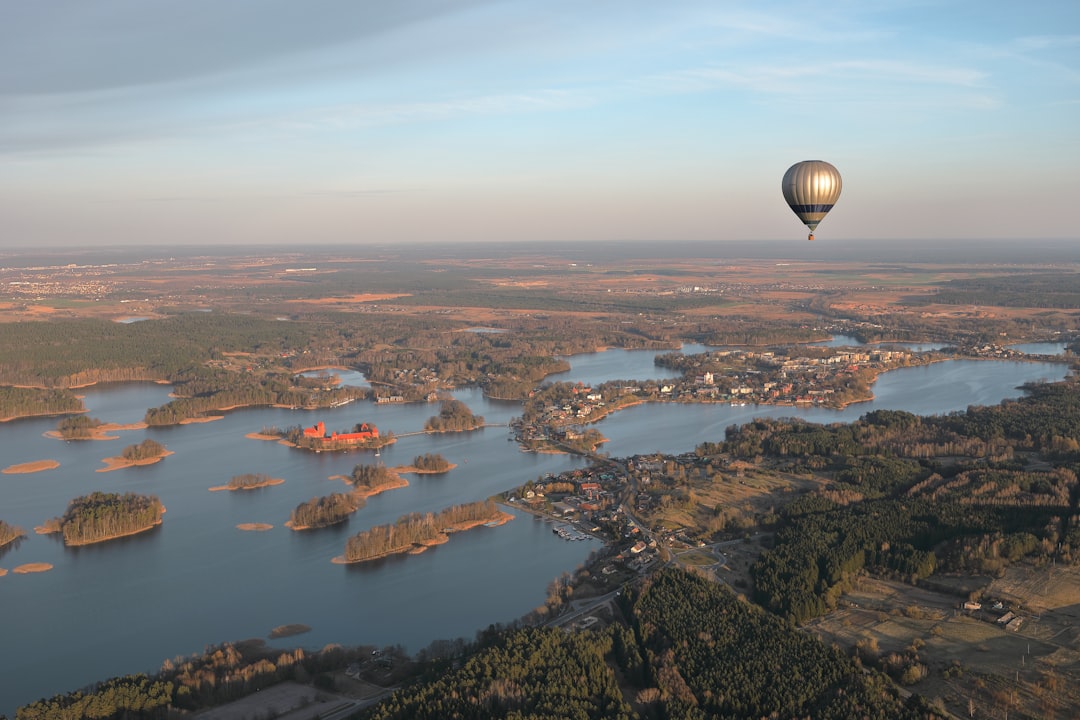
Photo by Maksim Shutov on Unsplash

Photo by Maksim Shutov on Unsplash

Share on Linkedin

The Lithuanian government declared a national state of emergency on Tuesday in response to a sharp increase in balloon and drone incursions from Belarus, to the tune of more than two incursions per day. The declaration potentially gives the military a hand in managing the situation alongside the country’s ministry of the interior, underscoring rising geopolitical tensions across the region.

You Might Also Like

CES isn’t just consumer tech anymore

Tech champion Mykhailo Fedorov named new defence minister of Ukraine

Defense Unicorns lives up to its name: $136M round lifts valuation past $1B

Up to now, the majority of the airborne devices appear to have carried no more than contraband cigarettes, but their significance goes beyond tax avoidance. The set-up has wreaked havoc on air traffic, and it potentially paves the way to send more dangerous and nefarious items over the border.

Lithuanian Prime Minister Inga Rugienenė, European Commission President Ursula von der Leyen, and others have gone so far as to start describing the incursions a form of “hybrid attack.”

In this year alone, over 600 balloons and 200 drones have been launched from the Belarus border so far, causing Vilnius International Airport to close and divert more than 300 flights. It was this plus the larger security implications that led to the state of emergency, said officials.

“The emergency was declared because of disruptions to civil aviation and because of national security concerns,” said Interior Minister Vladislavas Kondratovičius.

On the heels of the declaration, the government has now submitted a request to the Saeimas (parliament) to allow the military to join efforts in addressing the incursions.

In the Baltic state, border issues are under the jurisdiction of the Ministry of the Interior, which does not have a mandate for military intervention. According to Reuters, if the government gets the nod on the request, the army would be able to limit access to a territory; to stop and search vehicles; to perform checks on people, their documents and their belongings; and to detain those resisting or suspected of crimes.

The state of emergency is a dramatic but unsurprising start for Minister for Defence, Robertas Kaunas.

When he was appointed to the role less than 30 days ago, it came amidst a moment of political turmoil – the current Prime Minister came to power at the end of September after a vote of no-confidence in the previous government. Alongside that, the situation with the balloons and drones was well-known, with politicians and others already beating the drum for a stronger response. Declaring a state of emergency to get the military involved, therefore, is a signal from the government that it’s taking the situation seriously and will respond accordingly.

Yet it’s also being done in concert with wider authorities. The government reportedly consulted both with EU and NATO officials before making the call.

The balloons carrying contraband cigarettes each have a weight capacity of 50kg, and the government has described their presence as a “deliberate act of disruption” on the part of Moscow-influenced Belarus.

In a previous conversation with Resilience Media, defence tech investor and advisor Rokas Tamošiūnas pointed out that while the balloons are currently carrying cigarettes, the concern is that they could be swapped out for a more sinister payload.

Several countries across Europe have seen a rise in drone and balloon incursions, particularly in the wake of Russia’s invasion of Ukraine and escalating tensions in the region. In addition to Lithuania, drones and balloons have been spotted in countries that share a border with Russia and its allies such as Poland, Latvia, Estonia, and Finland; as well as in European countries beyond that periphery, including Belgium, Norway and Germany.

Yet to date, Lithuania is the only EU or NATO country to have declared a state of emergency over the balloon and drone incursions.

Part of the reason may be due to the sheer number of disruptions in Lithuania’s airspace. The combined number of drones and balloons totals more than 800 so far for 2025. That works out to more than two per day on average.

We have reached out to Lithuania’s Ministry of Defence for more comment on what comes next. So far, it has referred our questions to the Ministry of the Interior.

One small silver lining for the technology community in all this is that the airspace disruptions have prompted the MoD to call for innovative proposals to combat the balloon incursions. A total of €1M was made available for businesses to propose and prototype solutions. Currently, no solution yet has been made public.

Resilience Media will update this story as we learn more.

Tags: Lithuania
Previous Post

Anaphite targets cleaner battery production for with new UK government funding

Next Post

Nu Quantum lands record $60M to build UK’s first scalable quantum-networking platform

Julia Gifford

Julia Gifford

Julia Gifford is a Canadian-Latvian writer and communicator, a tech advocate who gets excited about telling the world about Europe’s tech excellence and impactful initiatives from the region. She has recently published her first book, Treasures of Latvia, and has previously written for Tech.eu, Labs of Latvia, and more.

Related News

CES isn’t just consumer tech anymore

byJohn Biggs
January 14, 2026

For decades, the Consumer Electronics Show has emphasized (as you might guess by the name) the consumer side of things....

Defence Tech Valley 2025: Kicking Around Military Innovation at a Football Pitch

Tech champion Mykhailo Fedorov named new defence minister of Ukraine

byIngrid Lundenand1 others
January 14, 2026

Ukraine on Wednesday made a significant shift in its leadership that signals just how central technology is to the country...

Defense Unicorns lives up to its name: $136M round lifts valuation past $1B

Defense Unicorns lives up to its name: $136M round lifts valuation past $1B

byCarly Page
January 13, 2026

Defense Unicorns, the US startup that builds environments for defence and other industries to build and use open source and...

Touchwaves' founders Martin Romero and Charlotte Kjellander

Touchwaves brings wearable haptics to the military cockpit

byPaul Sawers
January 13, 2026

From fighter jet cockpits to surgical theaters, humans remain a critical point of failure in high-stress, high-stakes environments. Cognitive overload, physiological...

yellow electric sign

Berlin power grid attack underscores fragility of Europe’s critical networks

byCarly Page
January 12, 2026

Berlin spent days in the dark earlier this month after an arson attack crippled part of its power grid, marking...

white and black airplane flying under blue sky

MoD weighs £20M laser investment for UK air defences

byCarly Page
January 12, 2026

The Ministry of Defence is exploring whether laser weapons could bolster UK air defences, as officials look at new ways...

Harmattan AI raises $200M at a $1.4B valuation from Dassault

Harmattan AI raises $200M at a $1.4B valuation from Dassault

byIngrid Lunden
January 12, 2026

Defence tech startups in Europe that are inking deals with government customers continue to pick up major funding with strategic...

person standing at the edge of a rock mountain facing the mountains during day

Terra Industries raises $12M to become ‘Africa’s first neo-prime’

byIngrid Lunden
January 12, 2026

A startup with ambitions to become the first defence tech “neo” prime in Africa has armed itself with $12 million...

Load More
Next Post
Nu Quantum lands record $60M to build UK’s first scalable quantum-networking platform

Nu Quantum lands record $60M to build UK's first scalable quantum-networking platform

No Anduril is an island: US defence unicorn teams with GKN Aerospace on the Isle of Wight

No Anduril is an island: US defence unicorn teams with GKN Aerospace on the Isle of Wight

Most viewed

Harmattan AI raises $200M at a $1.4B valuation from Dassault

Defense Unicorns lives up to its name: $136M round lifts valuation past $1B

InVeris announces fats Drone, an integrated, multi-party drone flight simulator

Terra Industries raises $12M to become ‘Africa’s first neo-prime’

Accenture acquires Faculty to build out its AI offence

Scout Ventures GP Brad Harrison talks about funding the future of defence

Resilience Media is an independent publication covering the future of defence, security, and resilience. Our reporting focuses on emerging technologies, strategic threats, and the growing role of startups and investors in the defence of democracy.

  • About
  • News
  • Resilence Conference
  • Guest Posts
  • Subscribe
  • Privacy Policy
  • Terms & Conditions

© 2026 Resilience Media

No Result
View All Result
  • About
  • News
  • Resilence Conference
  • Guest Posts
  • Subscribe
  • Privacy Policy
  • Terms & Conditions

© 2026 Resilience Media

This website uses cookies. By continuing to use this website you are giving consent to cookies being used. Visit our Privacy and Cookie Policy.