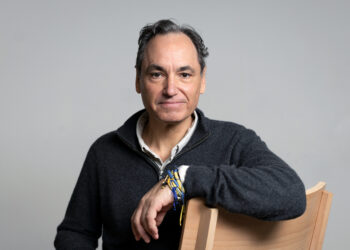
Before Russia invaded his country, Ukrainian filmmaker Yurko Ivanyshyn was best known for his Oscar-nominated documentary Winter on Fire, about the Euromaidan protests. Part of his process involved using countless cameras around Kyiv to livestream the protest online, making the footage also free for any media outlet to use.
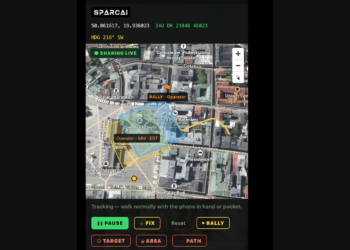
In wartime, he has put his livestreaming and videography skills to use in a different way. To help defend his country, Yurko developed the OCHI platform that the Ukrainian armed forces use to monitor tens of thousands of streams of drone video surveillance footage and use it for AI training.
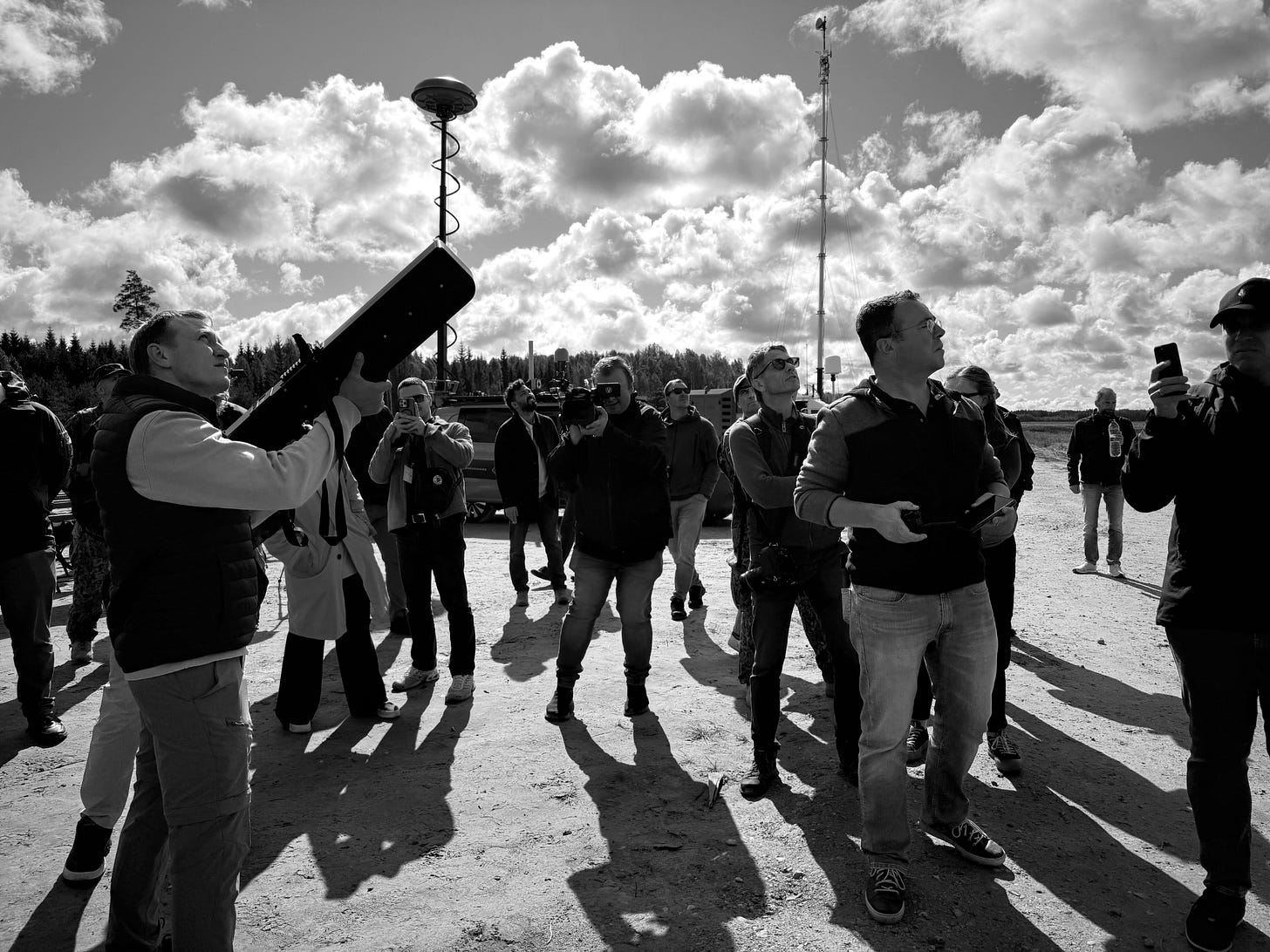
This week, Yurko was one of the participants at the Baltic Trust 25 military demonstration deep in the forests of Latvia – joining nearly 500 troops from 20 nations and 28 industry participants, together with the NATO Communications and Information Agency (NCIA), who presented the results of a 10-day-long drone and counter-drone military exercise at the 20km² Selija military training area.
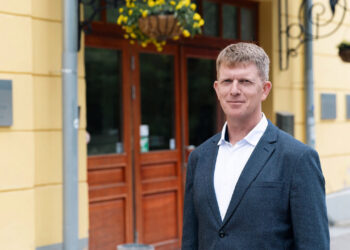
Testing full drone and counter-drone skill chains in class-1 warfare and testing the interoperability of systems and command structures between different NATO communities were the two key goals of the event, said Christian Coman of the NCIA.
But Lieutenant Colonel Janeks Drinks of the Latvian Armed Forces was a little more specific: a driving goal for the Latvian hosts was to increase their own skills in drone and counter-drone technologies.
Indeed, while NATO has held several counter-drone technology demonstrations in the past, this was the first event of its kind in Latvia. But it comes at a timely moment, just one year after a stray Russian Shahed drone landed in Rezekne, a Latvian city close to the border with Russia.
That drone, Latvian officials said at the time, was intended for Ukraine, not Latvia, but it was armed with explosives and the situation raised a lot of questions around how well-prepared Latvia was in its own anti-drone defence.
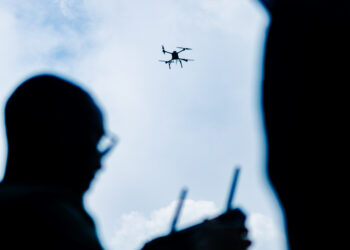
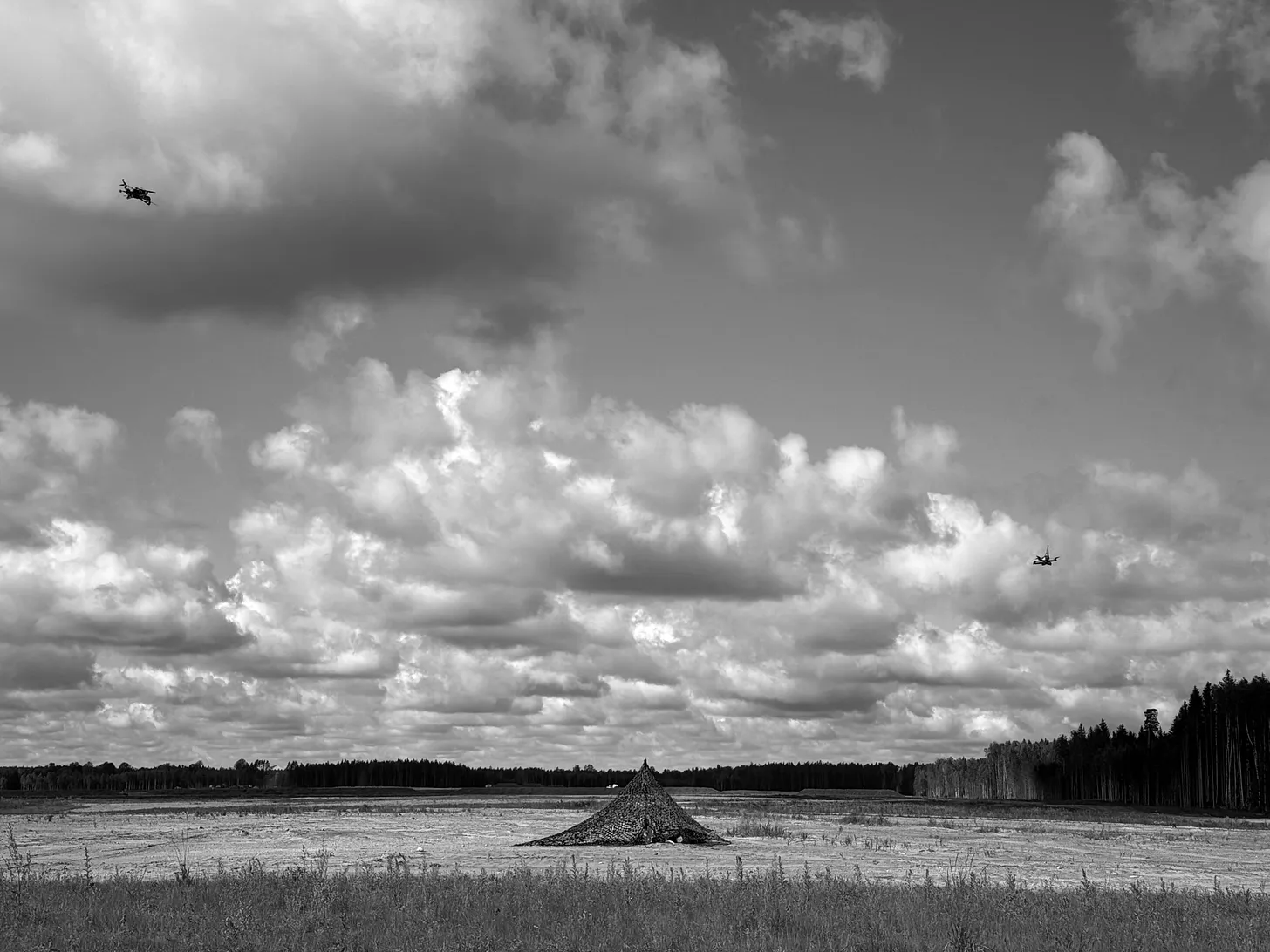
The military exercise participants this week demonstrated the core aspects of drone and counter-drone technologies. Drones tried to reach a goal – in this case, a mock-tent that represented an airport – with counterparts trying to stop them through detection and jamming.
To avoid jammers, drone operators hop frequencies; to catch them, jammers jam multiple frequencies. This continues until one is either caught, or the drone gets through the defence wall. The exceptions are fibre-optic drones and surveillance drones equipped with inertial navigation systems that operate independent of network connectivity.
According to Coman, this was the first NATO exercise where civil industry participants were fully integrated into military structures.
“This was a unique opportunity to bring tech into the hands of the military, even some things that are still in R&D,” he said. Not only were military personnel able to interact with the technologies being developed by industry players, but the latter companies were able to receive immediate feedback on what is working, and what needs to be improved.
The systems that NCIA placed a focus on in this military exercise were radio links and other communication technology.
“The battlefield is no longer run by one radio and one rifle,” said Coman. “First, you need to understand the battlefield, and for that, you need a specialist beside you. And then you can make the best decision.”
While this was not NATO’s first counter-drone exercise, an NCIA representative said that it’s been the best so far, thanks to the realistic environment, playing out across 24,000 hectares of land.
Coman also shared that while their drone exercises are usually limited to the 120 metre altitude limit defined by European legislation, the expansive size of the Selija training ground meant that they could fly up to 3,000 metres in the air, thus trialing longer-distance drones, such as Estonia’s EOS-C.
He emphasized that the location was unique in terms of frequencies.
“It’s very rare that you can find a place that allows you to jam, for example, the GNSS, the Global Navigation System or that you can do spoofing into that area. We couldn’t find too many places in Europe where we could do this,” he said. He chalks this up to the size of the area and the reduced risk of impacting civilian life.
However, the terrain did come with its own setbacks. As it turns out, the treeline was higher than expected, which meant that the 30-meter-high antenna, which was hired to ensure communication, was not able to establish point-to-point radio signals. As a result, they resorted to Starlink connectivity. Coman admitted that this was a learning point for NATO, and an indication that in the future, alternatives will have to be considered.

The frontline in Ukraine is setting the pace of innovation in drone and EW technologies at the moment, and what’s used there is thus often seen as a de facto standard. In keeping with that, there were several industry participants from Ukraine present, including Yurko, who is deeply integrated in the drone and counter-drone industry on the Ukrainian frontline.
Asked how he feels about collaborating with companies outside of Ukraine that are often seen as technically less advanced, Yurko was surprisingly frank.
“I’m going to make some people angry with this, but Ukraine isn’t that advanced as a producer,” he said. “We just have a lot of experience. On the frontline, I can’t wait for my government or my commander, I have to fight. That’s the difference. I’m happy to be here, we are totally open to sharing experiences. Only together will we be stronger. NATO and other European countries should understand that it can all change in one minute.”
The event culminated with an announcement that the counter-drone exercise would be repeated within a year’s time.
This reflects NATO countries’ commitment to strengthening drone and counter-drone capabilities in close collaboration with Ukrainian allies. It also signals a shift wherein industry partners will be more closely integrated into military structures, placing the latest technologies into the hands of the military personnel.