Friday 20 March, 2026
[email protected]
Resilience Media
  • About
  • News
  • Resilience Conference
    • Resilience Conference Warsaw 2026
    • Resilience Conference Copenhagen 2026
    • Resilience Conference London 2026
  • Guest Posts
    • Author a Post
  • Subscribe
No Result
View All Result
  • About
  • News
  • Resilience Conference
    • Resilience Conference Warsaw 2026
    • Resilience Conference Copenhagen 2026
    • Resilience Conference London 2026
  • Guest Posts
    • Author a Post
  • Subscribe
No Result
View All Result
Resilience Media
No Result
View All Result

NATO Warned: Defence Industry Bottleneck is Policy, Not Hardware

Founders say procurement delays and weak long-term commitments are threatening to blunt Europe’s response to Russian aggression

Resilience MediabyResilience Media
September 30, 2025
in News, Resilience Conference
Dr Rich Drake, Anduril; Cameron McCord, Nominal; Oluseun Taiwo, Solideon; on stage at Resilience Conference with Leslie Hitchcock

Dr Rich Drake, Anduril; Cameron McCord, Nominal; Oluseun Taiwo, Solideon; on stage at Resilience Conference with Leslie Hitchcock

Share on Linkedin

NATO allies risk losing critical time in strengthening their defence industrial base, with founders warning that outdated procurement processes and testing systems, rather than hardware capacity, are the biggest obstacles to building resilience.

You Might Also Like

Announcing the Resilience Conference Warsaw Agenda

HyImpulse eyes first European launch from SaxaVord as UK space ambitions gather pace

The UK is setting up meetings between Gulf states and defence tech startups

During a panel discussion at Resilience Conference this week, defence tech founders and manufacturers stated that while governments are increasingly acknowledging the urgency of scaling production, progress on the ground remains slow.

Rich Drake, who leads Anduril’s UK arm, said Britain is still waiting for clarity on its defence industrial strategy months after the long-trailed Strategic Defence Review.

“Everybody’s talking the right game, but we are yet to move at the pace we need to be ready,” he said. “We need to wait perhaps another 10 months before we get our defence industrial plan, from which we then start to buy and deliver things. We’re losing time.”

For early-stage companies, the challenge is not a lack of innovation but a lack of access. Oluseun Taiwo, founder and CEO of Solideon, said small firms are rarely included in acquisition discussions, leaving them dependent on larger contractors to open doors.

“It’s not just about cool robotics anymore,” he said. “You have to have a sustaining business model so your company survives long enough to deliver. If I want to help the warfighter, my business has to survive.” Solideon, which develops large-scale metal 3D printing and welding systems for the maritime sector, has leaned on partnerships with established shipbuilders to secure direct contracting routes.

Software, rather than hardware, is emerging as another critical bottleneck. Cameron McCord, founder and chief executive of Nominal, argued that the systems used to test and certify hardware have not kept pace with the demands of shorter programme timelines and modern autonomous technologies.

“It’s a solved problem to test, deploy and monitor software,” he said. “It’s not solved for software-defined hardware, robotic systems, autonomous systems – and that’s where production now gets stuck.” Nominal, which has recently opened a London office, is seeking to replicate the software testing infrastructure built in Silicon Valley for defence manufacturers in Europe.

The question of sovereignty – whether NATO nations can rely on foreign-owned companies for critical defence capabilities – was also a recurring theme.

Drake argued that sovereignty is about supply chains and local investment, rather than ownership. “We can be a sovereign UK business by using the UK supply chain, investing in factories, apprenticeships and SMEs, and giving freedom of action to government,” he said. McCord suggested that Nominal’s software can also fit into sovereignty requirements by ensuring nations can test and validate “their systems” while benefiting from international expertise.

Despite signs of progress, the panellists said governments still hesitate to make the long-term financial commitments that manufacturers and investors need. Drake warned that without multi-year contracts, firms cannot justify investment in new sites or capacity. “We are stuck between two places,” he said. “We are not yet at a war economy, and I hope we never have to be. But without longer-term commitments, investor capital does not follow.”

The panellists pointed to some improvements, particularly in the United States, where new acquisition pathways have made it easier for software companies to sell to the government. However, they cautioned that Europe lags behind, with too much reliance on rhetoric rather than action.

Asked what capabilities NATO would most regret failing to fund if Russia escalates by 2027, the answers were sobering. Taiwo pointed to Europe’s 370,000 industrial robotic arms that could be repurposed to manufacture heavy components but remain underutilised; McCord called for greater investment in electronic warfare, including GPS denial and jamming; and Drake urged governments to prepare “shadow factories” in civilian industries, ready to be converted at speed.

The panel’s conclusion was clear: NATO has the technology, talent and entrepreneurial drive to build resilience, but unless governments accelerate procurement, modernise testing, and commit to longer-term investment, they risk being overtaken by events.


Tags: AndurilCameron McCordNATONominalOluseun TaiwoRich DrakeSolideonUK
Previous Post

Russia is ‘Copying, Adapting, and Scaling’ Ukrainian Battlefield Innovations

Next Post

Never Lift Revealed as Early Investor in Cambridge Aerospace as Startup Confirms $136M Raised

Resilience Media

Resilience Media

Start Ups. Security. Defense.

Related News

Announcing the Resilience Conference Warsaw Agenda

byLeslie Hitchcockand1 others
March 19, 2026

We are excited to announce the agenda for Resilience Conference Warsaw, 15 April 2026. This is the first conference of...

HyImpulse eyes first European launch from SaxaVord as UK space ambitions gather pace

HyImpulse eyes first European launch from SaxaVord as UK space ambitions gather pace

byCarly Page
March 19, 2026

German aerospace startup HyImpulse has signed a launch agreement with SaxaVord Spaceport in Scotland to carry out the next flight...

a view of a city from the top of a building

The UK is setting up meetings between Gulf states and defence tech startups

byIngrid Lunden
March 18, 2026

The last few weeks have seen the UK stepping up its direct military engagement in the Middle East to defend...

Sille Pettai steps down from CEO role at SmartCap

Sille Pettai steps down from CEO role at SmartCap

byFiona Alston
March 17, 2026

Big news in European defence tech investment. Sille Pettai, the CEO of SmartCap -- the Estonian state-owned investment fund --...

100 Startups to Watch in 2026

100 Startups to Watch in 2026

byLeslie Hitchcockand1 others
March 17, 2026

Defence has long been the domain of primes. The war in Ukraine has changed that by introducing the tech sector...

person on top of brown steel frame

How Ukraine is transforming its battlefield data into a world-first AI training hub

byThomas Macauley
March 16, 2026

After four years effectively as an all-in-one laboratory, training ground and live arena for technology to fight its own war,...

US and UK ballistic missile defence capabilities brought into focus as Iran lashes out against region

US and UK ballistic missile defence capabilities brought into focus as Iran lashes out against region

byTom Pashby
March 12, 2026

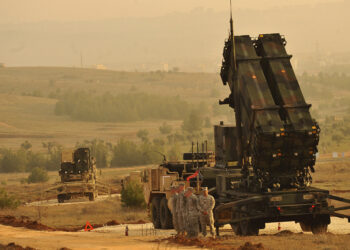
The ballistic missile defence capabilities of the US, UK and other allies have been put to the test as the...

Scout Ventures raises $125 million to expand investment in defence and dual-use tech

Scout Ventures raises $125 million to expand investment in defence and dual-use tech

byJohn Biggs
March 11, 2026

Scout Ventures has closed its fifth fund with $125 million in commitments, according to an announcement released March 10. The...

Load More
Next Post
Never Lift Revealed as Early Investor in Cambridge Aerospace as Startup Confirms $136M Raised

Never Lift Revealed as Early Investor in Cambridge Aerospace as Startup Confirms $136M Raised

Aspichi Is Building A Virtual Front for Soldiers in Ukraine

Aspichi Is Building A Virtual Front for Soldiers in Ukraine

Most viewed

InVeris announces fats Drone, an integrated, multi-party drone flight simulator

Uforce raises $50M at a $1B+ valuation to build defence tech for Ukraine

Auterion, the drone software startup, eyes raising $200M at a $1.2B+ valuation

Twentyfour Industries emerges from stealth with $11.8M for mass-produced drones

Senai exits stealth to help governments harness online video intelligence

Palantir and Ukraine’s Brave1 have built a new AI “Dataroom”

Resilience Media is an independent publication covering the future of defence, security, and resilience. Our reporting focuses on emerging technologies, strategic threats, and the growing role of startups and investors in the defence of democracy.

  • About
  • News
  • Resilence Conference
    • Resilience Conference Copenhagen 2026
    • Resilience Conference Warsaw 2026
    • Resilience Conference 2026
  • Guest Posts
  • Subscribe
  • Privacy Policy
  • Terms & Conditions

© 2026 Resilience Media

No Result
View All Result
  • About
  • News
  • Resilence Conference
    • Resilience Conference Copenhagen 2026
    • Resilience Conference Warsaw 2026
    • Resilience Conference 2026
  • Guest Posts
  • Subscribe
  • Privacy Policy
  • Terms & Conditions

© 2026 Resilience Media

This website uses cookies. By continuing to use this website you are giving consent to cookies being used. Visit our Privacy and Cookie Policy.