The panel discussion on The Role of Startups brought together three startup founders from the defence industry, Srdjan Kovacevic (CEO, OrqaFPV), Ian Muceus (CTO, Firestorm), and Kusti Salm (CEO, Frankenburg Technologies) to share insights on their startup journeys, challenges faced, and the evolving landscape of defence manufacturing. It was moderated by Abigail Desjardins, Global Partnerships, Defense Innovation Unit. Excerpts from the panel, which you can watch on our Youtube Channel, are below.
The Future of Defence Tech Manufacturing & Innovation was presented by the US Defense Innovation Unit and Munich Security Conference Tech & Innovation Thursday, sponsored by Boston Consulting Group, and powered by Resilience Media.
This conversation covered the challenges to scale manufacturing, the significance of design for manufacturing, and the unique hurdles in entering the European lethal weapons market. The panel underscored the importance of anticipating market needs and called for the defence sector to embrace newcomers to drive transformative change. The session concluded with actionable recommendations, including the establishment of NATO standardisation for drone platforms and investment in accessible, mass-produced defence products.
Challenges and Critical Decisions
Srdjan Kovacevic explained that, having started as a hobby drone company, Orqa found themselves shifting to a defence tech startup after the Russian full scale invasion of Ukraine. “We started the hobby company to build drones because we loved flying drones. We still do. And you know, you would think that a startup would pivot, but as it happens, the world pivoted around us and we ended up…having command over what’s arguably the most defining defence technology of the 21st century to date.”
For Kusti Salm, CEO of weapons manufacturer Frankenburg Technologies, there are three barriers to scaling his company.
- Investors: “We build weapons, we build something that is potentially lethal. It’s very difficult business to be in Europe. In order to start manufacturing in this business, 18 to 24 months to get a license and upfront cost at starting from 50,000 a month for just getting your permits and all the legal cost. So you need to have an investors who … take this [risk] because you don’t even know where you’re going to get all those permits. That’s the reason why there are almost zero startups that come from scratch going to the lethal space.
- “Building weapons in affordable and mass manufactured way is the question of what is the lowest bar for requirements. What is something that will address the 80% of threats and what is this 20% that you can just cut off? And that is the hardest question. And for that you need to really understand what is the military requirement. And you need to understand it without having a customer with you every single day.”
- “Build something where the supply chain exists. That’s very simple to say, very hard to execute. … The missile industries, especially in the short range air defence have been brain dead for last 30 years … [b]ecause there has been no demand. Short range air defence was built against helicopters. So how many nations are there in the world who will feasibly see a large scale helicopter threat against their nation? None. So that is the reason why the maximum capacity of all the factories of 300-400 missiles here is a less than designer bag industry.”
Manufacturing and Supply Chain
After running a Kickstarter campaign to launch their manufacturing presence, Kovacevic’s team learned how difficult it is to scale from one unit to thousands of units. “I’m happy that we didn’t know how difficult it would because we would never embark upon it.”
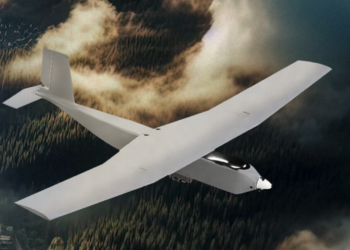
Firestorm’s Muceus shared that “one of the most important things is thinking about design for manufacturing up front. If you’re not doing that or if you’re not using a process that allows you to be nimble and switch between revs of your product, you’re hurting yourself. That’s why we have a fully additive manufactured airframe. Is that the only way to build airframes or even the best way? Not necessarily, but for us it’s the best because additive really shines there. It’s high mix, high volume, as long as you choose the processes correctly. We’ve been able to do thousands of revs [revisions] to our vehicle. Minor revs, 10 major revs that would have costed tens of millions of dollars in hard tooling if we chose to manufacture our vehicles in a different way. So how things have been done is not how things should be done.”
Collaboration with Larger Firms
Firestorm received investment from Lockheed Martin Ventures, so Muceus has more positive views about working with primes. He says, “We don’t build B21s and F35s and all these things that regardless of what our current administration says, we do need these things. Primes are the companies that can build those types of things. However, they’re not nimble enough to react to every new emerging technology as fast as startups can. We have pressure because we are so small and we have to do a lot with a little. And I think that kind of enables us to move into sectors of the market more quickly than a large prime can do.”
Industry Transformation
Kovacevic urged startups to think about distributed manufacturing capabilities as protection from long range precision strikes. “We’re looking at our industrial base being targeted first. So if you can keep your footprint smaller, as small as you can, that’s a clear path to resilience.”
Salm, who worked in defence procurement on the government side in Estonia doesn’t think the procurement system is itself the problem. The problem is:
the lack of affordable availability at scale, integrating with products was something that was the problem. We have all observed what happened with Ukrainian assistance. US government issued export licenses for Ukrainian assistance over weekend. I don’t know how they did it, but they did it legally. Germany procured 155 millimetre artillery shells from who knows where in a week. They did it. No problem with procurement process. The problem is availability. The problem is that the weapons equipment don’t interact with. The problem is that things are overly expensive and delivery times are outrageously long. That is the issue why the procurement is difficult.
Muceus voiced frustration about ethical concerns surrounding defence tech investing: “The fact that we’re still talking about this dual use need for investors and whatnot, it just is kind of hilarious to me. A lot of these folks would be invested in the S&P 500 with [companies] like Lockheed on there. Like why are we worried about a company being dual used to invest in them? I think it’s crazy. We have to start looking at companies that are pure defence plays and making sure that we’re investing capital in them to supercharge them.”