Sunday 18 January, 2026
[email protected]
Resilience Media
  • About
  • News
  • Resilience Conference
  • Guest Posts
    • Author a Post
  • Subscribe
No Result
View All Result
  • About
  • News
  • Resilience Conference
  • Guest Posts
    • Author a Post
  • Subscribe
No Result
View All Result
Resilience Media
No Result
View All Result

Ukraine warns of AI-powered malware targeting the defence sector

CERT-UA says LAMEHUG malware uses an LLM model to craft commands in real-time and evade detection.

Resilience MediabyResilience Media
August 3, 2025
in News
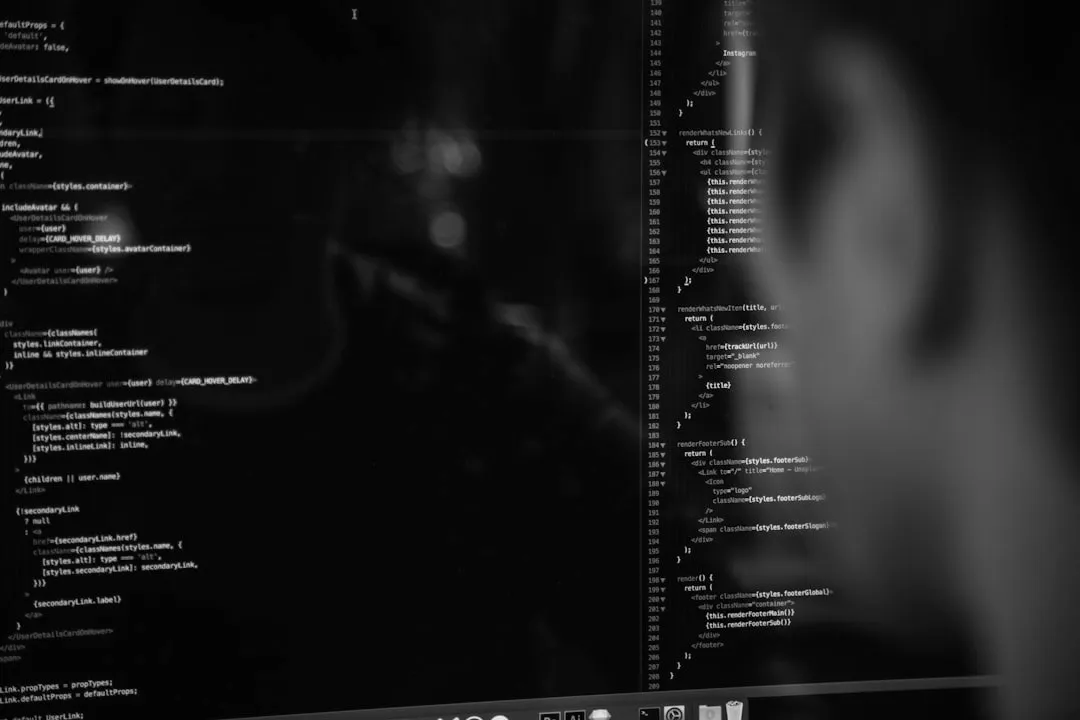
Photo by charlesdeluvio on Unsplash

Photo by charlesdeluvio on Unsplash

Share on Linkedin

Ukraine’s national cyber authority has issued a warning about what it says is the first known use of large language model-powered malware in active attacks targeting the country’s defence and security sector.

You Might Also Like

Power outages and small checks: The perils of being a VC in Kyiv

Equal1 Wants Quantum to Be as Simple as CPUs and GPUs — and It’s Raised $60m to Prove It

DTCP unveils €500m ‘Project Liberty’ fund to back European defence tech

According to CERT-UA, Ukraine’s Computer Emergency Response Team, the so-called “LAMEHUG” malware was deployed in a recent campaign that it first uncovered on 10 July. The agency says it assesses, with moderate confidence, that the attacks are the work of APT28, a state-sponsored hacking group aligned with Russia’s military intelligence agency, the GRU.

APT28, also known as UAC-0001 and Fancy Bear, has been linked to several high-profile espionage and sabotage operations around the world, including a string of attacks on UK defence organisations involved in delivering foreign assistance to Ukraine.

Earlier this month, the UK’s National Cyber Security Centre also formally linked Fancy Bear to a cyber campaign targeting Western logistics and technology sectors using the ‘Authentic Antics’ malware, and sanctioned 18 Russian individuals connected to the attacks.

In the Russia-backed group’s latest campaign observed by CERT-UA, the LAMEHUG malware is delivered through phishing emails disguised as communications from Ukrainian ministries. Once opened, a malicious .pif file triggers the LAMEHUG loader, which then connects to an open-source LLM hosted on Hugging Face’s cloud platform. Using Qwen 2.5-Coder-32B-Instruct, a powerful AI model capable of generating code and commands, to dynamically generate commands.

Unlike traditional malware that relies on pre-programmed instructions, LAMEHUG uses the LLM to gather detailed information about the victim’s computer, including hardware specifications, running processes, and network configurations. It then scans for sensitive documents, such as PDFs, Word files, and spreadsheets, before exfiltrating data via encrypted channels.

What makes LAMEHUG particularly dangerous is its stealth and flexibility. Because the malware is generating commands via a public API, its traffic can be hard to distinguish from legitimate AI use within an organisation. This means traditional antivirus tools and endpoint detection platforms may miss it entirely.

Vitaly Simonovich, a threat intelligence researcher at Cato Networks, warns that this marks a turning point in the evolution of cyber threats, where attackers use off-the-shelf generative AI tools to automate reconnaissance, tailor commands, and potentially adapt in real time without further human intervention.

“The discovery of LAMEHUG by CERT-UA marks a significant milestone in the threat landscape,” he told Resilience Media. “The campaign highlights state-sponsored investment in emerging AI technologies for cyber activities, with Ukraine serving as the testing ground for these new capabilities. The relatively simple implementation suggests this is APT28’s attempt at learning how to weaponise LLMs, likely opening the door for more sophisticated AI-driven campaigns in the future.”

This incident also highlights growing concerns about how open-source AI models, often released with minimal restrictions, could be weaponised. While the AI community continues to debate safety and governance, LAMEHUG may prove to be the first real-world case of an LLM being actively used in a hostile cyber campaign with zero human intervention.

CERT-UA did not specify if LAMEHUG’s execution of the LLM-generated commands was successful, what agencies were targeted, or whether any sensitive data was accessed.

Tags: NCSCUkraineVitaly Simonovich
Previous Post

Deep tech breakthroughs in Ukraine get a boost from Europe

Next Post

Resilience Media Secures Investment, Scales its Editorial Team

Resilience Media

Resilience Media

Start Ups. Security. Defense.

Related News

Power outages and small checks: The perils of being a VC in Kyiv

Power outages and small checks: The perils of being a VC in Kyiv

byJohn Biggs
January 16, 2026

When I called Sasha Yatsenko, the power had just cut out. No sirens, no warning, just a few minutes of...

Equal1 Wants Quantum to Be as Simple as CPUs and GPUs — and It’s Raised $60m to Prove It

Equal1 Wants Quantum to Be as Simple as CPUs and GPUs — and It’s Raised $60m to Prove It

byFiona Alston
January 16, 2026

Equal1, an Irish quantum semiconductor company announced this week it had raised $60 million to fuel the next stage of...

pink and purple led light

DTCP unveils €500m ‘Project Liberty’ fund to back European defence tech

byCarly Page
January 16, 2026

Deutsche Telekom Capital Partners (DTCP) has launched a €500 million fund dedicated to defence, security, and resilience technologies, marking what...

Weekly Digest: From the living room to the war room at CES 2026

Weekly Digest: From the living room to the war room at CES 2026

byLeslie Hitchcock
January 15, 2026

Good afternoon from the team at Resilience Media. This is Issue 54 of our weekly newsletter, which you can subscribe...

EIB backs Optics11 with €25M to boost undersea security and energy resilience

EIB backs Optics11 with €25M to boost undersea security and energy resilience

byCarly Page
January 15, 2026

The European Investment Bank has agreed a €25 million loan to Dutch fibre-optic sensor firm Optics11, backing technology designed to...

gray concrete towers under white clouds and blue sky during daytime

The start up hoping to sell anti-radiation drug to Ukrainian Armed Forces

byTom Pashby
January 15, 2026

The threat of radiation incidents has shot up the agenda in recent years, in particular due to Russia’s use of...

Hydrosat raises $60M for its thermal satellite imaging tech

Hydrosat raises $60M for its thermal satellite imaging tech

byIngrid Lunden
January 15, 2026

A startup building AI-based thermal infrared satellite technology to provide data for water resource management, public safety and defence applications...

Weekly Digest: From the living room to the war room at CES 2026

CES isn’t just consumer tech anymore

byJohn Biggs
January 14, 2026

For decades, the Consumer Electronics Show has emphasized (as you might guess by the name) the consumer side of things....

Load More
Next Post
Welcome to Resilience Media

Resilience Media Secures Investment, Scales its Editorial Team

SEB Expands Defence-Sector Investment Access, Launches Thematic Fund for Europe’s Strategic Resilience

SEB Expands Defence-Sector Investment Access, Launches Thematic Fund for Europe’s Strategic Resilience

Most viewed

InVeris announces fats Drone, an integrated, multi-party drone flight simulator

Harmattan AI raises $200M at a $1.4B valuation from Dassault

Defense Unicorns lives up to its name: $136M round lifts valuation past $1B

Hydrosat raises $60M for its thermal satellite imaging tech

Terra Industries raises $12M to become ‘Africa’s first neo-prime’

6 predictions for defence in 2026

Resilience Media is an independent publication covering the future of defence, security, and resilience. Our reporting focuses on emerging technologies, strategic threats, and the growing role of startups and investors in the defence of democracy.

  • About
  • News
  • Resilence Conference
  • Guest Posts
  • Subscribe
  • Privacy Policy
  • Terms & Conditions

© 2026 Resilience Media

No Result
View All Result
  • About
  • News
  • Resilence Conference
  • Guest Posts
  • Subscribe
  • Privacy Policy
  • Terms & Conditions

© 2026 Resilience Media

This website uses cookies. By continuing to use this website you are giving consent to cookies being used. Visit our Privacy and Cookie Policy.