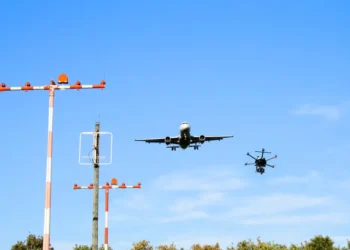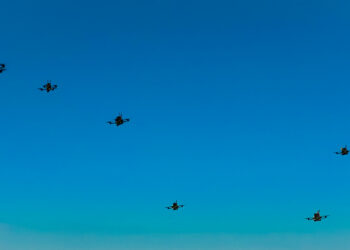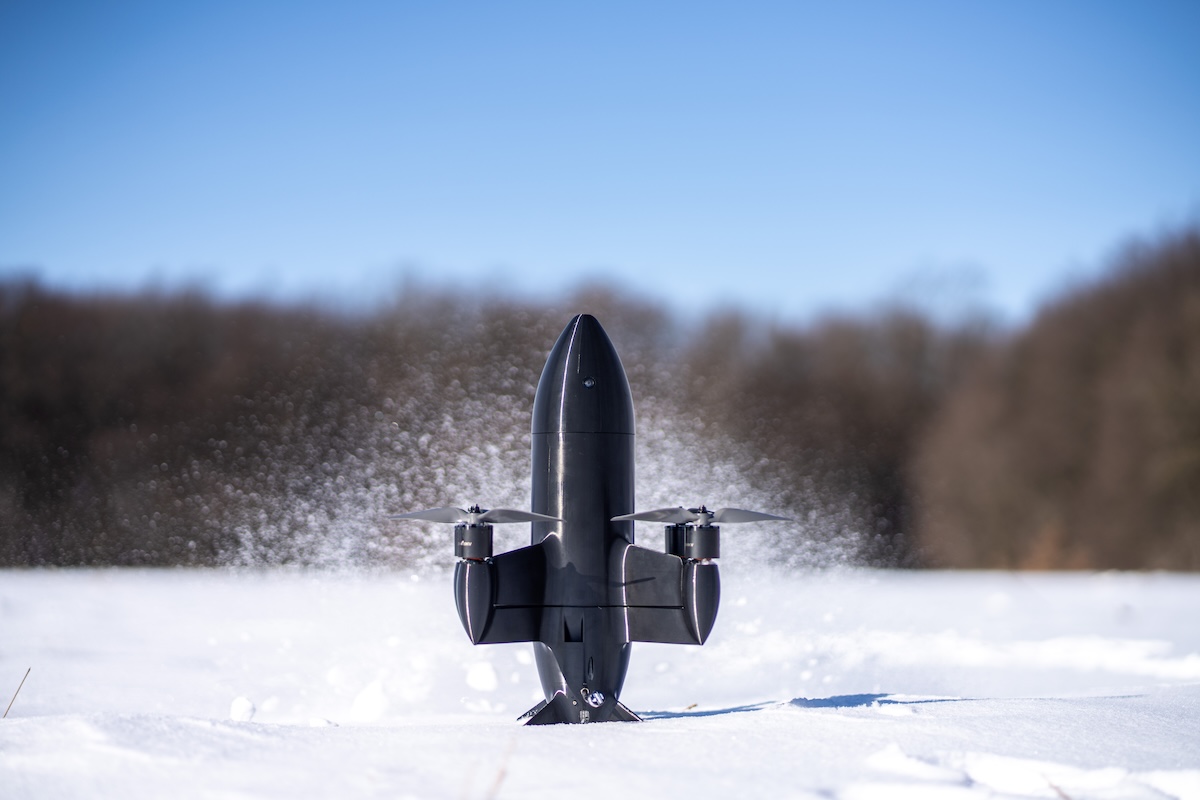
Ukraine-based autonomy company The Fourth Law has unveiled Zerov, an autonomous interceptor drone built to engage long-range strike UAVs in the Shahed class. The platform was developed as a response to the growing use of low-cost Iranian-designed drones that Russian forces have deployed extensively during the war.
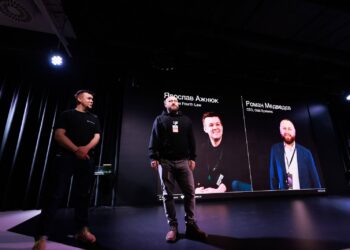
The Fourth Law was established in Kyiv in 2023 by entrepreneur Yaroslav Azhnyuk together with a group of engineers and military veterans. The firm focuses on autonomous robotics for defense and maintains operations in Ukraine, the European Union, and the United States.
Shahed-type drones have played a central role in Russian strike campaigns against Ukraine, targeting energy systems, military facilities, logistics centers, and other infrastructure. Their comparatively low price has complicated traditional air defense planning, since intercepting them with conventional missiles can impose far higher costs on the defending side. The Fourth Law says Zerov was designed to fill that gap by offering an interceptor suited for repeated, large-scale engagements.
“In an era where drone warfare is reshaping conflicts from Europe to the Middle East, Zerov-8 is the latest of what massively scalable autonomous drone interception technology can provide,” said Yaroslav Azhnyuk, founder and CEO of The Fourth Law.
“We trained the system to see targets where the human eye or standard sensors fall short,” he said.
The company says Zerov includes its TFL Anti-Shahed autonomous detection module, an AI-based system intended to locate and follow aerial targets by analyzing movement behavior, thermal signatures, and other signals. After the system identifies a target, the tracking process continues automatically, allowing the operator to concentrate on the intercept rather than manually searching for the drone.
The interceptor uses a tailsitter airframe that enables vertical launch before transitioning into forward flight for the intercept phase. The aircraft can reach speeds of about 326 kilometers per hour and is designed to pursue drones traveling at up to roughly 270 kilometers per hour. Its operational radius is approximately 20 kilometers, and it carries a warhead weighing up to 0.5 kilograms. Operators can configure the platform with either daylight cameras or thermal sensors depending on mission conditions.
The onboard detection module performs automated analysis to identify airborne targets. When contrast between the drone and its background is sufficient, the system can detect targets at distances close to one kilometer. Earlier detection provides additional time for operators to position the interceptor and improves the likelihood of a successful intercept while reducing the need for manual visual tracking during the final stage of engagement.
According to the company, later versions are expected to integrate with external radar sensors and wider command-and-control networks so that targets can be assigned automatically. The system is also designed to function in environments affected by electronic warfare, with software protections intended to keep the interceptor operating even when communications are degraded.
The interceptor takes its name from Mykola Zerov, a Ukrainian poet and scholar linked to the Executed Renaissance, a generation of cultural figures persecuted by the Soviet regime in the 1930s. The company says the naming convention reflects its practice of honoring Ukrainian cultural figures through its technology programs.