Monday 2 February, 2026
[email protected]
Resilience Media
  • About
  • News
  • Resilience Conference
  • Guest Posts
    • Author a Post
  • Subscribe
No Result
View All Result
  • About
  • News
  • Resilience Conference
  • Guest Posts
    • Author a Post
  • Subscribe
No Result
View All Result
Resilience Media
No Result
View All Result

China alleges the US exploited Microsoft Exchange zero-day to target defence sector

Beijing accuses US intelligence of carrying out a year-long espionage campaign to steal sensitive military designs — a rare reversal in the nations’ long-running cyber blame game

Resilience MediabyResilience Media
August 11, 2025
in News
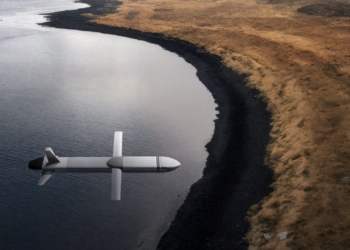
Photo by Yiran Ding on Unsplash

Photo by Yiran Ding on Unsplash

Share on Linkedin

China has formally accused US intelligence agencies of exploiting a previously unknown Microsoft Exchange zero‑day vulnerability to orchestrate a prolonged cyberattack against its defence sector.

You Might Also Like

Move fast — but never break trust: Inside Lakestar’s defence retreat in St. Moritz

Ukraine is working with SpaceX and Elon Musk to prevent Russia from using Starlink connectivity to guide its drones

Frankenburg has raised up to $50M at a $400M valuation, say sources

China’s National Internet Emergency Response Center (CNCERT), which describes itself as a non-governmental cybersecurity technical center, alleges that US intelligence hackers leveraged the flaw in Microsoft’s Exchange software to breach and maintain control of the email server of a major Chinese military-related enterprise (which it did not name) between July 2022 and July 2023.

During this alleged cyber‑espionage campaign, CNCERT claims the perpetrators stole sensitive defence data and maintained persistent access throughout that period.

“The attacker … launched more than 40 network attacks, stealing the emails of 11 people, including the senior management of the enterprise, involving the relevant design schemes, system core parameters and other contents of our military industry products,” reads a version of CNCERT’s statement translated by Resilience Media.

CNCERT claimed that, in a separate instance, US agents exploited vulnerabilities in an electronic file system, unrelated to Microsoft Exchange, to conduct cyberattacks against another Chinese military enterprise operating in the communications and satellite internet sector between July and November 2024, also exfiltrating confidential information.

“The attacker used the enterprise’s system software upgrade service to deliver theft Trojan horses to the enterprise’s intranet, invaded and controlled more than 300 devices, and searched for keywords such as ‘military special network’ and ‘core network’ to steal sensitive data on the accused host,” reads CNCERT’s alert.

Guo Jiakun, spokesperson of the Ministry of Foreign Affairs of China, said in a statement that the “US used its allies in Europe and in China’s neighboring region … to launch the cyberattacks.” He added that CNCERT’s alleged findings are “the latest evidence of the US government’s malicious cyberattacks on China” and “once again shows that the US is the top cyber threat faced by China.”

In a 1 August alert, CNCERT added that these alleged attacks, which it claims have been aggressively carried out since the US National Security Agency (NSA)’s alleged cyberattack on China’s Northwestern Polytechnical University in 2022, pose “a serious threat to the scientific research and production security of China’s defense and defense industries, and even to national security.”

Neither Microsoft nor the NSA immediately responded to Resilience Media’s questions.

These accusations follow a broader pattern of mutual cyberespionage allegations between Beijing and Washington. China’s latest claims echo earlier US assertions that Chinese state‑sponsored hackers have targeted its systems.

Notably, in 2021, Microsoft revealed that China-linked threat group Hafnium, also known as Silk Typhoon, had exploited multiple zero‑day vulnerabilities in Exchange to launch widespread intrusions across the globe. Those attacks affected tens of thousands of servers, including those belonging to US defense contractors, law firms, universities, NGOs, and healthcare research institutions. In response, Microsoft and international authorities issued patches and warnings to mitigate the damage.

Just last month, Microsoft said China-backed hacking groups had also exploited flaws in SharePoint to target governments and businesses that use the file-sharing software.

The UK’s National Cyber Security Centre told the BBC that these attacks, which focused on stealing intellectual property from organisations related to defense and strategic planning, targeted “a limited number” of SharePoint Server customers in the UK.

CNCERT’s latest allegations represent a rare reversal of narrative: China is now asserting that the US deployed analogous tactics against Chinese military‑industrial targets, underscoring intensifying tensions in cyberspace between the world’s two largest economies.

China’s accusations come just weeks after Ukraine’s national cyber authority warned that Russian state-backed hackers had been using AI-powered malware in active attacks targeting the country’s defence and security sector.

Tags: ChinaCNCERTGuo JiakunMicrosoft
Previous Post

BAE backs Oxford Dynamics to bolster UK defence autonomy with AI

Next Post

BAE Invests in a Startup; US Accused of Chinese Cyberattack; Darkstar Bootcamp returns to Kyiv (quiet week)

Resilience Media

Resilience Media

Start Ups. Security. Defense.

Related News

Move fast — but never break trust: Inside Lakestar’s defence retreat in St. Moritz

Move fast — but never break trust: Inside Lakestar’s defence retreat in St. Moritz

byTobias Stone
January 31, 2026

Last week, Davos dominated the headlines with what some might call a chaotic circus centred around Donald Trump. Further into...

Ukraine is working with SpaceX and Elon Musk to prevent Russia from using Starlink connectivity to guide its drones

Ukraine is working with SpaceX and Elon Musk to prevent Russia from using Starlink connectivity to guide its drones

byJohn Biggs
January 30, 2026

Ukraine is working directly with SpaceX to prevent Russian forces from using Starlink terminals to guide long range drones, according...

Frankenburg has raised up to $50M at a $400M valuation, say sources

Frankenburg has raised up to $50M at a $400M valuation, say sources

byIngrid Lundenand1 others
January 28, 2026

There are multiple thousands of kinetic and battle-ready drones being produced for use in Ukraine every month, but not just...

Ukraine says drone campaign logged nearly 820,000 verified strikes in 2025, with UAVs driving majority of battlefield interactions

Ukraine says drone campaign logged nearly 820,000 verified strikes in 2025, with UAVs driving majority of battlefield interactions

byJohn Biggs
January 27, 2026

Ukraine’s Ministry of Defence said drone operations accounted for hundreds of thousands of confirmed battlefield strikes in 2025, underscoring the...

\UK Advances Project NYX, shortlists Euro firms to Build Autonomous Wingman Drones for Apache Helicopters

UK Advances Project NYX, shortlists Euro firms to build autonomous “wingman” drones

byJohn Biggs
January 27, 2026

The UK Ministry of Defence has moved Project NYX into its next phase, selecting seven companies to develop prototype designs...

city skyline during day time

Russia-linked Sandworm hackers blamed for failed attack on Poland’s power grid

byCarly Page
January 26, 2026

Russia-linked hackers with a track record of sabotaging infrastructure operations were behind a failed attempt to disrupt Poland’s power grid...

Weekend Read: ‘History tells us what may happen next with Brexit & Trump’ ten years on

Weekend Read: ‘History tells us what may happen next with Brexit & Trump’ ten years on

byResilience Media
January 25, 2026

As internet culture takes part in the ‘Flashback to 2016’ meme, we are resurfacing our co-founder Tobias Stone’s pivotal essay...

How Rune Technologies wants to revolutionize military logistics

How Rune Technologies wants to revolutionize military logistics

byJohn Biggs
January 23, 2026

Peter Goldsborough, CTO of Rune Technologies, joined Resilience to talk about a part of modern warfare that rarely gets attention...

Load More
Next Post
BAE Invests in a Startup; US Accused of Chinese Cyberattack; Darkstar Bootcamp returns to Kyiv (quiet week)

BAE Invests in a Startup; US Accused of Chinese Cyberattack; Darkstar Bootcamp returns to Kyiv (quiet week)

Milrem and Frontline partner to power up Milrem’s THeMIS vehicles with BURIA grenade systems

Milrem and Frontline partner to power up Milrem’s THeMIS vehicles with BURIA grenade systems

Most viewed

InVeris announces fats Drone, an integrated, multi-party drone flight simulator

Twentyfour Industries emerges from stealth with $11.8M for mass-produced drones

Harmattan AI raises $200M at a $1.4B valuation from Dassault

Palantir and Ukraine’s Brave1 have built a new AI “Dataroom”

Hydrosat raises $60M for its thermal satellite imaging tech

Frankenburg has raised up to $50M at a $400M valuation, say sources

Resilience Media is an independent publication covering the future of defence, security, and resilience. Our reporting focuses on emerging technologies, strategic threats, and the growing role of startups and investors in the defence of democracy.

  • About
  • News
  • Resilence Conference
  • Guest Posts
  • Subscribe
  • Privacy Policy
  • Terms & Conditions

© 2026 Resilience Media

No Result
View All Result
  • About
  • News
  • Resilence Conference
  • Guest Posts
  • Subscribe
  • Privacy Policy
  • Terms & Conditions

© 2026 Resilience Media

This website uses cookies. By continuing to use this website you are giving consent to cookies being used. Visit our Privacy and Cookie Policy.