Sunday 10 May, 2026
[email protected]
Resilience Media
  • About
  • News
  • Resilience Conference
    • Resilience Conference Warsaw 2026
    • Resilience Conference Copenhagen 2026
    • Resilience Conference London 2026
  • Guest Posts
    • Author a Post
  • Subscribe
No Result
View All Result
  • About
  • News
  • Resilience Conference
    • Resilience Conference Warsaw 2026
    • Resilience Conference Copenhagen 2026
    • Resilience Conference London 2026
  • Guest Posts
    • Author a Post
  • Subscribe
No Result
View All Result
Resilience Media
No Result
View All Result

Milrem and Frontline partner to power up Milrem’s THeMIS vehicles with BURIA grenade systems

With Russia offering a bounty for Milrem’s tanks, Frontline is supplying autonomous tech to keep them ahead of the game in Ukraine

Resilience MediabyResilience Media
August 12, 2025
in News, Startups
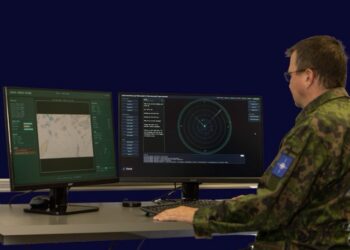
Photo credit: Frontline Robotics

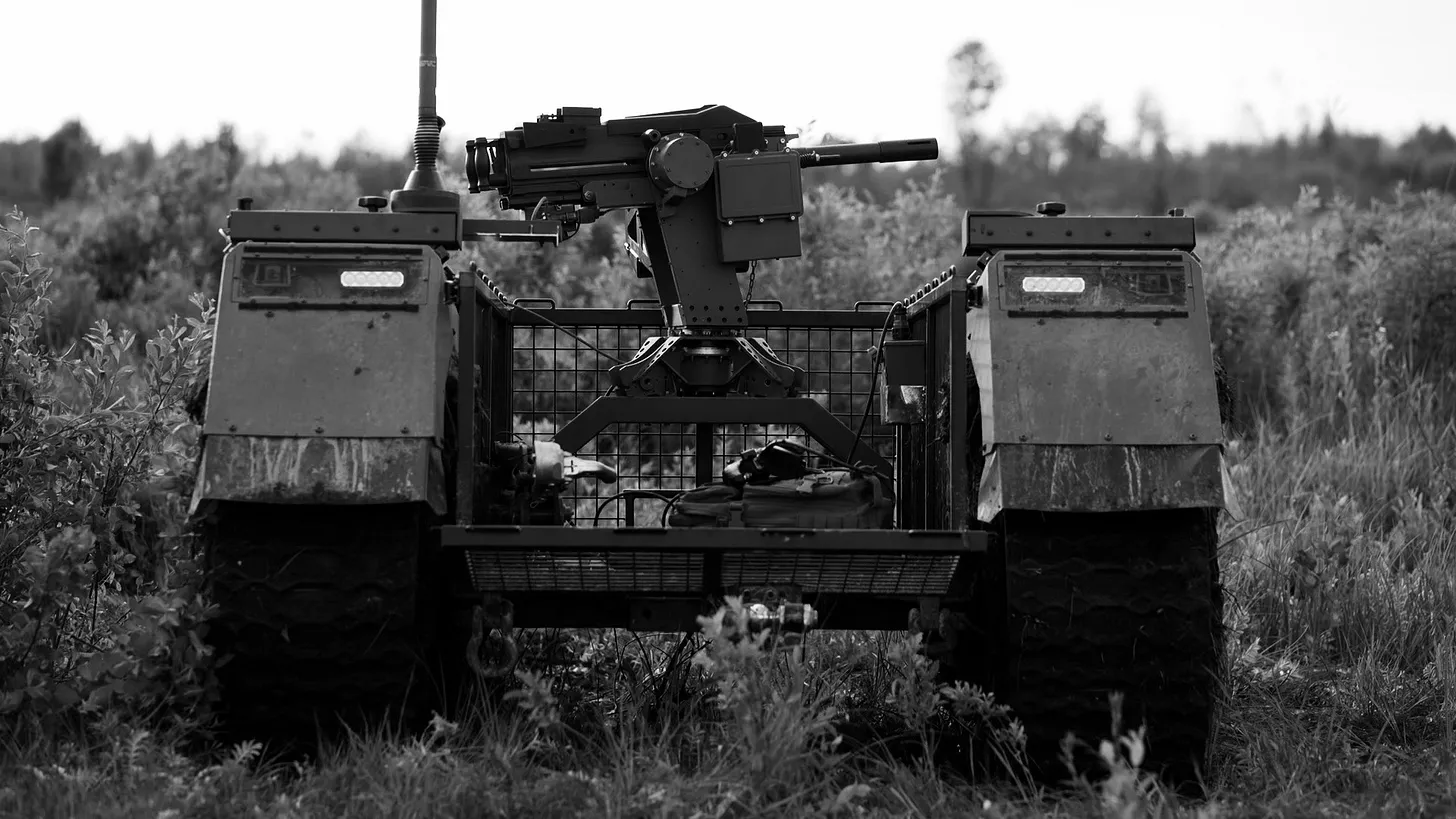
Photo credit: Frontline Robotics

Share on Linkedin

Frontline has confirmed to Resilience Media that Milrem is not taking a strategic investment in its business as part of the deal, but from what we understand, the companies are seeing this as the start of a partnership and more collaborations in the future.

You Might Also Like

Munich facility gives Spire a base for sovereign space capabilities

Ukrainian Magura sea drone found in Greek cave near Lefkada

Two drones entering from Russia and armed with warheads land in Latvia

For context, Frontline recently raised a seed round of $800,000, with backers including the defense tech unicorn Quantum Systems, which has a 10% stake in the business. Milrem is majority-owned by the Edge Group based out of the United Arab Emirates.

Frontline CMO Mykyta Rozhkov told Resilience Media that the pair began to collaborate six months ago after meeting in late 2024 at a Darkstar bootcamp in Kyiv. What caught the attention of the Ukrainian startup, he said, was THeMIS’ size and payload capacity. The vehicle is bigger and can carry not only the turret but more ammunition than the competition.

Ensuring the ongoing development of THeMIS is critical for another reason. For years, the Russian government-aligned Center for Analysis of Strategies and Technologies (CAST) has offered a bounty of 2 million roubles (around US$25,000) for a captured THeMIS UGV — which is a key component of Ukraine’s defence effort — allegedly to reverse engineer the UGV and feed its know-how into Russian blueprints for similar systems.

“We take it as a compliment,” Milrem’s director of marketing and communications Gert Hankewitz said to Resilience Media in response to the bounty on its vehicles.

Defense companies regularly partner and integrate their technologies. This partnership between Milrem and Frontline is distinct, however, in part because both products are already being used in live combat in Ukraine.

This also means the companies have been accruing live battlefield experience, which gets incorporated into further iterations.

The autonomous THeMIS can reach a speed of 20 kilometers per hour and recalculate to acquire targets within 80 milliseconds. During tests, the integrated systems were able to engage targets at a range of 1,100 meters.

The THeMIS, as it is now, is not the same vehicle which first entered Ukraine in 2022, said Raul Rikk, Milrem’s capability development director.

Moreover, the THeMIS has been deployed in ways that have gone far beyond the use cases that Milrem originally envisioned. For instance, as Milrem’s chief sales officer Patrick Shepherd noted, it never expected to see the UGV used to deliver timber to construct fortifications at the frontline.

Unmanned logistics has been seen as an important complement to the proliferation of unmanned aerial vehicles: both help forces preserve life in the execution of basic and more complex military activities.

That has translated into business, albeit on a scale significantly smaller than defence companies in the West may recognise. Frontline Robotics, founded in 2023, appears to have grossed $180,000 in 2024 based on published financial data. It declined to comment on the figure but noted to RM that it has worked with 40 different units in the country.

Frontline unveiled the BURIA in early 2025, and it is now in serial production. Frontline said it had enough orders to utilize 100% of their capacities in Q1 2025 – a rarity in Ukraine, where money is often short. The price for BURIA is “under 20% of the cost of some Western systems,” Milrem’s Hankewitz told Resilience Media.

In the coming weeks, Frontline and Milrem said they will continue with tests, reviewing various battlefield scenarios to better calibrate the collaborative product.

The partnership comes in the wake of Frontline’s alliance with Quantum System and represents the next step in its strategy of working with partners across the European defence industry.

“By integrating Ukrainian battle-proven solutions into top-tier European defence systems, we can equip Ukraine’s armed forces with the best weapons and boost their frontline capabilities,” Rozhkov said.


Tags: Edge GroupFrontline RoboticsGert HankewitzMilrem RoboticsMykyta Rozhkov
Previous Post

BAE Invests in a Startup; US Accused of Chinese Cyberattack; Darkstar Bootcamp returns to Kyiv (quiet week)

Next Post

Finnish Defence Company Millog Launches New Testing Centre for NATO and EU Dual-Use Tech

Resilience Media

Resilience Media

Start Ups. Security. Defense.

Related News

Munich facility gives Spire a base for sovereign space capabilities

Munich facility gives Spire a base for sovereign space capabilities

byJohn Biggs
May 8, 2026

Spire Global has opened a satellite manufacturing facility in Munich as European governments push to expand sovereign space and intelligence...

Ukrainian Magura sea drone found in Greek cave near Lefkada

Ukrainian Magura sea drone found in Greek cave near Lefkada

byJohn Biggs
May 8, 2026

Greek authorities are investigating the discovery of an unmanned surface vehicle (USV), known as a Magura V5 waterborne drone, off...

‘One alone isn’t a fighter’: Latvia opens up to allies as NATO DIANA supersizes

Two drones entering from Russia and armed with warheads land in Latvia

byJulia Gifford
May 8, 2026

A drone incursion this week in Latvia highlights the risk of grey-zone threats as fighting continues on in Ukraine against...

black and white computer keyboard

Analysis: Europe’s chip ambitions risk going stale

byPaddy Stephens
May 8, 2026

Headlines warn that helium shortages – caused by the ongoing war in Iran and the wider region – are threatening...

ARX expands Ukraine presence as uncrewed ground robot demand surges

ARX expands Ukraine presence as uncrewed ground robot demand surges

byJohn Biggs
May 7, 2026

The robotic ground war is heating up in Ukraine with companies are sending hundreds of uncrewed ground vehicles (UGVs) to...

(L-to-R): James Palles-Dimmock (CEO) with co-founders Prof John Morton (CTO) and Prof Simon Benjamin (CSO)

Quantum Motion raises $160M for silicon-based quantum computers that fit in a server rack

byPaul Sawers
May 7, 2026

Large-scale quantum computers remain an elusive goal, but with multiple nations hustling to be the first to build and use...

L-to-R: Joakim Sjöblom (co-founder & CEO), Sebastian Reismer (head of construction), Carl Duforce (co-founder & COO)

Swebal raises $35M to rekindle Europe’s TNT supply chain

byPaul Sawers
May 7, 2026

NATO is facing a shortage of TNT, an essential explosive in the manufacturing of weapons. Now, startups are setting up...

Estonia is setting up a new ‘rare drone’ tech testing lab to ease the European bottleneck

Estonia is setting up a new ‘rare drone’ tech testing lab to ease the European bottleneck

byFiona Alston
May 6, 2026

Estonia has unveiled plans for a new lab designed to test the next wave of defence technology, a facility that...

Load More
Next Post
Finnish Defence Company Millog Launches New Testing Centre for NATO and EU Dual-Use Tech

Finnish Defence Company Millog Launches New Testing Centre for NATO and EU Dual-Use Tech

As European governments combat ‘digital sabotage,’ open source startups stand to benefit

As European governments combat ‘digital sabotage,’ open source startups stand to benefit

Most viewed

InVeris announces fats Drone, an integrated, multi-party drone flight simulator

Uforce raises $50M at a $1B+ valuation to build defence tech for Ukraine

Auterion, the drone software startup, eyes raising $200M at a $1.2B+ valuation

Palantir and Ukraine’s Brave1 have built a new AI “Dataroom”

Senai exits stealth to help governments harness online video intelligence

Twentyfour Industries emerges from stealth with $11.8M for mass-produced drones

Resilience Media is an independent publication covering the future of defence, security, and resilience. Our reporting focuses on emerging technologies, strategic threats, and the growing role of startups and investors in the defence of democracy.

  • About
  • News
  • Resilence Conference
    • Resilience Conference Copenhagen 2026
    • Resilience Conference Warsaw 2026
    • Resilience Conference 2026
  • Guest Posts
  • Subscribe
  • Privacy Policy
  • Terms & Conditions

© 2026 Resilience Media

No Result
View All Result
  • Home
  • Subscribe
  • About
  • Events
  • Guest Posts
  • Interview
  • News
  • Resilience Conference London 2026
  • Resilience Conference Copenhagen 2026
  • Resilience Conference Warsaw 2026
  • Startups
  • Venture
  • Weekly Digest

© 2026 Resilience Media

This website uses cookies. By continuing to use this website you are giving consent to cookies being used. Visit our Privacy and Cookie Policy.