The Exploration Company (TEC), a five-year-old aerospace firm headquartered in Germany, has raised $450 million in a Series C round of funding as it looks to develop reusable spacecraft for transporting cargo to and from orbit and expand Europe’s independent access to space.
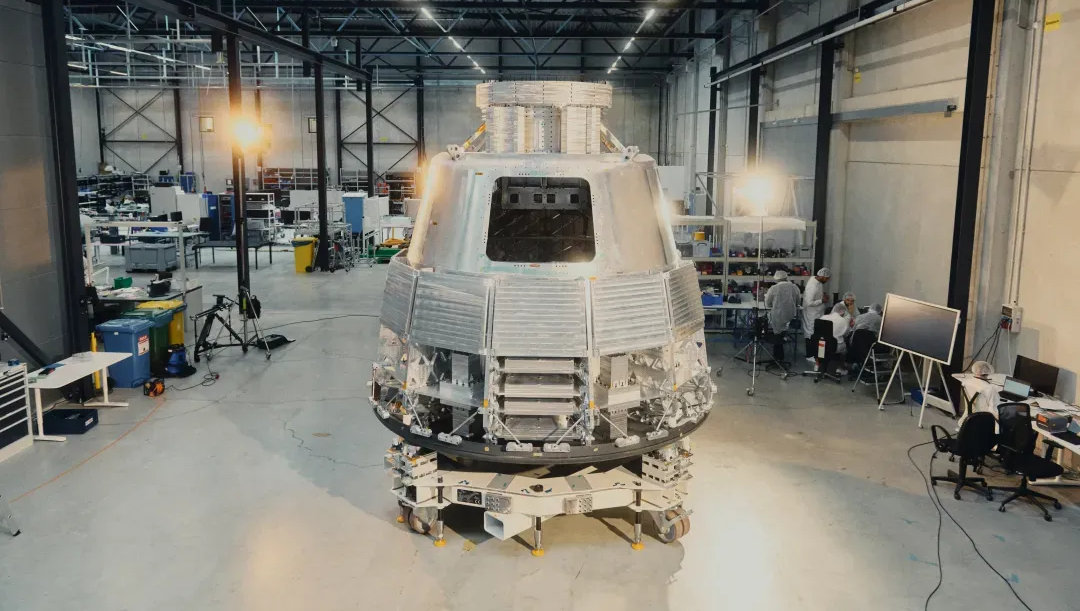
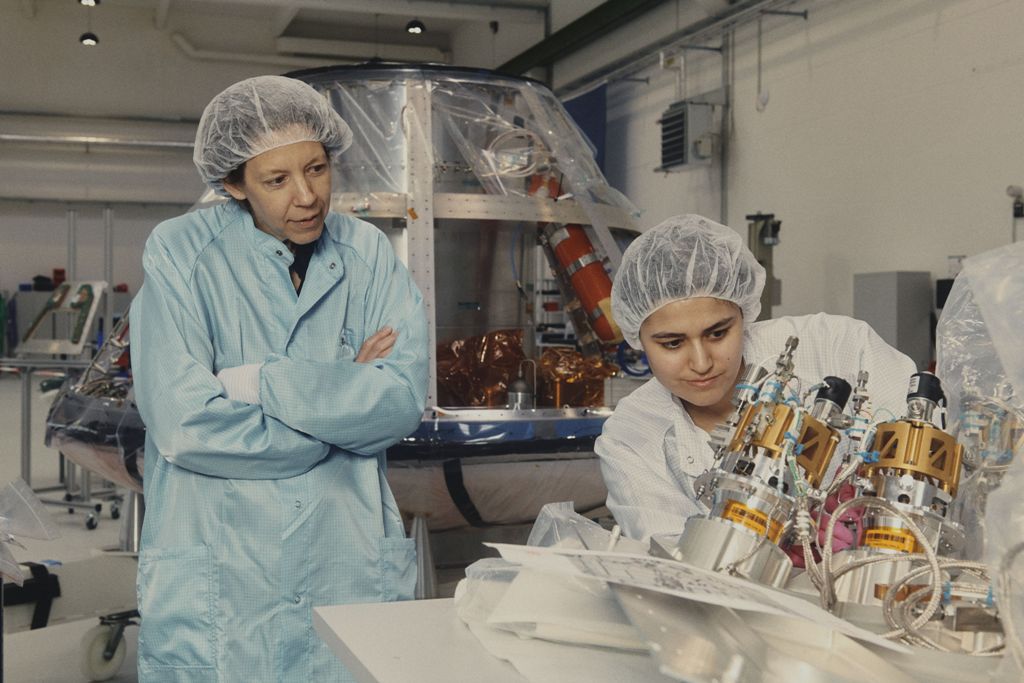
Founded out of Munich in 2021 by CEO Hélène Huby, an aerospace veteran with extensive experience across senior space roles at Airbus, TEC is building a reusable capsule dubbed Nyx, designed to dock autonomously with space stations, deliver supplies and scientific payloads, collect cargo for the return journey and re-enter Earth’s atmosphere for reuse. The company is developing the vehicle under an European Space Agency (ESA) programme aimed at establishing a cargo service to the International Space Station (ISS).
In a statement, Huby says that while much of modern life now depends on infrastructure in space, the ability to sustain operations in and out of orbit is far from a simple endeavour. The new financing will help TEC move Nyx toward a mission to dock with the ISS and return safely to Earth, while it will also help accelerate development of Storm, the high-thrust reusable rocket engine the company unveiled in June.
“We are scaling from Europe with talent, customers and partners from around the world because the next generation of space transportation must be built to serve more nations, industries and people,” Huby explains.
TEC has emerged as one of Europe’s most heavily funded private space companies. Following its €40.5 million ($44 million) Series A round in 2023, TEC went on to raise a further €150 million ($160 million) the following year, with its latest round — which the company calls “the largest-ever Series C announced by a European space company” — taking its total funding to nearly $680 million.
The round was co-led by Bessemer Venture Partners, Atomico, and EQT’s Scaleup Europe Fund, with participation from a slew of existing backers including Balderton, Plural, Cherry, and Red River West.
The company tells Resilience Media that it’s not sharing a valuation — however, reports emerged in July that TEC was eyeing a $2 billion valuation off the back of a $300 million raise.
The SpaceX factor
TEC’s news comes amid a flurry of funding activity across Europe’s space tech sector, with Germany in particular emerging as a hotbed of investment. German space cargo startup Atmos announced a $30 million round in April, followed in June by rocket maker Isar Aerospace, which announced €270 million in fresh funding at a €2 billion valuation. Elsewhere, Finnish satellite company Iceye announced a €1 billion round in June at a chunky €10 billion valuation, while Irish space tech firm Ubotica announced $11 million in funding later that month.
However, the elephant in the room amid all of this is Elon Musk’s SpaceX, which already dominates large parts of the commercial space market, including launch, cargo transport and satellite connectivity. Following its blockbuster IPO in June, SpaceX also became one of the world’s most valuable public companies, with its market capitalisation currently sitting at more than $2 trillion.
That heft has increasingly become a strategic concern for Europe. Much like the bloc’s broader technology sovereignty push to reduce its dependence on US companies across areas such as cloud computing and artificial intelligence (coincidentally, in line with that, Mistral today announced a €3 billion round, also co-led by the ScaleUp Europe Fund), governments are keen to develop European-owned space infrastructure, launch capacity and satellite communications. The stakes have become particularly visible in Ukraine, where SpaceX’s Starlink has become deeply embedded in battlefield communications.
“Space sovereignty is increasingly critical for Europe’s national security, particularly as space becomes the infrastructure layer that the modern economy runs on,” Alex Ferrara, partner at Bessemer Venture Partners, said in a statement. “Europe cannot rent its way to owning that access.”
There are signs elsewhere that this wider effort is beginning to bear at least some fruit. Earlier this week, Isar Aerospace successfully sent its Spectrum rocket into orbit from Norway, becoming the first privately developed rocket to reach orbit from continental Europe. The achievement gives Europe a new homegrown option for launching satellites, while TEC is now gearing up for its own major milestone: a full-scale demonstration mission to the ISS, currently targeted for 2028.