
Tuesday 30 June, 2026
[email protected]
Resilience Media
  • News
    • Events
    • Interview
    • Startups
    • Venture
    • Weekly Digest
  • Resilience Conference
    • Resilience Conference Warsaw 2026
    • Resilience Conference Copenhagen 2026
    • Resilience Conference London 2026
  • About
  • Guest Posts
    • Author a Post
  • Subscribe
No Result
View All Result
  • News
    • Events
    • Interview
    • Startups
    • Venture
    • Weekly Digest
  • Resilience Conference
    • Resilience Conference Warsaw 2026
    • Resilience Conference Copenhagen 2026
    • Resilience Conference London 2026
  • About
  • Guest Posts
    • Author a Post
  • Subscribe
No Result
View All Result
Resilience Media
No Result
View All Result

UK puts drones at the centre of its next defence investment plan

John BiggsbyJohn Biggs
June 29, 2026
in Drones & UAS, News, Startups
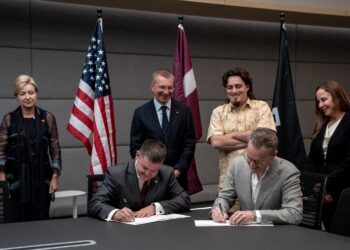
Rear Admiral Rich Harris who spoke to Resilience about DIP in Copenhagen.

Rear Admiral Rich Harris who spoke to Resilience about DIP in Copenhagen.

Share on Linkedin

The UK government will commit more than £5 billion over four years to a major drone and autonomous systems integration across the UK Armed Forces. The move is one of the largest in UK history and will be included in the Defence Investment Plan (DIP), the country’s planned injection of up to £300bn in military funding.

You Might Also Like

Estonian forces trial portable drones that prevent RF jamming on the battlefield

Exclusive: Osney Capital closes £60M cyber fund to back UK’s next generation of security startups

Nokia resurfaces to help build Finland’s border guard anti-drone capability

The funding will build out uncrewed systems across land, air, and sea forces. It will support new autonomous platforms, testing infrastructure, industrial capacity, and faster collaboration between the Ministry of Defence and British defence companies.

“This game-changing investment will strengthen our Armed Forces on land, at sea, and in the air, ensuring our servicemen and women have the cutting-edge capabilities they need to deter evolving threats and keep the British people safe,” said Prime Minister Keir Starmer.  “At the same time, we are backing British innovation, British industry, and British jobs and delivering opportunity to every corner of the country. ”

The announcement reflects a growing recognition within the UK government that warfare has changed faster than traditional procurement systems can handle. Ukraine has shown that drones can be produced, modified, lost, and replaced at speed, and the UK government said that Ukraine is using roughly 200,000 drones a month, while the Iran conflict saw as many as 700 offensive drones launched per day at its height. This dependence on autonomous systems shows that focusing on traditional, manned defence technologies may soon be problematic.

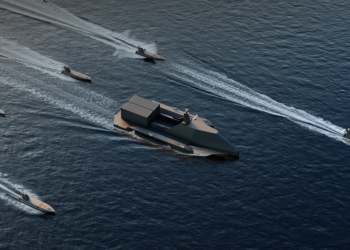
The investment will fund attack drones flying with Army helicopters, new uncrewed systems supporting RAF jets, and a hybrid Royal Navy built around crewed and uncrewed vessels.

A central part of the effort will be the Uncrewed Systems Centre in Swindon, described by the government as Europe’s largest drone testing centre. The plan also includes a new Uncrewed Systems Taskforce intended to speed the development and deployment of autonomous capabilities with industry.

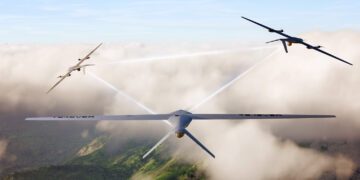
Further investment will go to Project NYX, a plan to launch up to “24 autonomous armed drones” that will fly next to the Army’s Apache attack helicopters and Project Corvus, a surveillance and intelligence gathering system. This merging of crewed and uncrewed systems is part of the government’s plan to create fully autonomous devices that will support rather than replace traditional soldiers.

The money will also go to “a major investment into inexpensive expendable autonomous systems and loitering munitions to enhance the lethality of the Army, including a £50 million boost over the next 12 months for the Army’s RAPSTONE programme, funding additional first-person view and interceptor drones,” said the government in a release.

“The character of warfare is rapidly changing. In Ukraine and the Middle East, uncrewed systems are defining conflicts. This largest-ever UK investment into these evolving technologies will help our Armed Forces stay ahead of our adversaries, backed by the best of our defence industry. We are giving our extraordinary people the equipment they need to fight and win,” said Defence Secretary Dan Jarvis MBE MP.

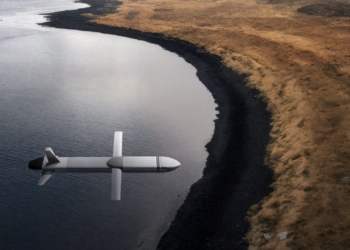
For the Royal Navy, the investment supports a shift toward what officials call a Hybrid Navy. The plan includes uncrewed missile platforms to add firepower, uncrewed sensing systems for anti-submarine warfare in the North Atlantic, extra-large uncrewed underwater vehicles to work with crewed submarines, and systems designed to scan the sky for threats. In the 2030s, the government plans to expand these platforms and bring at least six Common Combat Vessels into service as part of a networked maritime air defence system.

The industrial message is as important as the military one. The government is framing the plan as a way to back British jobs, expand sovereign AI and autonomous systems capability, and give the military manufacturing industry clearer signals for what to build. Further, it points to the slow but steady dispersal of the DIP investment with a focus on UK-based manufacturing and growth.

Tags: ArmyDronesNavyUK
Previous Post

Estonian forces trial portable drones that prevent RF jamming on the battlefield

John Biggs

John Biggs

John Biggs is an entrepreneur, consultant, writer, and maker. He spent fifteen years as an editor for Gizmodo, CrunchGear, and TechCrunch and has a deep background in hardware startups, 3D printing, and blockchain. His work has also appeared in Men’s Health, Wired, and the New York Times. He has written nine books including the best book on blogging, Bloggers Boot Camp, and a book about the most expensive timepiece ever made, Marie Antoinette’s Watch. He lives in Brooklyn, New York. He runs the Keep Going podcast, a podcast about failure. His goal is to share how even the most confident and successful people had to face adversity.

Related News

Estonian forces trial portable drones that prevent RF jamming on the battlefield

Estonian forces trial portable drones that prevent RF jamming on the battlefield

byJohn Biggs
June 29, 2026

Sky Spy and Orqa have demonstrated a drone-based signals intelligence system with the Estonian Defence Forces, a project that adds...

Exclusive: Osney Capital closes £60M cyber fund to back UK’s next generation of security startups

Exclusive: Osney Capital closes £60M cyber fund to back UK’s next generation of security startups

byCarly Page
June 29, 2026

Osney Capital has closed its debut cybersecurity fund at a £60 million hard cap after investors piled in beyond its...

Nokia resurfaces to help build Finland’s border guard anti-drone capability

Nokia resurfaces to help build Finland’s border guard anti-drone capability

byJohn Biggs
June 26, 2026

Nokia announced its participation in an industrial consortium led by the Finnish Border Guard to build anti-drone systems for government...

a chinese flag hanging from the side of a building

Sanctioned Chinese cyber giant claims AI can rival Anthropic’s Mythos

byCarly Page
June 26, 2026

A Chinese cybersecurity company sanctioned by the US claims it has developed an artificial intelligence system capable of hunting software...

SE3 Labs unveils its spatial AI tools for defence backed by Lakestar and Sequoia Scouts

SE3 Labs unveils its spatial AI tools for defence backed by Lakestar and Sequoia Scouts

byIngrid Lunden
June 26, 2026

Large Language Models are changing how non-technical people engage with AI, and those learnings are permeating into the world of...

Copenhagen-based startup Acodyne lands €2.5 million pre-seed round for autonomous cargo drones

Copenhagen-based startup Acodyne lands €2.5 million pre-seed round for autonomous cargo drones

byJohn Biggs
June 25, 2026

Copenhagen-based Acodyne announced it has raised €2.5 million in pre-seed funding to help build autonomous cargo aircraft designed for "heavy...

Nearfield Instruments

Nearfield Instruments raises $380M to stake Europe’s claim in the global chip supply chain

byPaul Sawers
June 25, 2026

Sovereignty has emerged as one of the defining strategic preoccupations in Europe today, intersecting with almost every aspect of national...

Irish space tech firm Ubotica raises $11M

Irish space tech firm Ubotica raises $11M

byFiona Alston
June 24, 2026

Ubotica, the Irish space tech firm developing orbital AI for satellites, has raised $11 million to scale the commercialisation of...

Load More

Most viewed

InVeris announces fats Drone, an integrated, multi-party drone flight simulator

Uforce raises $50M at a $1B+ valuation to build defence tech for Ukraine

Auterion, the drone software startup, eyes raising $200M at a $1.2B+ valuation

Palantir and Ukraine’s Brave1 have built a new AI “Dataroom”

Twentyfour Industries emerges from stealth with $11.8M for mass-produced drones

Senai exits stealth to help governments harness online video intelligence

Resilience Media is an independent publication covering the future of defence, security, and resilience. Our reporting focuses on emerging technologies, strategic threats, and the growing role of startups and investors in the defence of democracy.

  • About
  • News
  • Resilence Conference
    • Resilience Conference Copenhagen 2026
    • Resilience Conference Warsaw 2026
    • Resilience Conference 2026
  • Guest Posts
  • Subscribe
  • Privacy Policy
  • Terms & Conditions
  • Mission Statement & Code of Practice
  • Press

© 2026 Resilience Media

No Result
View All Result
  • Home
  • About
  • Subscribe
  • Events
  • Guest Posts
  • Interview
  • News
  • Resilience Conference London 2026
  • Resilience Conference Copenhagen 2026
  • Resilience Conference Warsaw 2026

© 2026 Resilience Media

This website uses cookies. By continuing to use this website you are giving consent to cookies being used. Visit our Privacy and Cookie Policy.