Dominion Dynamics, the fast-growing Canadian startup building defence tech for extreme climates, is doubling down on the opportunity with a significant funding round: a Series A of $100 million (CAD$150 million). Resilience Media understands that the round is coming in at a post-money valuation of $400 million (CAD$570 million).
Canada has particular circumstances that contribute to how it needs to approach defence: namely an enormous and remote geography with arctic conditions that make it impossible to use traditional communications networks and operate standard defence systems. That is what Dominion is aiming to build with mesh-based networking and other technology and hardware that is capable of working across and in those conditions.
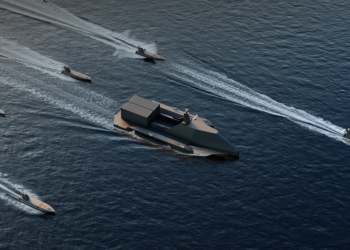
The plan will be to use the funding to continue growing Dominion’s business after a very heady six months. Some highlights: The company largely self-funded the development of its flagship product, AuraNet, a mesh-based land, sea and air sensor network designed for arctic and other extreme climates.
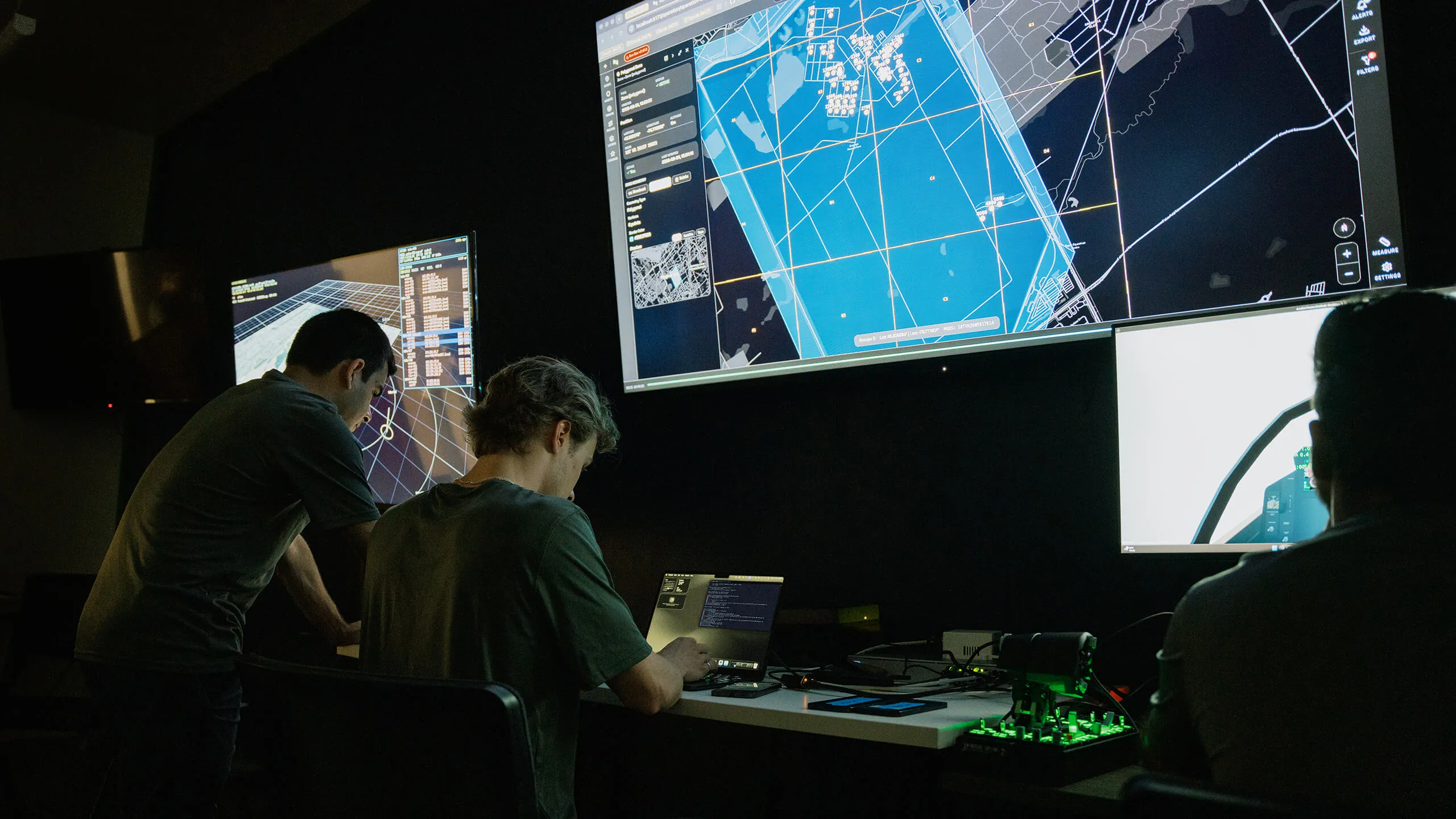
It then deployed AuraNet with the Canadian Rangers across the Northwest Passage to Churchill Bay, and in the process developed a second product: a common operating picture using those sensors that pulled in other data, the start of “functioning C2 (command and control) product,” in the words of CEO and founder Eliot Pence. C2 was always a concept he thought Dominion would tackle, but the timing was dictated by circumstances.
“Development on the edge represents a more natural ‘go to market,’” he said in an interview. “In Ukraine, the iteration cycles are hours or days, not years and months, and that is what we replicated with this operation with 200 updates to the back end and refactoring the whole platform over 90 days.” (And you can hear more about this from Pence himself at London’s Resilience Conference later this autumn.)
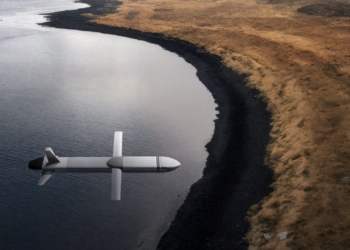
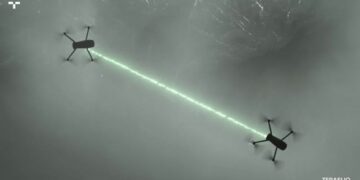
It’s now putting a further $50 million into developing its own extreme climate drone, the Dominion Scout.
Following all of that, the company upgraded to a 25,000 square foot manufacturing facility, opened an office in Toronto, and is on track to have 100 employees by end of year (starting at 15 in January). Hires are coming from Tesla, Rheinmetall, Google, Rivian and others.
Pence was also officially named to Prime Minister Mark Carney’s advisory council on US-Canada trade. That official role was perhaps inevitable: Pence had been an early employee at Anduril, the world’s biggest ‘neo-prime’ out of the US, where his last job was to lead its international business.
As we reported previously, he informally advised the Canadian government on how to build more sovereign defence in the wake of shifting geopolitical tides — a set of conversations that ultimately led to Pence founding Dominion Dynamics in the first place.
Notably, it was only six months ago that Dominion announced a seed round. Pence said that the startup “pulled up” plans for this raise and carried out the process in just four weeks and was 1.9x oversubscribed.
“It was shocking,” he said, not least because all of this played out in Canada. The country doesn’t have any prominent sovereign defence primes (although it has a couple of large industrial aerospace companies), in part because it doesn’t have a huge military procurement ecosystem.
“I’d been told been told Canadians don’t want to invest in defence and funds don’t allow it, but our fundraise ran counter to everything I’ve been told.”
Georgian, one of Canada’s biggest VC firms, is leading the investment, after also leading Dominion’s $15 million seed in January 2026.
The Series A also includes a long list of others such as the Royal Bank of Canada, Valor Equity Partners, Valor Atreides AI Fund, Expeditions, Lakestar, OMERS, Business Development Bank of Canada (BDC), Deloitte Ventures (Canada), JDY Capital and previous backers British Columbia Investment Management Corporation (BCI), Bessemer Venture Partners, Garage Capital, Golden Ventures and Silent Ventures.
Each investor brings value beyond money to the Ottawa-based startup. Among them, Valor was an early backer of SpaceX and reportedly made a return of around $60 billion in the IPO, one of the biggest ever for a VC, so it’s not surprising to see it making a wider range of frontier bets.
Expeditions has been a prolific defence tech investor in Europe and this underscores how its pursuing its wider thesis; the same goes for the US investor, Bessemer. Lakestar meanwhile is led by Klaus Hommels, who, as former chairman of the NATO’s NIF, helped set the pace for defence tech investing across both NATO and Europe. Deloitte as a systems integrator works with a large range of customers a strengthened relationship with Dominion could help the startup with business growth.
Dominion describes the round as the largest Series A to date for a Canadian defence tech, but it might be easier to say it’s a large Series A for a Canadian startup full-stop, since there are very few defence companies built and developed in the country to compare it to. Dominion’s ambition is to become the country’s first ‘neo-prime’ in the market.
Dominion’s inception and growth are coming at a key moment that’s spurring a lot of the activity in the world of defence and defence tech.
Geopolitical events such as the wars in the Middle East and Ukraine — as well as the changing posture of the US relative to how it sees its role in defending and financing through NATO and the world at large — are leading many countries to reassess.
Could they be more independent — sovereign — when it comes to their own defence and overall resilience, if push came to shove?
That has played out in Canada in a big way, not just because of the US’s changing global posture but because of how it’s viewed Canada. Behind every joke that US President Trump makes about coopting Canada as the 51st state is an ongoing concern in Canada about how it seriously asserts its own sovereignty.
And that’s what is behind this investment. “Dominion and Eliot are leading the charge for defence tech in Canada in general,” said Margaret Wu, who led the deal for Georgian both in seed and Series A. Charitably, she described Canada’s existing defence posture “a nascent program,” and now Dominion has a prime opportunity (pun intended) to “build the software stack for that.”