Tuesday 24 March, 2026
[email protected]
Resilience Media
  • About
  • News
  • Resilience Conference
    • Resilience Conference Warsaw 2026
    • Resilience Conference Copenhagen 2026
    • Resilience Conference London 2026
  • Guest Posts
    • Author a Post
  • Subscribe
No Result
View All Result
  • About
  • News
  • Resilience Conference
    • Resilience Conference Warsaw 2026
    • Resilience Conference Copenhagen 2026
    • Resilience Conference London 2026
  • Guest Posts
    • Author a Post
  • Subscribe
No Result
View All Result
Resilience Media
No Result
View All Result

Driving innovation in Defence: Bridging the Gap Between Startups and Ministries of Defence

A guest post from John Ridge, Chief Adoption Officer, NATO Innovation Fund

Resilience MediabyResilience Media
July 1, 2025
in Guest Posts, News, Venture
Photo by HAIPING WU on Unsplash

Photo by HAIPING WU on Unsplash

Share on Linkedin

Innovation is key, not only for winning wars, but also for preventing them. In today’s world, where threats are constantly evolving and our adversaries are innovating at the pace of conflict, staying ahead with new and bold technologies is a necessity. By working together, startups and MoDs can overcome barriers, adopt new technologies faster, and create a stronger, more agile defence system. The Rapid Adoption Action Plan – which was just endorsed by Allies at the 2025 NATO Summit in the Hague – makes crystal clear the fact that the future of defence is one where innovation is not just important – it’s imperative.

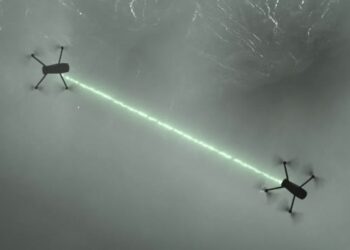
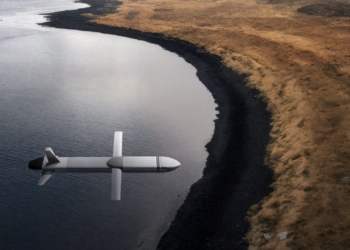
In today’s fast-changing world, innovation is vital not only for winning wars but also for preventing them. Modern defence strategies rely on cutting-edge technology to address emerging dangers like cyberattacks and drones, while also protecting or even replacing soldiers, sailors and aviators on the frontlines. To keep up, Ministries of Defence (MoDs) need to rethink how they adopt new ideas and technologies. Without change, defence systems risk of falling behind.

The most obvious deterrent effect of innovation is that it can help field capabilities that give one side or other a clear advantage in any future conflict. One obvious historical example is the race to develop nuclear weapons during World War II – capabilities that fundamentally altered the balance of power. But innovation also offers a more subtle way to deter. By introducing uncertainty into an adversary’s decision-making calculus, ramping up tech capabilities helps create enough doubt to prevent a decision to go to war. Because the innovative forces are constantly evolving, it is hard to predict the outcome of any future conflict.

Why is it hard for defence ministries to innovate?

Even though innovation is essential to prevent wars, many decision-makers in MoDs are cautious about adopting new technologies. Their hesitation often comes from a reliance on proven equipment, either for rational concerns about the potential of new technology or cultural attachment to old ways of doing things. While this may appear to reduce risks in the short term, sticking only to what’s familiar increases them in the long run.

One major challenge is building trust in new technologies. Startups need to show that their solutions work by testing them in realistic settings. At the same time, Ministries of Defence need to give startups opportunities to prove their technologies and provide clear guidance on what they need, framed as problems, not pre-judged solutions. MoD decision-makers also often lack the appetite to take calculated risks. We therefore need to think about how we change structures, processes and incentives to encourage them to try new approaches. MoDs must create systems that reward sensible risks and prioritise the adoption of new technologies. By working together, MoDs and startups can overcome these challenges and accelerate innovation.

Three ways to speed up defence technology adoption

To adopt new technologies faster, MoDs can take three key steps:

1. Set clear goals for innovation: MoD decision-makers need clear direction and incentives to focus on new technologies. Giving them a strong mandate to innovate will empower them to take action.

2. Prioritise speed over perfection: On the battlefield, reliable equipment is vital. But as technology becomes a key advantage, speed matters more than ever. Defence teams should focus on adopting solutions quickly, even if they aren’t yet perfect.

3. Use and improve what’s already out there: Many technologies that meet most defence needs already exist. Adapting these to specific requirements is faster and cheaper than creating something entirely new.

The Role of the NATO Innovation Fund (NIF)

The NATO Innovation Fund (NIF) is helping bridge the gap between startups and MoDs. Acting as a connector, the NIF brings these two groups together to collaborate effectively. The NIF team understands what MoDs need and helps ensure clarity and mutual understanding. It also connects the dots by using its global reach to link innovation hubs with defence requirements, creating opportunities for collaboration.

At the same time, the NIF works closely with startups, to help them develop their cutting edge-tech into capabilities that can be deployed and used effectively by warfighters.

Looking ahead: A plan for Rapid Adoption

To speed up the adoption of new technologies, the NIF worked closely with NATO to help inform the Rapid Adoption Action Plan. This plan will make it easier for MoDs to integrate innovative solutions into their systems. The goal is to strengthen operational readiness, ensuring that defence systems can respond quickly to new challenges. By doing so, we help deter future conflicts or, should deterrence fail, help the Allied nations win.

John Ridge leads on Adoption for the NATO Innovation Fund – getting our portfolio companies’ technology into the hands of end-users across the Alliance. To do so, he works closely with ministries of defence and governments across NATO as well as with a broad spectrum of industry partners. The Adoption team’s insights into future defence and national security requirements also help shape the Fund’s investments.

Prior to joining the NATO Innovation Fund, John spent over three decades in the Armed Forces and government. He first joined the Army as a Reservist in 1989 and, after studying Architectural Engineering at the University of Leeds, joined the Regular Army as a Royal Engineers officer. As a junior officer, he completed tours with Commando forces, Gurkhas, bomb disposal and close-support engineers. He deployed to Northern Ireland, Norway, Oman, Kosovo, Bosnia and Afghanistan. His final two tours in uniform were in command of 8 Engineer Brigade and as Chief of Joint Force Operations leading the UK’s crisis response headquarters. John left the Army in 2020 to join the Civil Service. He spent two years in Defence Intelligence, before a six-month loan to 10 Downing Street. He then returned to MOD as Director Defence Innovation where he led Defence’s innovation portfolio, before leaving the civil service in November 2024 to join the NATO Innovation Fund. Outside work John is a keen indoor rower, cyclist and runner. He is married to Nina, a broadcast meteorologist and teacher, and they have four children.

You Might Also Like

C-UAS tech likely to see only a ‘limited’ role in Iran conflict, say startups

The UK is on the precipice of geopolitical and military irrelevance

Meet the company preparing for a world without GPS

Tags: John RidgeNATO Innovation Fund
Previous Post

When will Ukrainian defence tech startups be able to export?

Next Post

Digital Sovereignty and the startup-MoD challenge

Resilience Media

Resilience Media

Start Ups. Security. Defense.

Related News

C-UAS tech likely to see only a ‘limited’ role in Iran conflict, say startups

C-UAS tech likely to see only a ‘limited’ role in Iran conflict, say startups

byTom Pashbyand1 others
March 24, 2026

Innovative, low-cost uncrewed aerial system (UAS) technology is at the centre of Iran’s response in the Middle East to the...

The UK is on the precipice of geopolitical and military irrelevance

The UK is on the precipice of geopolitical and military irrelevance

byGuest Author
March 24, 2026

Imagine the headline next week: “Trump seizes Cyprus, Chagos and Gibraltar from the UK.”  Such is the ambiguity of Britain’s...

Meet the company preparing for a world without GPS

Meet the company preparing for a world without GPS

byJohn Biggs
March 23, 2026

The modern world runs on signals most people never see. GPS, the world's position system, now guides trucks, times financial...

How the Element CEO secured communications in thirty-four countries

How the Element CEO secured communications in thirty-four countries

byJohn Biggs
March 23, 2026

https://youtu.be/G9c3SAGx3HU Matthew Hodgson has spent more than a decade working on a question most people never think to ask: what...

Egide lands €8M to build low-cost interceptors as Europe races to counter drone swarms

Egide lands €8M to build low-cost interceptors as Europe races to counter drone swarms

byCarly Page
March 23, 2026

French defence startup Egide has raised €8 million in seed funding to develop a new class of low-cost interceptors aimed...

Defence Tech Valley 2025: Kicking Around Military Innovation at a Football Pitch

Brave1 packs rooms in the US with its Ukraine defence tech roadshow

byLuke Smith
March 23, 2026

Three years into the most drone-intensive conflict in history, Ukraine has built a defense tech industry that the world has...

a large flock of birds flying over a field

The Perfect Swarm: How Swarmer got its timing just right – by accident – and saw its US IPO pop

byIngrid Lunden
March 20, 2026

Timing accounts for a lot in business. Such was the case for Swarmer, a startup out of Ukraine that develops...

Buntar Aerospace raises $10.4 million from Axon, others

Buntar Aerospace raises $10.4 million from Axon, others

byJohn Biggs
March 19, 2026

Ukraine-based Buntar Aerospace has raised $10.4 million to expand its intelligence, surveillance, and reconnaissance (ISR) platform and software. The round...

Load More
Next Post
Digital Sovereignty and the startup-MoD challenge

Digital Sovereignty and the startup-MoD challenge

SoftBank Invests in Sceye to Accelerate Stratospheric Telecom and Disaster Resilience

SoftBank Invests in Sceye to Accelerate Stratospheric Telecom and Disaster Resilience

Most viewed

InVeris announces fats Drone, an integrated, multi-party drone flight simulator

Uforce raises $50M at a $1B+ valuation to build defence tech for Ukraine

Auterion, the drone software startup, eyes raising $200M at a $1.2B+ valuation

Twentyfour Industries emerges from stealth with $11.8M for mass-produced drones

Senai exits stealth to help governments harness online video intelligence

Palantir and Ukraine’s Brave1 have built a new AI “Dataroom”

Resilience Media is an independent publication covering the future of defence, security, and resilience. Our reporting focuses on emerging technologies, strategic threats, and the growing role of startups and investors in the defence of democracy.

  • About
  • News
  • Resilence Conference
    • Resilience Conference Copenhagen 2026
    • Resilience Conference Warsaw 2026
    • Resilience Conference 2026
  • Guest Posts
  • Subscribe
  • Privacy Policy
  • Terms & Conditions

© 2026 Resilience Media

No Result
View All Result
  • About
  • News
  • Resilence Conference
    • Resilience Conference Copenhagen 2026
    • Resilience Conference Warsaw 2026
    • Resilience Conference 2026
  • Guest Posts
  • Subscribe
  • Privacy Policy
  • Terms & Conditions

© 2026 Resilience Media

This website uses cookies. By continuing to use this website you are giving consent to cookies being used. Visit our Privacy and Cookie Policy.