The Ukrainian innovators developing defence products find themselves in a weird position at the moment. On one hand, they receive a steady stream of requests from embassies, foreign media, and VC firms. Shying away from such attention means not capitalising on the attention, one of the most important resources of today’s world. On the another hand, most of these companies are not able to export their products due to export restrictions in Ukraine.
The Exporting Security Forum, an event was organised by Tech Forces in UA, sought to address this complex topic. Over the past two years this association of leading manufactures of innovative weapons has invested extensive effort in outlining the reasons why Ukraine should revise the ban for the export of defence goods.
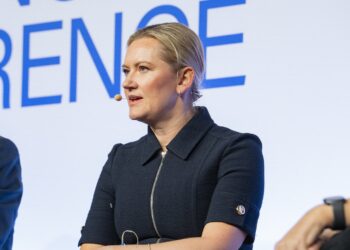
How did this ban come about? Officially it does not exist. ‘There is no law or a decree, which argues that export is closed,’ said Kateryna Mykhalko, Director-General of the coalition. In the absence of such a decree, the same pre-war export controls system functions. Theoretically, a producer can apply to the State Service of Export Control for a permit. ‘Most of these applications are refused with a very simple explanation, being that currently the need of the Armed Forces are a priority’, said Yuna Potomkina, a partner at Asters, on one of the forum’s panels.
This seems, of course, absolutely logical. Ukraine is fighting for its survival, so why would it voluntarily export what it needs to fight? The more complex answer was explained recently by President Volodymyr Zelensky: 40% of the Ukrainian defence industry is idle, lacking funds for production. In other words, it is not that the products potentially exported are the products that did not make it to the frontline but that these products are currently not even being built.
It is often argued exporting Ukrainian products could harm Ukrainian security because the enemy will ultimately get hold of these weapons and reverse-engineer them. The members of the Ukrainian ecosystem are not underplaying this threat. To manage these threats, they rely on homegrown due diligence capabilities, such as an intelligence firm like Molfar. Its founder and CEO, Artem Starosiek, hinted at a few cases where his firm was able to locate the Russian roots of allegedly European companies that sought to develop ties with the Ukrainian innovators.
Seeking access to Ukrainian technology is not the only way in which the enemy will try to take advantage of the potential export of defence products. Russia will most certainly launch information operations, fuelling a narrative like: ‘the bad weapons producers are profiteering, while our boys are bleeding in the trenches’. A pre-bunking campaign deployed before the export is widened may lessen the impact of such Russian operations, said Mariia Berlinska at the forum. She is an activist who has been supporting the development of the Ukrainian unmanned industry since 2014. Berlinska remembers all too well the state in which the Ukrainian defence innovation ecosystem was prior to the full-scale invasion: only a handful of producers survived from 2014 until 2022 due to a drop in governmental procurement and public interest. The few companies which did survive had relied heavily on exports. This time around, the whole of Ukrainian society should make a concentrated effort not to repeat the mistakes.
Much of the discussion regarding lifting the export ban is centred on these risks and challenges, while the added value of the Ukrainian defence industry to the free world receives less attention. There are multiple reasons why Ukrainian experience is needed in Europe, which currently not only recognises the threat Russia presents to its way of life, but also understands the consequences of over-reliance on support from the US. The knowledge of new weapons tactics, the ability to scale the production quickly and cheaply, the experience of innovating under constantly evolving battlefield conditions – all these areas constitute the Ukrainian competitive advantage, said Mykhalko of TFUA. With exports enabled, Ukraine would stop being ‘a victim of the war, the object of compassion’ and would become ‘an actor, capable of developing relations with partners on an equal footing’.
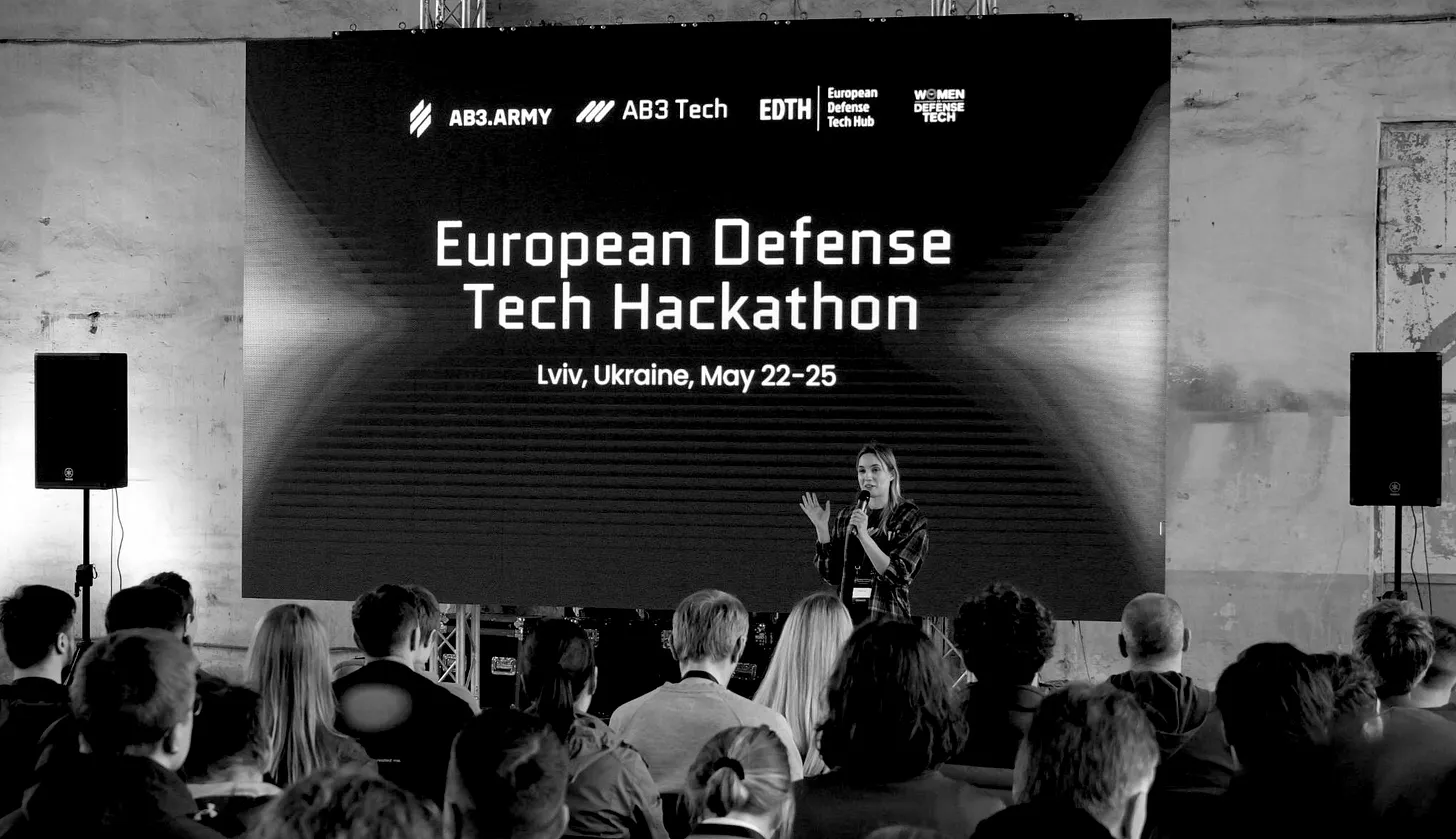
The Ukrainian Defense Tech ecosystem develops with such speed that calendars are getting crowded with events. After the Tech Force in Ukraine forum had just finished, many of the participants got on the train to travel directly to Lviv for the first European Defense Tech hackathon in Ukraine, organised by the 3rd Assault Brigade, the European Defense Tech Hub, and Women in Defense Tech.
EDTH, which has roots in Germany, seeks to accelerate the development of defense technologies all over Europe. By now, it has gained such traction that hackathons are running almost every month, from Copenhagen to Madrid. The co-founder of the initiative, Benjamin Wolba, spends more time travelling through the continent than in his hometown of Berlin, he told Resilience Media.
Of 260 hackers at the Lviv event, many are returning participants. A Danish team performed well at the hackathon in Copenhagen and promised Wolba to come to Lviv. Another group from France had already been to EDTH hackathons in Munich and Warsaw, moving closer and closer to the frontlines of Ukraine.
EDTH now has extensive experience running defence hackathons, but they had not yet organised one in a country at war. Eveline Beer, a partner at EDTH, explained why it was important for them to come to Ukraine: “we won’t be able to provide our hackers the opportunity to develop innovative solutions that work and address real and acute problems.” So, EDTH joined forces with Women in Defense Tech and the Ukrainian 3rd Assault Brigade, a unit so successful that it has been chosen to expand into an army corps. EDTH was responsible for integrating the foreign defence tech ecosystems and participants, while the brigade managed all the operations within Ukraine. Perhaps the most important among them was ensuring the attendance of Ukrainian soldiers and officers with the deepest knowledge of the current battlefield challenges.
Receiving feedback from the military is why everyone attended, be it a student from a regional Ukrainian engineering school or a thirty-something German with a PhD in physics. The latter was part of a team of four PhDs. None of them has a connection to Ukraine, nor a significant experience in defence. On the first day, they set off to build a solution to counter Shaheds, Iranian-Russian kamikaze drones which attack the Ukrainian air defence by hundreds every other night. As the team worked on this solution, the servicemen of the 3rd Assault Brigade were going from table to table to discuss the concepts. One of them approached the Germans and carefully listened to their ideas. It took him no more than 30 seconds to explain that not only had this approach been tested, but it also proven to be highly impractical. The officer proposed a different approach.
This is also what Larysa Visengeriyeva, the co-founder of Women in Defense Tech and parter at EDTH, witnessed. Western teams abandoned their projects within half an hour, having received feedback from the Ukrainian military that “this is not a challenge, we already have a simple solution for the problem.”
With this new challenge, the team needs to start from scratch and iterate on their idea. “I have a PhD but this is still freaking difficult,” its informal leader Karl (not his real name) exclaimed. Soon, another soldier came around with an additional proposal. The task got even harder, but this produced an opposite effect: the team got back on track, fuelled by an appetite to master the problem.
A young German engineer, Jan (not his real name), led another team and is already active in the Defence Tech field professionally. For Jan, whose relatives did not know about his whereabouts, the trip was much more than hacking – the team had finished the product by the end of the second day. ‘I need more time to process everything mentally, ’ he said. This includes a conversation Jan held with Eddy, a young British humanitarian worker who lost an arm and a leg while delivering aid. “The only difference between us is that he decided to go to Ukraine to help on the ground,” Jan said.
Other teams also faced challenges when meeting the Ukrainian reality. The Danes, who have been working on their concept for some time already, formulated a comprehensive list of questions for the military. One by one, they quizzed an officer from the 3rd Assault Brigade. At one point, the conversation got stuck. The officer, who can freely communicate in English, understood all the words, but together they simply did not make any sense to him. The question was based on assumptions that simply do not match up with his everyday reality of the Ukrainian battlefield. It took lots of painstaking efforts to get to the core of the problem. ‘Now it all makes sense!’ the Danish engineer gasped.
Have all these efforts been worth the outcome? Eveline Beer, of Women in Defense Tech and EDTH, says that some of the teams demonstrated ‘fantastic’ progress, mostly due to ‘valuable and brutal feedback’ from the 3rd Assault Brigade. Virtually all the soldiers of the brigade who had been reserved in their assessments during the first day changed their minds by the end of the hackathon. Among them was Viktoriia Honcharuk, a graduate of Minerva University who gained professional experience at Citibank before returning to Ukraine to serve as a combat medic on the frontlines with the 3rd Assault Brigade. Amongst her many roles, she was organising the event. “We managed to open the Ukrainian military community to foreign engineers,” she told me. “Now we have to keep these doors open.”
Larysa Visengeriyeva agrees with Honcharuk: the ultimate goal of the partnership remains to “understand the battlefield’s real requirements, receive direct feedback from the 3AB, and develop deeper connections with the Ukrainian people.”
Even if the export of Ukrainian defence industries remains under discussion, the import of European talent is very real. For Sebastian, it was a life-changing experience. “In these three days I have accomplished more than throughout my professional career,” he said, noting that his current employment has nothing to do with defence innovation. Originally he was worried about going to Ukraine, but he did not panic during the air raid alerts and now wants to come back for more engagement with the Ukrainian ecosystem.