Since 2007, we have talked about Russia’s hybrid war. This term described actions against the West by Russia that stopped short of actual kinetic war. Anything that was not soldiers, tanks, explosives and weapons was hybrid war.
‘Hybrid war’ was a useful way to describe Russia’s behaviour back in 2007. That is the year Russia cyber-attacked Estonia and engineered riots on the streets of Tallinn. It was not an invasion, it did not involve soldiers, but it was an act of aggression of sorts.
The term continued to be useful to describe cyber-attacks, disinformation, and disrupting elections, all of which clearly fell short of war. But our use of this term has become one of Russia’s greatest strengths against the West. Putin’s regime is very skilled at designing attacks that fall short of direct conflict, and which are hard to stitch together. In reality, ever since 2007, Russia has been at war with the West. The Bronze Soldier Riots in 2007 were followed in 2008 by cyber-attacks on Georgia which came alongside actual military attacks by Russian soldiers that Putin claimed were just volunteers and peace keepers. This prevented Georgia from joining NATO, destabilised the country, and has successfully led to the failure of its democracy and a shift away from the West towards Russia.
Where the West has failed and Russia has been successful is that our politicians and media have failed to connect the dots between Estonia in 2007, Georgia in 2008, Ukraine in 2014, and the attacks on the Brexit vote, the American elections, and attacks on the elections in Germany, France, the referendum in Catalonia, and most recently on the Romanian election. In the midst of all this is the actual war in Ukraine, but around that we’ve seen assassinations, abductions, arson, and sabotage. To Putin’s regime, this has all been one war, but to the politicians and media in the West it is a series of random events. We have failed to understand and present it as one strategy that has now been in play for 18 years.
One reason for this is that our democracies change leaders and governments so frequently, and we also rotate leadership within our intelligence agencies and military regularly, so it is hard for any government to follow a single timeline that runs for 18 years. In Russia, by contrast, the same people have been in power for over two decades, so they can play a long game like this. That is one of their greatest strengths against our democracies, being able to play moves over 10, 20, 30 years.
Calling all of this ‘hybrid war’ underplayed how serious it was, distracted funding and coordinated responses, and meant that we did not adequately alert our citizens to how bad things were getting. It is good finally to hear political leaders from Western Europe and the UK say we are at war, but they are doing so 18 years after the war began.
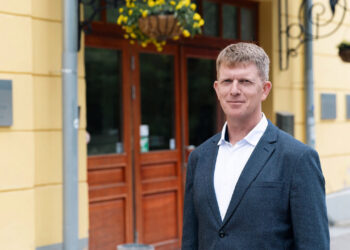
The leaders in Eastern Europe have been ahead of the West on this. In a speech at the 2025 Munich Security Conference, the head of Estonia’s foreign intelligence agency, Kaupo Rosin, said that “the word ‘hybrid’ is misleading and soft.” Russia’s activities have now escalated to sabotage, arson, and assassination, as well as incredibly sophisticated and concerted efforts to disrupt our way of life, our democracies, and our security. It is no longer hybrid war, it is just war.
Even now we talk about the ‘full-scale invasion of Ukraine’ as if the partial invasion of Ukraine earlier didn’t really count.
Even now we talk about the ‘full-scale invasion of Ukraine’ as if the partial invasion of Ukraine earlier didn’t really count. As with the Duck (who walks like a duck, and quacks like a duck), we should have realised that if it looks like war and it sounds like war, it is war. In the West we are boiling frogs, not noticing that Russia has been gradually heating up the water and we are now being cooked. Had we called it war even a decade ago, we would not now be scrambling to increase funding for defence and working out how to make our militaries technically fit for this modern era.
Had we called it war back in 2007, we would have realised that concerted efforts to permanently alter our political landscapes, to undermine our alliances, and undermine our confidence in information, and to threaten our infrastructure are acts of war as destabilising as bombing our cities or sinking our battleships. A war is intended to undermine, weaken, or overthrow a country. Look at the politics of Hungary, Slovakia, Poland, France, Italy, at the recent election chaos in Romania, and look at the damage Brexit has done to the UK and EU. Most of these outcomes were influenced heavily by what we timidly described as Russia’s ‘hybrid war.’ In reality Russia has succeeded in weakening the EU and NATO, weakening countries within Europe, and undermining the perceived value of democracy. It was not all Russia, but wherever there was a crack, Russia had a crow-bar to rip it open.
Language matters because it influences how we respond to a threat, both psychologically and legally.
Language matters because it influences how we respond to a threat, both psychologically and legally. Once you cross the line and recognise that Russia is at war with us, not just carrying out occasional uncoordinated attacks, that changes how we react. We need that distinction now because we need to begin responding to these acts of war appropriately. If we can learn one lesson from Ukraine, it is that we should respond to the early act of war as a full-scale war and not wait for it to get worse.
If the Russian state carries out arson attacks, sets off bombs, assassinates people, cuts undersea cables, tries to influence our elections, and hacks our information systems, either these are acts of war by a state, or they are acts of terrorism. It is important now to call them one or the other. Either way, they break international law and local laws. Recognising Russia either as a state sponsor of terrorism, or a country at war with Western countries from Scandinavia to Romania, would force a more appropriate and coordinated response.
Calling it war will help gain support for the measures our democracies will need to take and may help undermine the internal damage being caused by Russian-funded, pro-Putin politicians across Europe. It would also help move towards seizing Russia’s frozen assets to fund our defence against Russia.
The phrase hybrid war is no longer useful, and we should stop using it. War is war, and calling it war may help focus our response and win the support of our citizens. Let’s start talking about war and terrorism and stop using phrases that downplay Russia’s actions.