Saturday 7 March, 2026
[email protected]
Resilience Media
  • About
  • News
  • Resilience Conference
    • Resilience Conference Warsaw 2026
    • Resilience Conference Copenhagen 2026
    • Resilience Conference London 2026
  • Guest Posts
    • Author a Post
  • Subscribe
No Result
View All Result
  • About
  • News
  • Resilience Conference
    • Resilience Conference Warsaw 2026
    • Resilience Conference Copenhagen 2026
    • Resilience Conference London 2026
  • Guest Posts
    • Author a Post
  • Subscribe
No Result
View All Result
Resilience Media
No Result
View All Result

Frankenburg CEO: A Flood of Funding for European Defence Tech is Disrupting the Days of ‘800 Pages of Spec’

The pool of capital getting deployed into resilience startups is leading to faster dealmaking, said Kusti Salm, one of the founders building interceptor technology

Resilience MediabyResilience Media
September 30, 2025
in Events, News, Resilience Conference
Share on Linkedin

The new generation of VCs bringing unprecedented investment to European defence technology is enabling a much-needed acceleration of inexpensive weaponry, industry players said on Monday.

You Might Also Like

Ukrainian autonomy company The Fourth Law unveils an anti-Shahed drone

Ukraine’s autonomous weapons makers push for industrial scale

MSC got the urgency right. The hard part comes next

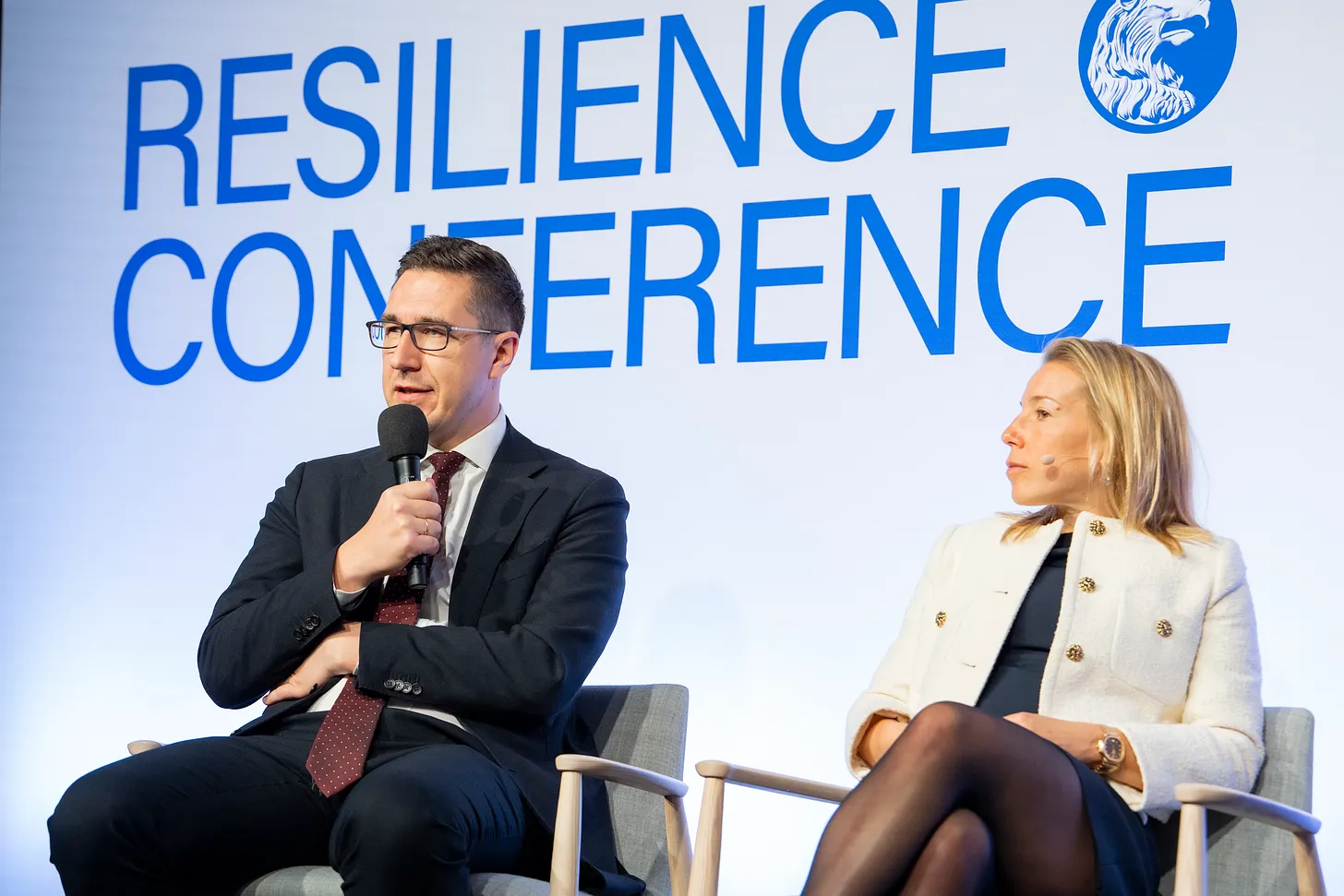
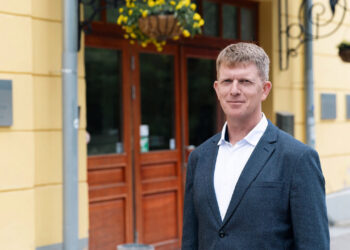
It’s the “first time in 70 years we are in this situation, where there is private money available for developing defence technology and weapons” in Europe, Kusti Salm, CEO of missile company Frankenburg, said on Tuesday at the Resilience Conference in London.

Salm was speaking a day after the publication of a landmark Dealroom and Resilience Media report that says a record $1.5 billion in European VC funding was raised for defence tech so far in 2025 alone.

The influx is not only of cash, but new priorities and attitudes to development, Salm said.

“Conventionally the way the defence market works is that the customer comes in with their requirement,” Salm said. “And the requirement is not a drawing on a whiteboard. It’s 800 pages of spec.”

Now, it’s founders who define the requirements, he said — and in Frankenburg’s case, the emphasis is on speed, affordability, and a preference for minimum viable product over exquisite capabilities.

This suits capital just fine, Salm said. “Private money acts differently to governments’ money — because private money is interested that things would get done fast.”

One major chokepoint is Europe’s neglected defence manufacturing base, something that is only just starting to change — for Frankenburg, that’s by locating their factories in Estonia and Latvia, where governments have “embarked on a reverse mission,” he said.

Broader government adaptation to the flood of VC interest is a work in progress, according to Ophelia Brown, managing partner at Europe-focused investment vehicle Blossom Capital, whose portfolio includes cybersecurity firms Sqreen and Tines.

The first step is in “governments acknowledging that they need to stockpile in times of peace,” she said.

“There’s a creation of new budgets, there’s awareness, there’s a conversation happening between startups and government and MODs,” she added.

Nonetheless, she said, there’s a long way to go in bringing these players into the existing system, dominated as it is by long-term spending commitments and contracts with primes not built to reflect the fast-changing needs of contemporary conflict.

For that, what Salm called “over-engineered” requirements could be reconsidered, he said — he gave the example of a capability needing to work under both Saharan and Arctic temperatures — and with it, what he framed as “30 or 40% of the price tag.”

Asked about balancing reliable technical requirements with speed, Salm said: “As in Ukraine, you forget a lot of these requirements if people start to shoot at you.”

Frankenburg has worked on the assumption that Europe’s next conflict scenario will be analogous to Ukraine’s in 2022, Salm said, including with similar levels of readiness.

It’s the kind of scenario planning that has been the subject of extensive discussion in the realm of defence. While some believe Ukraine provides a valuable template and lesson on the new generation of warfare, others have warned against modelling any future dilemma in Europe too closely on Ukraine’s present.

But it seems clear that Europe needs a market-viable counter to the drone and missile onslaughts currently endured today in Ukraine — and with that in mind, Frankenberg earlier this month announced its low-cost Mk.1 short-range interceptor missile, which it says is roughly one-tenth the cost of its nearest current equivalents.

It was developed in less than a year, Salm said, contrasting it to an average missile development time of 8.5 years.

Even at these rates and costs of production, “we address 5% to 6% of what is needed per day in Ukraine,” he said, speaking of his ambition to scale up fast.

“We speak about numbers that are still 100 times too low,” he said. “Which also means that there is room for everyone in the market.”
Tags: Blossom CapitalFrankenburgKusti SalmOphelia BrownUK
Previous Post

Stratis, a Mysterious Icelandic Startup, Emerges from Stealth to Build a ‘Palantir for Europe’

Next Post

Verne Capital Unveils €100M Fund Devoted to European Defence

Resilience Media

Resilience Media

Start Ups. Security. Defense.

Related News

Ukrainian autonomy company The Fourth Law unveils an anti-Shahed drone

Ukrainian autonomy company The Fourth Law unveils an anti-Shahed drone

byJohn Biggs
March 6, 2026

Ukraine-based autonomy company The Fourth Law has unveiled Zerov, an autonomous interceptor drone built to engage long-range strike UAVs in...

Ukraine’s autonomous weapons makers push for industrial scale

Ukraine’s autonomous weapons makers push for industrial scale

byLuke Smith
March 6, 2026

In the past five months in Ukraine, Major Maksym Gromov's unit launched 608 autonomous Lupynis drones against Russian adversaries. Four...

asphalt road between trees

MSC got the urgency right. The hard part comes next

byRobin Dechant
March 6, 2026

A few weeks on from the Munich Security Conference, something many of the Resilience Media community no doubt attended, I...

NATO Innovation Fund appoints a president, Ari Kristinn Jónsson

NATO Innovation Fund appoints a president, Ari Kristinn Jónsson

byIngrid Lunden
March 5, 2026

The NATO Innovation Fund, the VC formed out of the strategic alliance of NATO countries that counts most (but not...

SkySafe Wants to Be the Air Traffic Control for Drones

SkySafe partners with major energy sector player to build out drone defence

byJohn Biggs
March 5, 2026

Southern States LLC and SkySafe announced a partnership to integrate real time drone detection and airspace intelligence into Southern States’...

Uforce raises $50M at a $1B+ valuation to build defence tech for Ukraine

Uforce raises $50M at a $1B+ valuation to build defence tech for Ukraine

byIngrid Lunden
March 5, 2026

The United Kingdom and Ukraine look like they may have minted their first defence tech ‘unicorn’. Uforce (stylised ‘UFORCE’) —...

Balázs Nagy and Rozalia Urbanek to speak at Resilience Conference Warsaw

Balázs Nagy and Rozalia Urbanek to speak at Resilience Conference Warsaw

byResilience Media
March 5, 2026

On April 15, Resilience Conference Warsaw will convene the defence tech ecosystem in Poland – bringing together military and political...

Anthropic, OpenAI, and the new rules of Defence AI

Anthropic, OpenAI, and the new rules of Defence AI

byCarly Pageand1 others
March 3, 2026

Anthropic is facing the prospect of being frozen out of US government work after refusing to relax safeguards on how...

Load More
Next Post
Verne Capital Unveils €100M Fund Devoted to European Defence

Verne Capital Unveils €100M Fund Devoted to European Defence

When Data Loss Means Lives: HyperBunker Pitches Offline Vault to Militaries

When Data Loss Means Lives: HyperBunker Pitches Offline Vault to Militaries

Most viewed

InVeris announces fats Drone, an integrated, multi-party drone flight simulator

Twentyfour Industries emerges from stealth with $11.8M for mass-produced drones

Senai exits stealth to help governments harness online video intelligence

Uforce raises $50M at a $1B+ valuation to build defence tech for Ukraine

Harmattan AI raises $200M at a $1.4B valuation from Dassault

Palantir and Ukraine’s Brave1 have built a new AI “Dataroom”

Resilience Media is an independent publication covering the future of defence, security, and resilience. Our reporting focuses on emerging technologies, strategic threats, and the growing role of startups and investors in the defence of democracy.

  • About
  • News
  • Resilence Conference
    • Resilience Conference Copenhagen 2026
    • Resilience Conference Warsaw 2026
    • Resilience Conference 2026
  • Guest Posts
  • Subscribe
  • Privacy Policy
  • Terms & Conditions

© 2026 Resilience Media

No Result
View All Result
  • About
  • News
  • Resilence Conference
    • Resilience Conference Copenhagen 2026
    • Resilience Conference Warsaw 2026
    • Resilience Conference 2026
  • Guest Posts
  • Subscribe
  • Privacy Policy
  • Terms & Conditions

© 2026 Resilience Media

This website uses cookies. By continuing to use this website you are giving consent to cookies being used. Visit our Privacy and Cookie Policy.