Sunday 21 June, 2026
[email protected]
Resilience Media
  • News
    • Events
    • Interview
    • Startups
    • Venture
    • Weekly Digest
  • Resilience Conference
    • Resilience Conference Warsaw 2026
    • Resilience Conference Copenhagen 2026
    • Resilience Conference London 2026
  • About
  • Guest Posts
    • Author a Post
  • Subscribe
No Result
View All Result
  • News
    • Events
    • Interview
    • Startups
    • Venture
    • Weekly Digest
  • Resilience Conference
    • Resilience Conference Warsaw 2026
    • Resilience Conference Copenhagen 2026
    • Resilience Conference London 2026
  • About
  • Guest Posts
    • Author a Post
  • Subscribe
No Result
View All Result
Resilience Media
No Result
View All Result

When Data Loss Means Lives: HyperBunker Pitches Offline Vault to Militaries

European startup born out of decades of data-recovery work is pitching a military-grade vault that keeps backups permanently offline

Resilience MediabyResilience Media
October 3, 2025
in Startups
Share on Linkedin

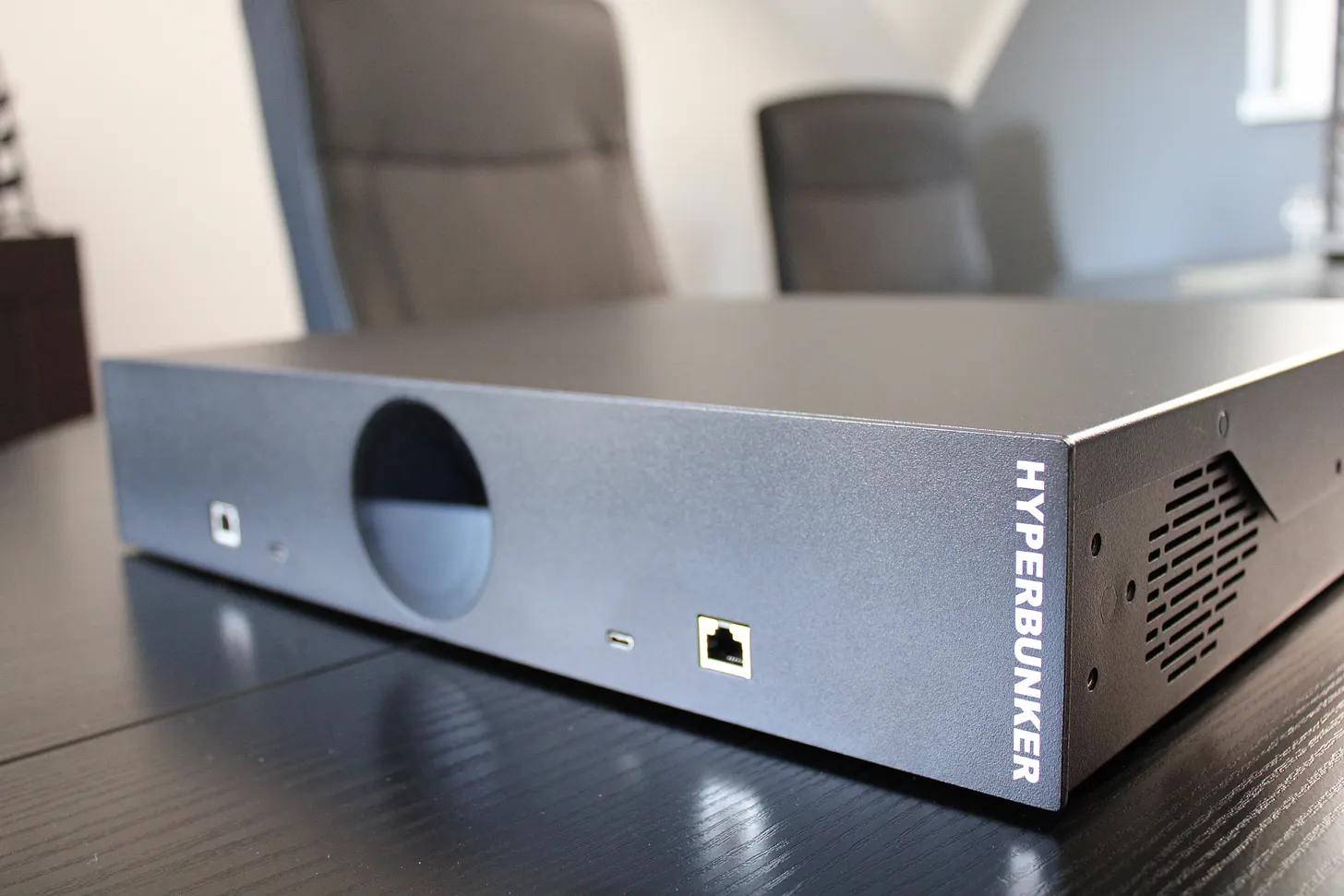
Croatian engineer Nino Doko has spent three decades recovering data in more than 50,000 ransomware cases. The lesson he’s drawn is clear: any data that’s connected is at risk. Three years ago, he decided to build something that couldn’t be reached, no matter how clever the attacker. The result is HyperBunker, an offline vault designed as the last line of recovery when everything else has failed.

You Might Also Like

Lithuania’s PDKinematics raises €2M to scale precision guidance systems across NATO

Can AI save a satellite before it fails? PiLogic thinks so

Saronic, Castelion plan autonomous hypersonic strike platform for maritime operations

The principle is simple. Storage that is never connected to a network can’t be stolen, corrupted, or encrypted by outsiders. HyperBunker achieves that using optocouplers – tiny devices that pass information one way via light – combined with a hardware buffer.

“Our customers run apps like manufacturing controls, finance systems, or customer databases,” investor and advisor Matt Peterman told Resilience Media. “HyperBunker protects the underlying repositories – once data is pushed, it’s locked and immutable. That removes the risk of that data being encrypted.”

Simply, data can be written in, but there is no route back out: no logins and no remote access.

“Even if you say it’s only online for a few seconds, that’s still enough for an attacker,” Doko told Resilience Media. “As long as you control the system with software, it means somebody else can control it too.”

Doko compares HyperBunker to a submarine airlock: one door must close before the next opens, and the two doors are never open simultaneously. That makes the final storage invisible to the network, and by extension, to would-be attackers.

HyperBunker is now building a military-specific version of its vault, adding features expected in the field, including a ruggedised enclosure, passive cooling, hardened I/O, removable media, and tamper-evident logging. The core architecture is the same as the civilian model, which has already shipped to early adopters in utilities and critical infrastructure.

HyperBunker’s first production run sold out, and with the next builds underway, defence buyers are moving through their own assessments.

It’s not hard to see the appeal. Ransomware gangs typically target backups first, and the cloud, once touted as a safe haven, is usually the first thing their automated scripts probe. HyperBunker sidesteps the game of cat and mouse by putting the crown jewels out of reach: each unit stores four versions of a dataset, giving operators the option to roll back if more recent snapshots are compromised.

For military users, the logic is hard to ignore. If a business loses data, it loses money, but if the military loses data, it loses lives. “In defence, you cannot wait in a queue for cloud support during a blackout,” Doko said. “You must hold your data under your own control.”

The question of ransom payments inevitably comes up. HyperBunker’s stance is clear: paying the hackers fuels crime, but bans don’t bring systems back online. The only reliable way to avoid being cornered is to hold an offline, immutable copy under your own control. Once attackers get administrator credentials – and most breaches end that way – they can access anything run by software. But even with a general’s password in hand, HyperBunker’s disks remain unreachable.

The design avoids features that often become liabilities. There is no cloud dashboard, no password-protected portal, no remote update mechanism. For IT managers used to everything being software-defined and API-driven, that may look primitive. For militaries facing persistent, well-resourced adversaries, it looks more like common sense.

Doko even argues it is quantum-ready. “If quantum computers break encryption, what can they do against storage that is never online?” he said.

HyperBunker, as you can see in the team picture above, is still a small outfit, closer to a startup than a prime contractor. But the first units have already shipped, the pipeline is full, and MoD evaluations are in progress.

“We have had great investor interest and expect to announce fundraising this fall from multiple investors,” Peterman said. “That will also help us in faster shipping of our hardware to clients.”

Peterman added that the company sees “complacency” as its biggest competitor, noting that organisations continue to trust online backups that ransomware actively targets. He said that others in the offline data storage market, such as Firevault, are not “truly offline” due to their reliance on internet-based management.

HyperBunker’s gamble is that in an age of drones and hypersonics, militaries won’t forget the basics: keeping a copy of their data truly offline. “A cybersecurity chain is only as strong as its weakest link,” Doko said. “That’s why we built HyperBunker to sit outside the chain. Even if everything else fails, it still holds.”



Tags: HyperBunkerMatt PetermanNino Doko
Previous Post

Verne Capital Unveils €100M Fund Devoted to European Defence

Next Post

A Ukraine Defence Demo Day Unlike Any Other

Resilience Media

Resilience Media

Start Ups. Security. Defense.

Related News

Lithuania’s PDKinematics raises €2M to scale precision guidance systems across NATO

Lithuania’s PDKinematics raises €2M to scale precision guidance systems across NATO

byFiona Alston
June 17, 2026

Lithuanian startup PDKinematics has raised a €2 million seed round to help the company scale manufacturing as it targets NATO...

Can AI save a satellite before it fails? PiLogic thinks so

Can AI save a satellite before it fails? PiLogic thinks so

byJohn Biggs
June 16, 2026

https://youtu.be/xSj3z-7nzqA Artificial intelligence is rapidly finding its way into defence and aerospace systems, but many of today's AI tools come...

Saronic, Castelion plan autonomous hypersonic strike platform for maritime operations

Saronic, Castelion plan autonomous hypersonic strike platform for maritime operations

byJohn Biggs
June 15, 2026

Two surface vessel drone makers, Saronic and Castelion, have announced plans to build a hypersonic vehicle for maritime maneuvers. The...

Alta Ares reaches a new high with €50M in funding

Alta Ares reaches a new high with €50M in funding

byIngrid Lundenand1 others
June 15, 2026

With all the investment we’re seeing into drones, we’re also witnessing a major surge of attention around companies building tech...

the big ben clock tower towering over the city of london

John Healey’s resignation – a defence investor’s view

bySamuel Burrell
June 15, 2026

John Healey and Al Carns resigned last week rather than put their names to a Defence Investment Plan (DIP) that...

Helsing expands CA-1 platform with AI-powered Electronic Attack drone

Helsing expands CA-1 platform with AI-powered Electronic Attack drone

byJohn Biggs
June 11, 2026

Helsing, a leading European AI-infused weapons manufacturer, has announced the launch of the CA-1 Electronic Attack or CA-1EA, an uncrewed,...

Orqa unveils hybrid tactical drone for jammed battlefields

Orqa unveils hybrid tactical drone for jammed battlefields

byJohn Biggs
June 11, 2026

Croatian drone manufacturer Orqa has announced the launch of their latest tactical drone, the MRM2-10AI, a hybrid Unmanned Aerial Vehicle...

Anthropic, OpenAI, and the new rules of Defence AI

Gardar, an early-stage defence tech fund out of Norway, taps Ukrainian builders

byIngrid Lunden
June 9, 2026

The war Ukraine has changed the face of defence in Europe. But ironically, when it comes to Ukrainian builders, there...

Load More
Next Post
A Ukraine Defence Demo Day Unlike Any Other

A Ukraine Defence Demo Day Unlike Any Other

Resilience Conference 2025: Big Takeaways from Helsing, General Catalyst, Auterion, Cambridge Aerospace

Resilience Conference 2025: Big Takeaways from Helsing, General Catalyst, Auterion, Cambridge Aerospace

Most viewed

InVeris announces fats Drone, an integrated, multi-party drone flight simulator

Uforce raises $50M at a $1B+ valuation to build defence tech for Ukraine

Auterion, the drone software startup, eyes raising $200M at a $1.2B+ valuation

Palantir and Ukraine’s Brave1 have built a new AI “Dataroom”

Twentyfour Industries emerges from stealth with $11.8M for mass-produced drones

Senai exits stealth to help governments harness online video intelligence

Resilience Media is an independent publication covering the future of defence, security, and resilience. Our reporting focuses on emerging technologies, strategic threats, and the growing role of startups and investors in the defence of democracy.

  • About
  • News
  • Resilence Conference
    • Resilience Conference Copenhagen 2026
    • Resilience Conference Warsaw 2026
    • Resilience Conference 2026
  • Guest Posts
  • Subscribe
  • Privacy Policy
  • Terms & Conditions
  • Mission Statement & Code of Practice
  • Press

© 2026 Resilience Media

No Result
View All Result
  • Home
  • About
  • Subscribe
  • Events
  • Guest Posts
  • Interview
  • News
  • Resilience Conference London 2026
  • Resilience Conference Copenhagen 2026
  • Resilience Conference Warsaw 2026

© 2026 Resilience Media

This website uses cookies. By continuing to use this website you are giving consent to cookies being used. Visit our Privacy and Cookie Policy.