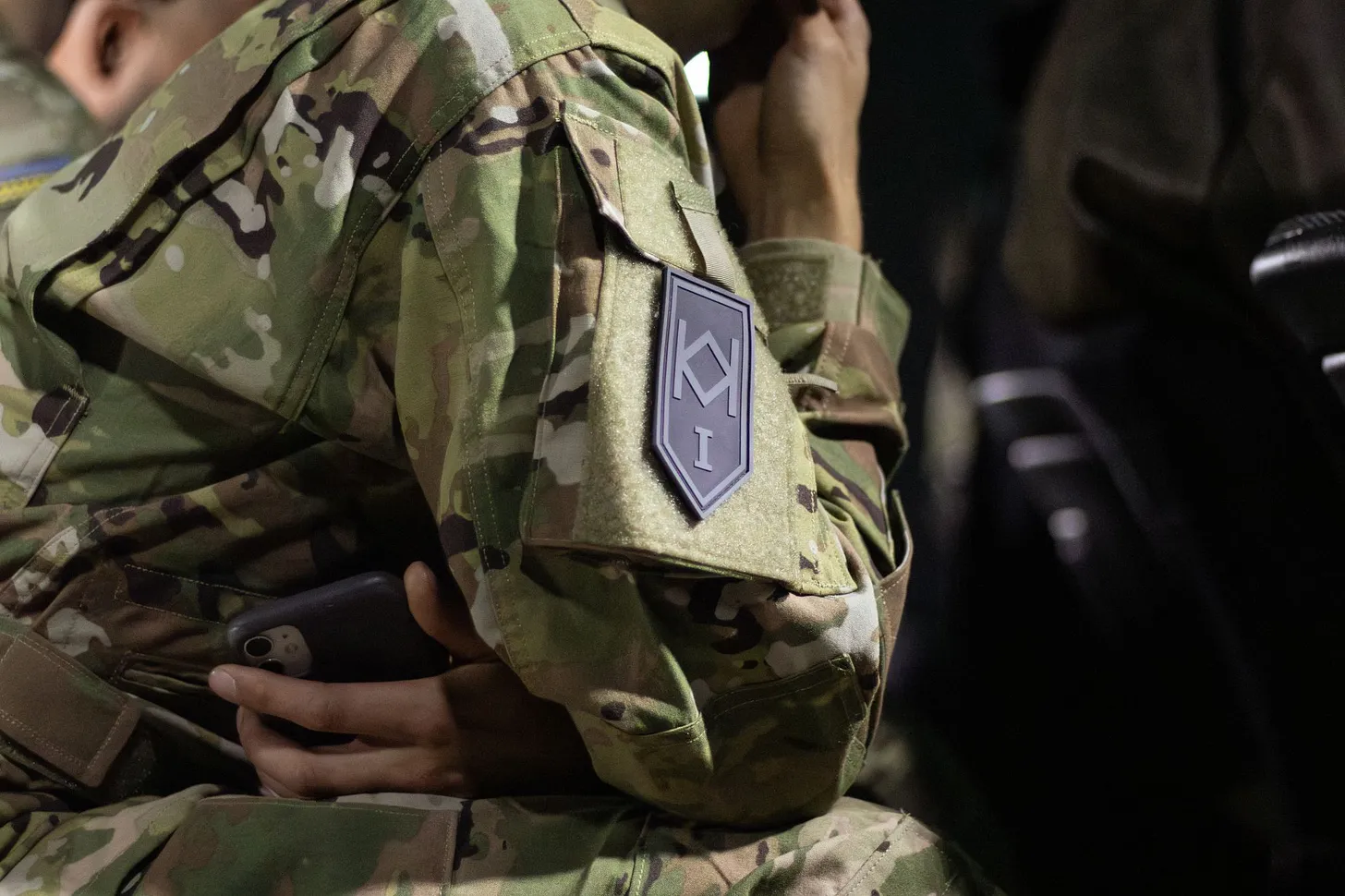
In a darkened room in Lviv last month, people building at the front lines of the fight against Russia met with investors to pitch projects at a new event called the Combat-Driven Innovation Showcase. These projects were not the usual pitches one sees at demo days. No polished presentations, and no gadgets in sight. Instead, in front of a crowd of about 80 people, soldiers working in the margins of active duty presented what they had been working on to help their troops win the war.
Many of those presenting projects were speaking in English in front of crowds for the first time, and we were reminded by the person introducing the event that these soldiers “are not great at pitching, they are great at killing.” Their audience, on the other hand, was investors, Ukrainian manufacturers, and defence tech startups from the EU.
Projects covered a range of use cases related to the current operations of unmanned ground vehicles, drones and tactical electronic software systems.
Out of the ten pitches, the top spoils – a prize of $10,000 – went to Dronebase, a drone management and configuration platform; in second, a $7,000 prize went to Toad, which its creators described as a low-cost “smart mine” to “ambush” enemy drones near launch sites.
And the third place of $5,000 went to Directoria, a project to develop short-range, solid fuel, affordable interceptor missiles to take out FPV drones. The Directoia team claims it is solving the problem of affordability and scalability of the missiles by removing the expensive hardware from the missile itself and placing it in the ground station.

“There are plenty of pitch competitions and hackathons in defence right now, which is great, because it reflects the urgency,” said Nicholas MacGowan Von Holstien, founding partner and managing director of venture studio Bifrost Defence, one of the event sponsors. “But what makes the Combat-Driven Innovation Showcase stand out is that it is frontline soldiers themselves presenting solutions to the problems they face. That’s rare.”
The scale for a lot of what we saw was far from the lofty billions raised by the likes of Anduril and Helsing from their high-tech perches in the West, and it was all the more humbling given who was doing the presenting.
Toad’s pitch, for example, included a modest ask of €2,000 to build a prototype – a sum MacGowan offered up straightaway. In fact, the money these soldiers were asking for to develop their low-cost tech was so small in some cases, that it almost felt like they had done their sums wrong. One thing was clear: what they were building was not designed to be fancy, just fully functional.
“In Europe we often say hardware is hard, especially when it’s combined with software,” MacGowan said. “These soldiers show that with determination and urgency, it can be done. They don’t have the luxury of waiting for someone else to invent a solution. If they don’t solve it, they and their comrades are more vulnerable on the frontline. That’s why their innovations matter so much.”
Organised by Women in Defence Tech, AB3 Tech and Snake Island Institute, the event was opened by Viktoriia Honcharuk of Snake Island Institute who is also a combat medic.
You’d be forgiven if you expected this event to be female focused, as did the author. While in fact that was not the case, only three women graced the stage all night. If their name grabs attention, so be it. Their mission is the same, regardless of their gender – support frontline soldiers to get investment for their projects, and as Women in Defence Tech’s Larysa Visengeriyeva said, they organise ‘no bullshit events’.
Previously, the same organising team had organised a hackathon, where engineering teams from Ukraine and around Europe were mentored by soldiers from the Third Assault Brigade in Lviv. The most recent event is a response to some of what the organisers learned from the hackathon.
“We realised there were a lot of engineering projects, innovation and R&D going on at the front lines, but they are all paying for it from their own pockets, no one has been funding them,” said Women in Defence Tech’s Larysa Visengeriyeva. “Defence tech investors need to have access to the real customers, the real end users, and right now it’s the Ukrainian military. If you don’t include military people into your defence tech initiatives or startup, honestly, I don’t believe it’s really defence tech.”
Other investors at the event included Jan-Erik Saarinen from Double Tap Investments, which was a sponsor of the event.
“It’s not battle tested, it’s battle developed,” he said of the projects. “I think that Women in Defence Tech are doing super work. I really like the fact that they draw attention [to defence tech].” Saarinen also served on the judging panel.
“Our mission firstly is to help Ukraine to win the war and secondly to learn from them,” he added.
“Learn from” is a key phrase here: defence tech companies based out of Ukraine – regardless of age or size – cannot export their wares, with only those with the wherewithal to establish bases outside of the country able to bypass current restrictions on international sales.
This is something that the Ukrainian government has said it is working to change, but it still presents a pretty significant opportunity gap for many of the most talented soldiers as they consider the future.
“Do you believe you could sell this stuff outside of Ukraine?” one of the soldiers was overheard asking a small crowd of inventors who were trying to convince him that this would become his career one day. For the soldier, he is just thinking about winning the war, and for now, his vision stops there – even as his fingers type the code that underpins one of the most exciting projects of the night.
One takeaway from the event was that if you were not in the room, you missed one of the most genuine and urgent-feeling defence tech meetups held to-date. The other take away was a pressing question: it’s great to see so many front-line projects emerging, but where do we go from here?