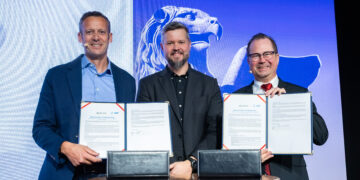
Japan’s Ministry of Defence has signed a contract to acquire interceptor drones from Ukrainian manufacturer SkyFall, Defence Minister Shinjiro Koizumi announced at a press conference on October 9.
The deal is another signal of how drone makers hatched out of the war in Ukraine are now extending to other markets. They are finding new markets not only for their hardware, but also for their learnings.
Not only is Japan gaining new technology, “but also a new way of fighting, the highest experience in the world,” the minister said, referring to rapid iteration cycles and industrial infrastructure to underpin that. “I think we have a lot to learn about this.”
Significantly, the deal also comes as geopolitical tensions continue to escalate between Japan and China. This year, China has clamped down on rare earth exports to Japan; flown bombers (with Russia) close to the border; and detained Japanese nationals — grey zone tactics that kicked off after Japan’s Prime Minister Sanae Takaichi said, in November 2025, that Japan would be prepared to help defend Taiwan against China.
The “rapid feedback cycle” that Ukraine has developed helps keep technology and hardware fresh, Minister Koizumi said, but importantly he noted that it also helps underpin a wider “deterrence” posture that is important to Japan right now.
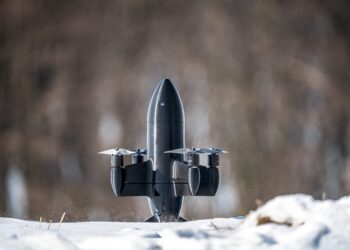
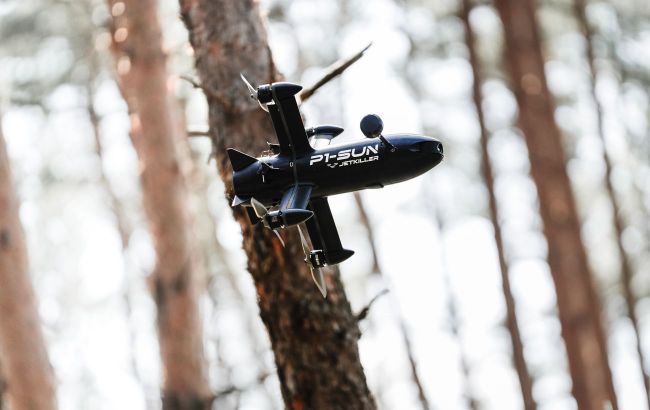
SkyFall produces the P1-SUN family of interceptor drones, although the specific model and variant ordered by Japan have not been disclosed. The contract’s value, number of drones ordered and delivery schedule also remain undisclosed.
Newer variants, such as the P1-SUN JetKiller, can reportedly reach speeds of up to 370 km/h. In September, SkyFall released footage it said showed the JetKiller intercepting a Russian Geran-5 jet-powered drone.
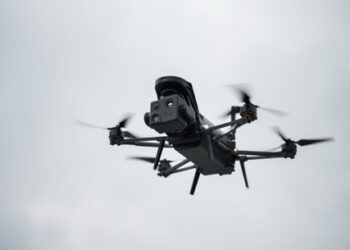
The agreement follows an earlier interceptor-drone procurement contract signed by Japan’s Acquisition, Technology & Logistics Agency (ATLA) in August for the TerraB1, produced by Japanese manufacturer Terra Drone.
Japan has been actively seeking to draw on Ukrainian experience in drone warfare as it ramps up its own domestic military profile.
In June, Terra Drone announced plans to acquire 50% stakes in Ukrainian interceptor manufacturers Amazing Drones and WinnyLab, developers of the Terra A1 and Terra A2, respectively. Both interceptors have been deployed in Ukraine, where Terra Drone says they have successfully intercepted Russian Shahed-type drones.
Japanese interest in Ukraine-tested drone technology extends beyond interceptors, and beyond Ukraine companies.
In August, German drone manufacturer Helsing worked with Japanese technology conglomerate Rakuten to finalise a deal to supply its HX-2 strike drones to Japan’s Ground Self-Defence Force. Helsing had previously reached an initial agreement while the HX-2 was undergoing trials with Japanese forces.
Other Ukrainian drone technology companies are expanding into Japan.
In May 2026, Ukrainian-American autonomy company Swarmer announced plans to enter the Japanese market, again with support from Rakuten. Earlier in the year, Rakuten also helped organise a demonstration of Swarmer’s autonomous drone coordination software for a Japanese military unit.
Speaking at the 9 October press conference, Koizumi highlighted Ukraine’s rapid technological development, pointing to its ability to incorporate battlefield feedback and introduce improved drone systems every two to three weeks.
China and Russia only two of the countries threatening Japan’s security. At a July 3 press conference, Koizumi singled out North Korea’s drone programs as an increasingly serious and imminent threat to Japanese security.
Koizumi also emphasised the need for relatively inexpensive means of countering aerial threats, identifying interceptor drones as one promising option.