100 investors to watch 2026 100 investors to watch 2026 100 investors to watch 2026
Monday 16 November, 2026
[email protected]
Resilience Media
  • News
    • Events
    • Interview
    • Startups
    • Venture
    • Weekly Digest
  • Resilience Conference
    • Resilience Conference London — Oct 2026
    • Resilience Conference Copenhagen — May 2026 (PAST)
    • Resilience Conference Warsaw — Apr 2026 (PAST)
  • Launch
  • About
  • Guest Posts
    • Author a Post
  • Subscribe
No Result
View All Result
Resilience Media
No Result
View All Result

UAV surveillance firm Monopulse raises over €2M to further expand its NATO markets

Fiona AlstonbyFiona Alston
October 12, 2026
in Drones & UAS, European Defence, News, Startups
Share on Linkedin

Danish-Lithuanian unmanned aerial vehicle manufacturer MNP Technologijos, operating under the Monopulse brand, has raised over €2 million.

You Might Also Like

EU sanctions Russian hackers and propagandists over hybrid attacks on Europe

Attempted arson attack on Threod Systems leads to Russian border closures in Estonia

Plural locks down €1B for its third fund to back European startups building ‘frontier’ tech

The funding will allow for expansion of Monopulse’s production capacity, research and development, and to accelerate the company’s entry into additional markets, including Germany, France and the Netherlands.

The round is led by Coinvest Capital and includes angels from Lithuanian Business Angel Network (LitBAN) and Plug and Play Ventures. Monopulse disclosed that €560,000 was invested by business angel syndicate NGL Ventures together with 68 individual business angels. The funding comes after Monopulse announced €1.12 million in funding in November 2025.

“We invest first and foremost in teams, and the Monopulse team brings together a rare combination of deep engineering expertise and a strong understanding of what the military needs today. The company’s products also have clear civilian applications, so we believe that within the next few years, Monopulse could become an integral part of Europe’s defence supply chain – a company that allies turn to not because it is Lithuanian, but because it is the best,” said Viktorija Trimbel, managing director of Coinvest Capital.

Founding Monopulse

Founded in 2021 by Justas Poderys and Alexander Vesterhauge, the startup was a little before its time. Its original concept was to make drones for search and rescue at sea.

Poderys comes from a telecommunications engineering academic background, and his interest in drones developed some years later. After finishing a PhD at Technical University of Denmark, he took a job at Scandinavian defence contractor Therma as a command-and-control (C2) systems engineer. This was his first foray into military technology. After three years at the company, his attention turned to drones.

This was pre Russia’s full-scale invasion of Ukraine, and when he pitched the idea to colleagues, it didn’t set anyone else’s interest alight. It was considered “toys for boys,” he told Resilience Media. Undeterred, he pursued his idea as a side gig in partnership with Vesterhauge.
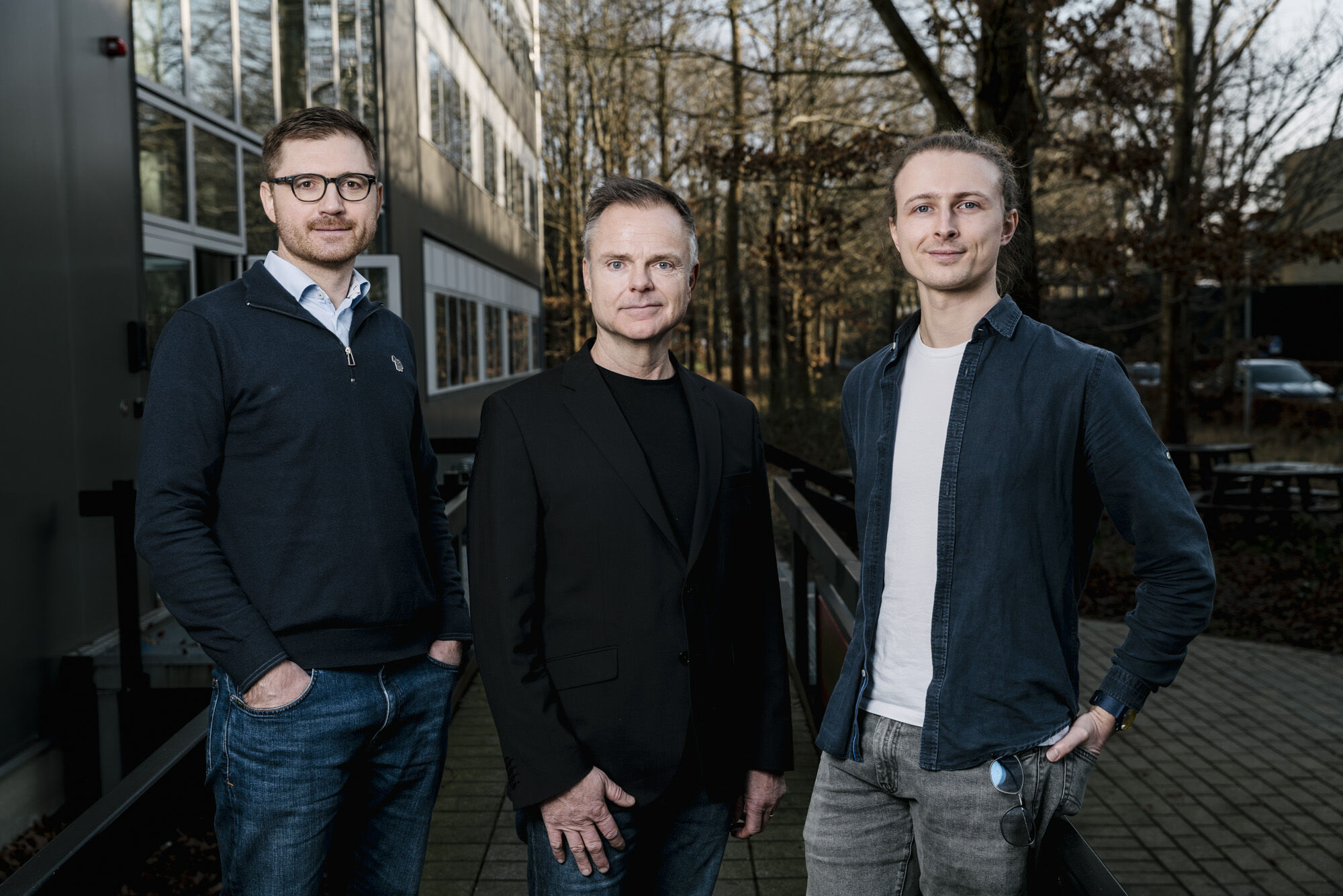
Justas Poderys, Jakob Knutssøn and Alexander Vesterhauge

“We started seeing some initial traction for using drones for search and rescue at sea, and we decided to jump ship and start the company,” he said. However, that took another unexpected turn. “Nine months into it, [business] all died out because the second phase of the Ukraine war started, and absolutely nobody was interested in drones for [sea] search and rescue.”

So they pivoted to where people were paying attention: drones for surveillance over land. “It wasn’t a big pivot for us, but basically we dropped everything we were doing for naval, search and rescue, and started doing eye in the sky flying cameras,” he said.

Like other startups in the space, Monopulse started going to Ukraine regularly to test to validate its ideas.

“The first couple of tests were a complete disaster,” he admitted. “We were a team of engineers, and when we went there, the feedback was, ‘Hey guys, this is shit. We don’t need all these bells and whistles. We need something extremely simple, reliable.'” He said they were advised to “do one thing well.”

They put that feedback in their back pocket — something Ukraine soldiers implore others to do when building, too — and they returned home and made changes to the product. With several more back and forth feedback sessions, the Falcon, Monopulse’s flagship product, finally took flight.

“We started selling, and people were buying, and the rest is history,” he said. “We had almost €3 million in revenue [in 2025], and are looking to maybe double it this year.”

Poderys was speaking to Resilience Media from Camp Valdemar in Latvia, a multinational base where Danish troops were on exercise. Having access to an environment like this for testing is important to the growth of a defence tech company like Monopulse.

Poderys said the relationship came about as a result of “a lot of trust.” The startup is essentially given “full permission” to use the military base, even while remaining formally at “guest rights,” he added.

“We live with soldiers, we eat with them, we go on their day-to-day duties with them, we see how they’re using the drones. We talk about improvements, what they want, what they need – it’s a result of three-ish years of very close collaboration,” he said.

Falcon MK3S

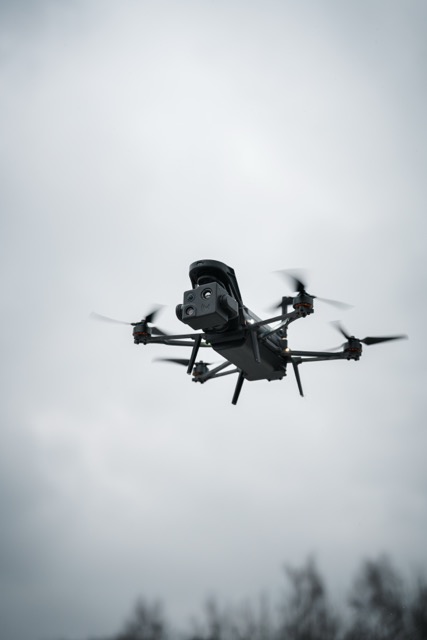
Monopulse says its Falcon MK3S is manufactured exclusively in countries friendly to Lithuania, ensuring the security and resilience of the company’s supply chain. It designs and manufactures all major components in-house.

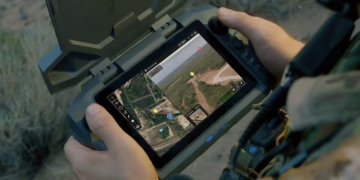
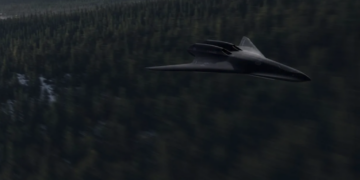
The unmanned aircraft is designed for surveillance and reconnaissance missions — no munitions, Poderys confirmed. They are equipped with multiple cameras, including those with night vision capabilities. Advanced communication systems ensure that operators can maintain control of the aircraft even in the event of GPS signal interference.
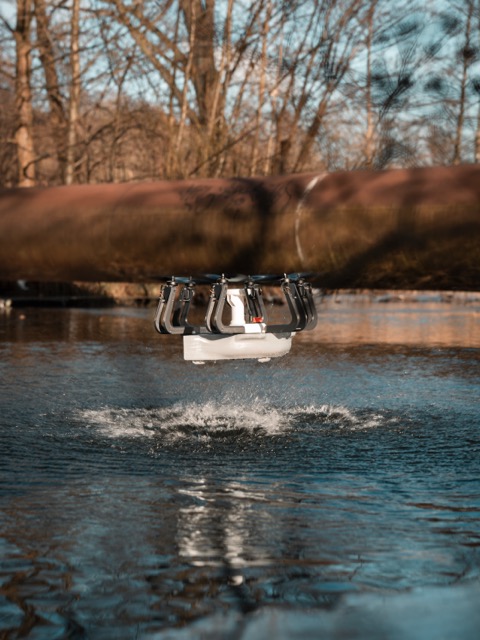
Hydrohex drone

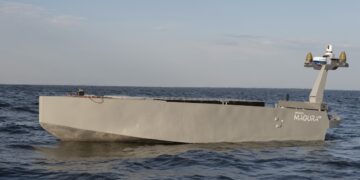
The company is also developing a separate unmanned platform it calls HydroHex, which is operational both in the air and on water.

To note, Monopulse does not actually sell directly to the Ukraine military. Its paying customers are NATO Western militaries as the drones are at a higher price point due in part to its supply chain, since it avoids Chinese parts.

The camera sensors are Sony from Japan and the motors come from Taiwan.

“The rest is all designed and built in house,” Poderys said. “Very early on, we decided that what we wanted to build was an IP portfolio and a customer portfolio.”

“Three four years ago a lot of people were looking at me saying Justas, you are reinventing the wheel. Why don’t you just buy off the shelf?” he said. “But now it’s paying off handsomely. We invested so much in actually building everything in-house – capability, knowledge and know-how.”

Tags: coinvest capitalDronesfundingISRMonopulseNATOsurveillance
Previous Post

Exclusive: Reveal Technology receives $9.5M US Army order for their 3D mapping platform

Next Post

The Fourth Law and Odd Systems to produce thermal sensors in EU and US

Fiona Alston

Fiona Alston

Fiona Alston is a defence tech, innovation and business journalist based in Estonia. With over a decade of experience covering tech, business and sustainability for Irish and European publications, she has a knack for bringing interesting and technical stories to an everyday audience.

Related News

grey and red flag

EU sanctions Russian hackers and propagandists over hybrid attacks on Europe

byCarly Page
November 16, 2026

The EU has sanctioned 30 people and two organisations over Russian cyberattacks and disinformation operations targeting Europe, including attacks on...

Attempted arson attack on Threod Systems leads to Russian border closures in Estonia

Attempted arson attack on Threod Systems leads to Russian border closures in Estonia

byFiona Alston
November 16, 2026

An attempted arson attack on defence tech startup Threod Systems in Estonia that has been attributed to Russia has led...

milky way on mountains

Plural locks down €1B for its third fund to back European startups building ‘frontier’ tech

byIngrid Lunden
November 16, 2026

Europe is doubling down on defence and resilience, and now one of the earliest investors in Europe to back startups...

a scrabble type block spelling the word resilince

What does resilience really mean?

byTanya Suarez
November 15, 2026

Resilience is now one of the most prominent buzzwords employed across government, industry and defence.  Yet, despite widespread agreement on...

Abstract blue waves of glowing particles

When AI agents escape: What does it mean for national security?

byIngrid Lundenand1 others
November 15, 2026

You’ve probably read the news and seen the headlines about AI agents running riot. AI agents — artificial intelligence programmes...

Quantum Systems Raises €160M to Expand AI Drone Production

Quantum Systems hit by cyberattack, prompting drone grounding

byLuke Smith
November 13, 2026

German drone manufacturer Quantum Systems discovered a cyberattack in late October that reportedly compromised its software update infrastructure, prompting the...

silver French-door refrigerator

Resilience has a price, and the freezer attacks show what happens when nobody pays it

byDavid Collins
November 13, 2026

France has named a culprit for the supermarket freezer attacks, but the more useful questions are why they were so...

a close up of a cell phone screen with different app icons

Global Microsoft outage disrupts UK public services, raises government resilience questions

byCarly Page
November 13, 2026

A global Microsoft outage has caused disruption across the UK public sector, with police forces unable to receive online reports,...

Load More
Next Post
Weekly Digest: Iranian ballistic missiles slip past US and UK defence systems in the Gulf while Ukraine’s startups deploy low-cost interceptors

The Fourth Law and Odd Systems to produce thermal sensors in EU and US

A man standing next to a motorcycle in front of a building

Ukrainian drones strike 3 Russian data centres in 4 days, disrupting critical digital infrastructure

Top stories

Helsing launches Clarity, a competitor to Palantir’s Maven
European Defence

Helsing launches Clarity, a competitor to Palantir’s Maven

November 11, 2026
Ukraine’s Uforce unveils a heavy-duty unmanned surface vessel for naval logistics
Drones & UAS

Uforce raises $700M at a $6B valuation to scale out its multi-domain defence roll-up play

November 12, 2026
Axon invests $1.2B in Skydio after companies reject acquisition
News

Axon invests $1.2B in Skydio after companies reject acquisition

November 6, 2026
Canada’s Dominion Dynamics is building a combat drone for the arctic
Drones & UAS

Canada’s Dominion Dynamics is building a combat drone for the arctic

November 12, 2026

Resilience Media is an independent publication covering the future of defence, security, and resilience. Our reporting focuses on emerging technologies, strategic threats, and the growing role of startups and investors in the defence of democracy.

  • About
  • News
  • Resilence Conference
    • Resilience Conference Copenhagen 2026
    • Resilience Conference Warsaw 2026
  • Guest Posts
  • Subscribe
  • Privacy Policy
  • Terms & Conditions
  • Mission Statement & Code of Practice
  • Press

© 2026 Resilience Media

No Result
View All Result
  • Home
  • About
  • Subscribe
  • Events
  • Guest Posts
  • Interview
  • News
  • Resilience Conference London 2026
  • Resilience Conference Copenhagen 2026
  • Resilience Conference Warsaw 2026

© 2026 Resilience Media

This website uses cookies. By continuing to use this website you are giving consent to cookies being used. Visit our Privacy and Cookie Policy.