British-Ukrainian defence-tech startup Pai Defence has raised $5 million in a pre-seed funding round led Gardar, the Nordic VC firm set up earlier this year specifically to make early-stage investments into startups with Ukrainian founders. The funding will be used to expand its frontline drone-detection sensor coverage and further develop its machine-learning algorithms.
Other investors include UA1, D3, Green Flag, Defence Builder, 1991 Ventures, Motanka, WildField, TA Ventures and Angel One.
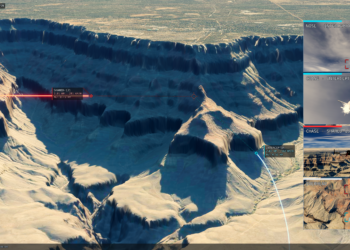
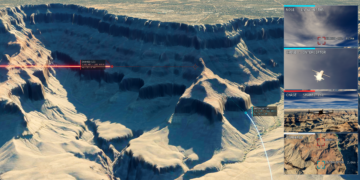
Founded in 2025 by aerospace engineer Tonia Zakorchemna and Ukrainian military officer Dmytro Pulmanovsky, Pai is developing a system intended to provide Ukrainian forces with a shared, real-time map of drone activity over the battlefield.
The system uses passive radio-frequency (RF) sensors to detect drone transmissions, while machine-learning algorithms analyse the collected data to identify drone types and track their location.
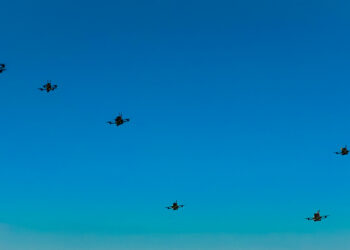
Currently, much frontline drone detection relies on handheld devices that detect nearby radio transmissions or intercept analogue video feeds from enemy FPV drones. The process can be time-consuming: operators may have to cross-reference intercepted footage with terrain maps to pinpoint a drone’s location or coordinate with other units to determine whether a detected drone is friendly or hostile.
“For the most lethal weapon on the frontline, a detector’s beep when the drone is almost overhead is far too late,” said Zakorchemna, Pai’s co-founder and CEO.
Ukraine’s DELTA battlefield management system already integrates live sensor feeds, drone video and operational data. However, Pai argues that significant gaps remain in automatically detecting and mapping enemy drone movements.
The company claims it has already tracked more than 100,000 drone flights — although it’s likely these are pre-launch tracks, since the site is still under construction and this is only a pre-seed round. Its longer-term goal is to use data collected across the front to identify likely flight routes, locate enemy drone operators and predict patterns of activity.
The technology nevertheless has limitations. Because it relies on RF emissions, it cannot detect fibre-optic drones or autonomous drones that operate without transmitting.
However, RF-controlled drones remain a primary battlefield threat. According to a 2026 briefing for a US Army Europe and Africa staff course, radio-controlled VT-40 drones accounted for 67% of tactical strike missions conducted by Russia’s elite Rubikon drone formation in the period examined. Fibre-optic Vandal drones accounted for another 12%.
The continued reliance on RF-controlled drones leaves considerable scope for systems such as Pai’s.
Pai plans to use the new funding to expand its sensor coverage in Ukraine, grow its engineering team and improve its ability to analyse patterns in drone activity.