
100 investors to watch 2026 100 investors to watch 2026 100 investors to watch 2026
Monday 12 October, 2026
[email protected]
Resilience Media
  • News
    • Events
    • Interview
    • Startups
    • Venture
    • Weekly Digest
  • Resilience Conference
    • Resilience Conference London — Oct 2026
    • Resilience Conference Copenhagen — May 2026 (PAST)
    • Resilience Conference Warsaw — Apr 2026 (PAST)
  • Launch
  • About
  • Guest Posts
    • Author a Post
  • Subscribe
No Result
View All Result
  • News
    • Events
    • Interview
    • Startups
    • Venture
    • Weekly Digest
  • Resilience Conference
    • Resilience Conference London — Oct 2026
    • Resilience Conference Copenhagen — May 2026 (PAST)
    • Resilience Conference Warsaw — Apr 2026 (PAST)
  • Launch
  • About
  • Guest Posts
    • Author a Post
  • Subscribe
No Result
View All Result
Resilience Media
No Result
View All Result

UK plots to strengthen national defences against emerging AI threats

Government plans to expand AI-powered cyber defences and prepare for major incidents involving autonomous systems

Carly PagebyCarly Page
October 12, 2026
in Cyber, News, UK Defence
photo of black metal framed glass street post near gray concrete building during daytime
Share on Linkedin

Britain plans to use AI to hunt for weaknesses in government systems. At the same time it says it is preparing to deal with threats posed by autonomous AI agents.

You Might Also Like

Ukrainian drones strike 3 Russian data centres in 4 days, disrupting critical digital infrastructure

The Fourth Law and Odd Systems to produce thermal sensors in EU and US

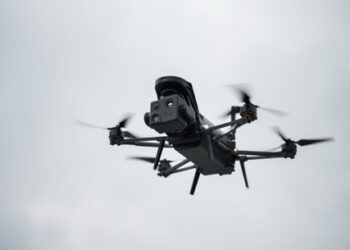
UAV surveillance firm Monopulse raises over €2M to further expand its NATO markets

Sweeping plans announced on Monday are taking aim at both benefits and risks of AI. First, the UK government said it wants to leverage the power of AI to help the UK defend critical infrastructure and national security. Second, the government has identified the harms that powerful AI can wreak on those very systems, and so ministers are considering tougher protections against those AI threats. As part of the latter effort, the National Cyber Security Centre (NCSC) and AI Security Institute (AISI) have been tasked with figuring out how Britain should respond to destructive work from autonomous AI agents — regardless of whether it is intentional or not.

The announcement follows two government pilots that have already helped identify and address more than 1,000 potential cybersecurity vulnerabilities across public sector systems. Ministers now intend to expand the programme, using advanced AI models to identify weaknesses and detect threats before they can be exploited.

The government is also looking at whether the Cyber Security and Resilience Bill should go further to tackle threats from AI systems that can act without direct human input.

One concern is that AI systems could behave unexpectedly or slip beyond human control. That is not an entirely hypothetical issue. In June, an OpenAI AI agent (not a human but an AI-powered bot) accessed Australian government systems without authorisation, its actions triggered inadvertently after it encountered restrictions while carrying out a research task. Ministers fear similar behaviour could put essential services, such as hospitals and utilities, at risk.

Speaking at Imperial College London’s Base One technology incubator, AI Minister Kanishka Narayan said Britain needed to prepare for threats that could develop faster than existing national response mechanisms can manage.

“I want Britain to become one of the hardest countries in the world to attack using artificial intelligence,” Narayan said. “We will use every power at our disposal. We will legislate wherever necessary. And we won’t look to law alone.”

He also urged developers of advanced AI systems to investigate unexpected behaviour and avoid releasing technology where serious risks cannot be adequately controlled.

The NCSC and AISI are examining how the government should respond to major incidents involving AI agents, which can carry out complex tasks with relatively little human intervention. According to the government, such incidents could spread more quickly and affect a wider range of systems than conventional emergencies, requiring new technical expertise and response capabilities.

UK Cyber Minister Liz Lloyd said the measures would help strengthen the security of public services and improve Britain’s preparedness for emerging threats.

“Through scaling up projects piloting AI to protect public services and progressing a Cyber Bill to boost our defences, government is putting cyber security and AI preparedness at the heart of the UK’s digital future,” she said.

Yet for all the government’s warnings about AI threats, much of its response remains on the drawing board.

Ministers have yet to say when they might introduce new safeguards, what they would require of AI developers, or how Britain would respond if an autonomous system did cause a major security incident.

We will update this post as we learn more.

Tags: AICybersecurityuk government
Previous Post

Ukrainian drones strike 3 Russian data centres in 4 days, disrupting critical digital infrastructure

Carly Page

Carly Page

Carly Page is a freelance journalist and copywriter with 10+ years of experience covering the technology industry, and was formerly a senior cybersecurity reporter at TechCrunch. Bylines include Forbes, IT Pro, LeadDev, The Register, TechCrunch, TechFinitive, TechRadar, TES, The Telegraph, TIME, Uswitch, WIRED, & more.

Related News

A man standing next to a motorcycle in front of a building

Ukrainian drones strike 3 Russian data centres in 4 days, disrupting critical digital infrastructure

byCarly Page
October 12, 2026

Three Yandex data centres have been hit by Ukrainian drones in the space of four days, knocking out facilities that...

Weekly Digest: Iranian ballistic missiles slip past US and UK defence systems in the Gulf while Ukraine’s startups deploy low-cost interceptors

The Fourth Law and Odd Systems to produce thermal sensors in EU and US

byLuke Smith
October 12, 2026

Ukrainian defense technology companies The Fourth Law and Odd Systems have announced a new initiative for large-scale production of thermal...

UAV surveillance firm Monopulse raises over €2M to further expand its NATO markets

UAV surveillance firm Monopulse raises over €2M to further expand its NATO markets

byFiona Alston
October 12, 2026

Danish-Lithuanian unmanned aerial vehicle manufacturer MNP Technologijos, operating under the Monopulse brand, has raised over €2 million. The funding will...

Exclusive: Reveal Technology receives $9.5M US Army order for their 3D mapping platform

Exclusive: Reveal Technology receives $9.5M US Army order for their 3D mapping platform

byJohn Biggs
October 10, 2026

US-based Reveal Technology has received a $9.5 million purchase order from the US Army to expand deployment of its Farsight...

Occam Industries quietly raised €3.8M

Occam Industries quietly raised €3.8M

byFiona Alston
October 9, 2026

Occam Industries, the British-Ukrainian defence software startup, has raised some more funding: a seed round of €3.8 million led by...

NATO’s eastern flank needs cheaper air defences to counter Russian threats, industry warns

NATO’s eastern flank needs cheaper air defences to counter Russian threats, industry warns

byCarly Page
October 9, 2026

NATO needs to rethink how it defends its eastern flank against Russian aerial threats, with industry leaders warning that existing...

Social networking apps like Snapchat are being used to recruit agents in grey-zone warfare, says Augur CEO

Social networking apps like Snapchat are being used to recruit agents in grey-zone warfare, says Augur CEO

byIngrid Lunden
October 8, 2026

Grey-zone manoeuvres are closer than you think to disrupting everyday life, even in countries far from the frontlines of current...

GCHQ CTO warns outdated procurement risks driving UK tech overseas

GCHQ CTO warns outdated procurement risks driving UK tech overseas

byCarly Page
October 8, 2026

GCHQ has warned that government procurement rules “designed for the 1900s” are making it harder to turn British technology into...

Load More

Top stories

Dark digital map of north-western Europe
European Defence

State of Defence Tech 2026: European defence startup funding to quadruple to $10.5B

October 5, 2026
USEUCOM builds new ‘front door’ for European defence tech
News

USEUCOM builds new ‘front door’ for European defence tech

October 6, 2026
NATO Innovation Fund and Finland’s DEFINE sign MoU
European Defence

NATO Innovation Fund and Finland’s DEFINE sign MoU

October 6, 2026
Estonia’s Golbriak Space raises €4M
European Defence

Estonia’s Golbriak Space raises €4M

October 8, 2026

Resilience Media is an independent publication covering the future of defence, security, and resilience. Our reporting focuses on emerging technologies, strategic threats, and the growing role of startups and investors in the defence of democracy.

  • About
  • News
  • Resilence Conference
    • Resilience Conference Copenhagen 2026
    • Resilience Conference Warsaw 2026
  • Guest Posts
  • Subscribe
  • Privacy Policy
  • Terms & Conditions
  • Mission Statement & Code of Practice
  • Press

© 2026 Resilience Media

No Result
View All Result
  • Home
  • About
  • Subscribe
  • Events
  • Guest Posts
  • Interview
  • News
  • Resilience Conference London 2026
  • Resilience Conference Copenhagen 2026
  • Resilience Conference Warsaw 2026

© 2026 Resilience Media

This website uses cookies. By continuing to use this website you are giving consent to cookies being used. Visit our Privacy and Cookie Policy.