It can still be very tricky to invest into startups founded, growing and operating exclusively in Ukraine, but a profusion of defence tech companies are being hatched out of the current war with Russia, and investors are finding ways and places to connect with the most promising founders to give them the fuel to grow. Verne Capital, a new VC founded in Germany, has raised €100 million to capitalize on this moment in European tech.
Verne was founded earlier this year, and it only came out of the shadows in September when Mykhailo Fedorov, Ukraine’s deputy prime minister, name-checked Verne as one of the new investors backing Ukrainian defence tech startups.
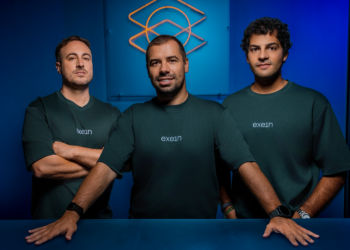
Now Verne is talking to the media for the first time. In an interview with Resilience Media, the VC’s founding partners Benjamin Krahmer and Michael Singer confirmed the €100 million size of the fund and spelled out some of Verne’s focus. Generally, the aim will be backing European startups building technology and services to address wider opportunities in “resilience.” But the firm has also earmarked one-third of the fund for DACH startups, and – notably – a further 25% specifically for defence startups founded out of Ukraine.
Krahmer and Singer have been working in European technology finance for two decades, and together co-founded a separate fund called Futury, which has invested in seed/early tech startups. Futury has both public money (Hessen federal land) and private investors such as Deutsche Bank, Deutsche Börse, Wisag, Merck and Dussmann.
But this is their first outing as investors in defence tech. To dive in quickly, they’ve assembled an industrial advisory board tailored to its investment scope, which includes tech for military use, tech for domestic public safety and security; and wider cyber services. The board includes former executives from Airbus and the Procurement Office of the German army and cybersecurity specialists.
And while a lot of investors today are dipping their toes into defence tech by focusing on “dual-use” startups that are building both for commercial as well as defence customers, Verne is not insisting on that two-pronged approach.
“Providers of financial services now assess the topic of defence and security differently than two or three years ago,” Singer, the firm’s managing partner, said in an interview. For example, he noted that the bank account his firm set up Luxembourg would have been nearly impossible to do just 12 months ago, due to the nature of Verne’s portfolio.
That’s not to say dual-use startups are off the table. Krahmer said that potential civilian applications are evaluated as part of their decision-making process on any deal. He is extremely direct when it comes to the endgame of Verne Capital.
“We are a venture capital fund, we invest for returns,” he said. But those returns, it seems, may not be purely financial but also in response to the current war and the wider implications of that.
“We also see the need to reposition ourselves in Europe,” he continued. “There’s a potential for danger. We see an opportunity to provide geopolitical support here.”
Because of the fact that Ukraine is currently in a state of war, the country has become a petri dish of sorts for cultivating a technology ecosystem. It is, for better or worse, the only country in Europe where front-line experience is contributing to how startups – who have pitched in drones, software, radars munitions and much more to aid in Ukraine’s effort – are iterating on their technology.
That is also what is propelling VCs to get more interested and involved. Krahmer and Signer recently travelled to Lviv to participate in Brave1’s Defence Tech Valley event.
“We want to study the mentality, which has formed under pressure,” said Singer. “We want to understand new ideas in procurement, in the streamlining of processes.”
It was also an important trip for the pair to see how Ukrainians continue to live despite the full-scale invasion.
“We ate very well, we drank very well, we felt great, but at the same time there were situations when we had tears in our eyes,” said Singer.
Verne is evaluating startups across a wide ranger of factors.
The technological experience of the team and the feedback their products are receiving from the frontline are two key areas, similar to how other investors are vetting startups from the area.
But it’s also looking deeper than this. Over the last several months, Verne reviewed around 40 Ukrainian startups. The pair then used their time in Lviv to have closer conversations with three of them, looking for whether founders have the right “defence IQ,” Krahmer said, or “’whether these are some random people that have just decided to jump on the defence bandwagon.”
Evaluating that is important especially because the fund invests very early – perhaps the first check in – and so the team and their mindset are central to whether a deal gets a green light or not.
The fund also seeks to understand market size and how demands can be met.
“Is this an isolated solution or can it be scaled out from Ukraine to, perhaps, Western Europe or the whole of Europe?” they ask. Ukraine still cannot export defence tech (one of the gating factors to investment) so this means Verne looks for “’whether there is a commercial mindset in the team” that will be able to hit the ground running whenever that changes (as some expect it to).
The three Ukrainian startups that have met all of these criteria are now going through due diligence: they will only be announced after that’s completed, which will take at least two more months.
The work does not stop just there. Verne Capital considers itself to be an active investor.
“We do not only give money, we want to support the startup in further growth, including enabling access to other European investors for later rounds,” said Krahmer. “In venture capital, collaboration is always welcome, therefore we are happy to see this ecosystem growing,” added Signer, referring to the crowd of investors that were a part of Brave1’s event in Lviv.
In Latin and Italian, verne is an adjective that comes from vēr, meaning spring. In Norwegian, verne is a verb that means “’to protect, to defend.” This is a fitting double meaning for Verne the VC: the defence tech ecosystem in Ukraine is only just being born, and Verne is an example of one of the VCs that is hoping to be a part of that.