Saturday 7 March, 2026
[email protected]
Resilience Media
  • About
  • News
  • Resilience Conference
    • Resilience Conference Warsaw 2026
    • Resilience Conference Copenhagen 2026
    • Resilience Conference London 2026
  • Guest Posts
    • Author a Post
  • Subscribe
No Result
View All Result
  • About
  • News
  • Resilience Conference
    • Resilience Conference Warsaw 2026
    • Resilience Conference Copenhagen 2026
    • Resilience Conference London 2026
  • Guest Posts
    • Author a Post
  • Subscribe
No Result
View All Result
Resilience Media
No Result
View All Result

‘One alone isn’t a fighter’: Latvia opens up to allies as NATO DIANA supersizes

Industry collaboration, drone innovation, and procurement acceleration were at the forefront in Latvia during two big industry events

Julia GiffordbyJulia Gifford
January 23, 2026
in News
Share on Linkedin

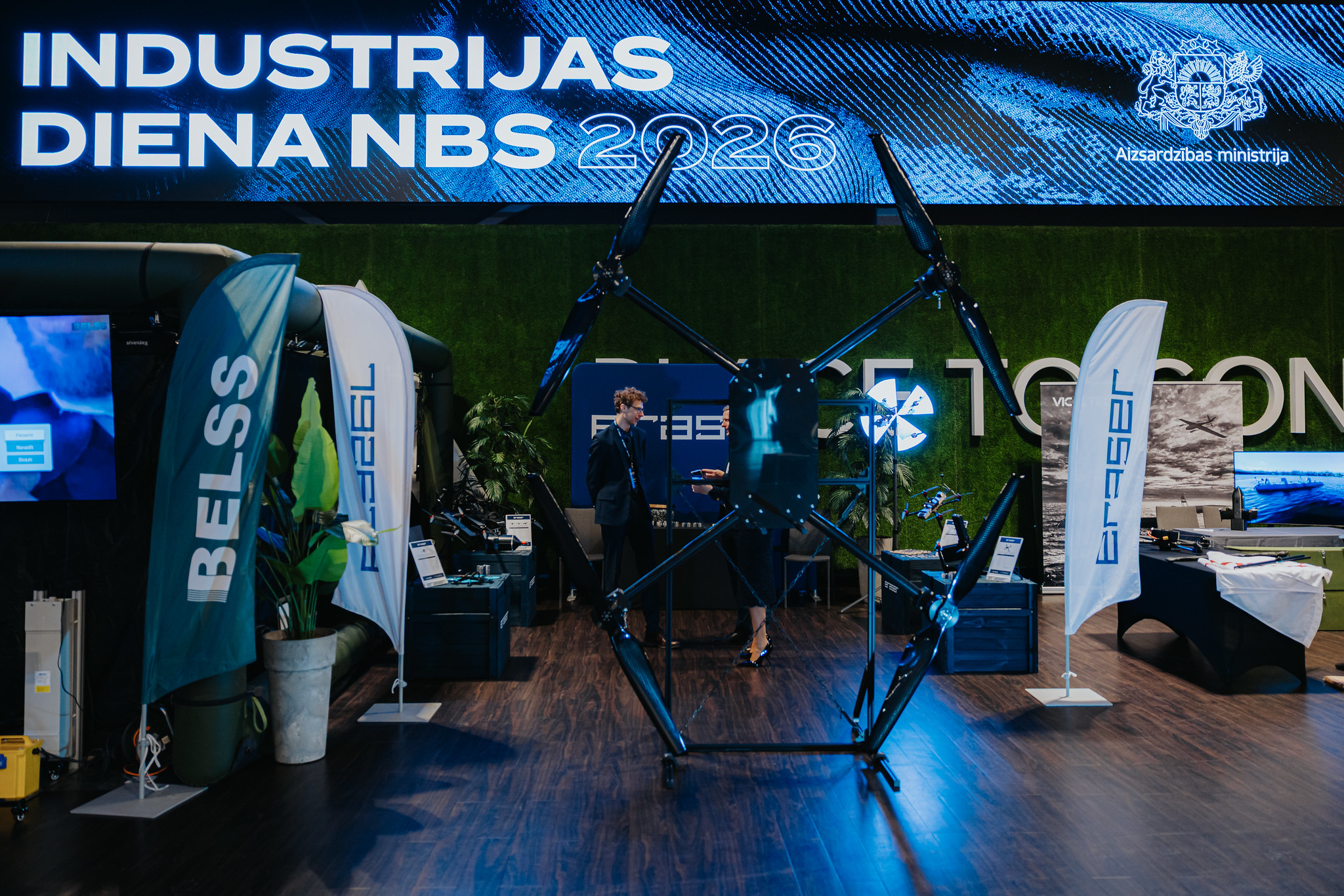
The Latvian defence tech industry is taking geopolitical threats very seriously. That was the stance displayed at length this week at the Latvian Armed Forces Industry Day – an event bolstered by being held in parallel with demos from the first-ever Latvia-based cohort of the NATO DIANA accelerator. 

You Might Also Like

Ukrainian autonomy company The Fourth Law unveils an anti-Shahed drone

Ukraine’s autonomous weapons makers push for industrial scale

MSC got the urgency right. The hard part comes next

The armed forces event focused on the many facets of resilience: real-life preparation, technology, industry collaboration, deterrence – and, in the worst-case scenario, tools for defending Latvian territory. Frank discussions and presentations did not shy away from calling a spade a spade, and it was clear that the industry is taking steps equal to the present threat.

“We don’t have a limitation to be able to shoot across borders, but we won’t be the first to shoot,” said Deputy Commander of the NATO multinational brigade, Ilmars Lejins. “And we will not hesitate, not one second, to respond.”

A major focus was placed on industry collaboration. Citing the Latvian proverb, “One alone isn’t a fighter,” Lejins emphasised that a small country like Latvia can only succeed through industry and allied-power collaboration. 

“Outward collaboration is new to us,” he continued. “Up until 2014, the National Armed Forces were very lonely. All of a sudden, we’re in a reality where we’re expected to collaborate, to be open, to share. This does not happen automatically, it will require a mindset shift.”

He outlined a few options to address the implementation of open collaboration with industry, an important way to drive more innovation. Ukraine has become a template for countries like Latvia, which will now aim to create more initiatives to encourage collaboration and innovation, such as in the recently-launched Drone Competence Center. More simply, innovation has been identified as a more general goal within the armed forces.

To the same end, Minister for Defence Andris Sprūds laid out a promising trajectory. Currently, 1.5% of the country’s defence budget, working out to €30 million annually, is already earmarked for “innovations,” and Sprūds said he hopes to grow this figure to 3% over time. This is about more than just national security, he added: the projection is that this 3% will also be how much the defence sector will contribute to Latvia’s GDP over time.

But speed will be critical. Procurement needs to be carried out safely and securely, but it nevertheless has to be accelerated, he added. 
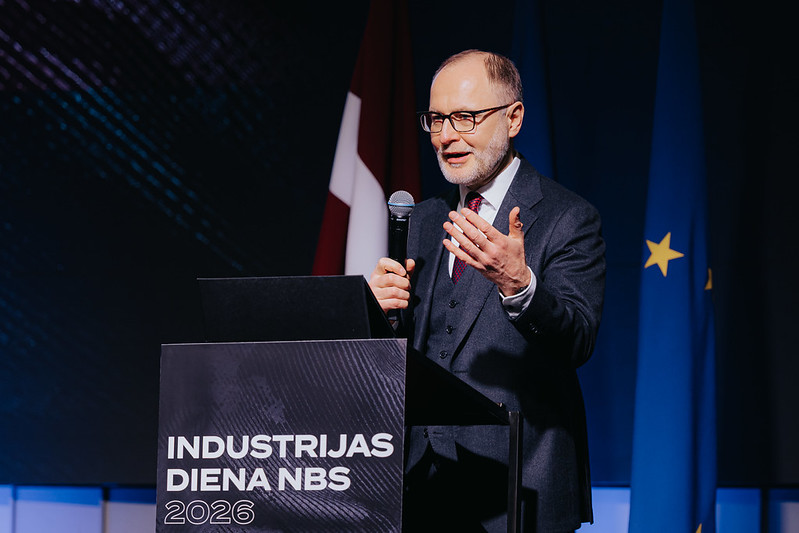
Andris Sprūds, Minister for Defence of Latvia. Image courtesy of Latvia’s Ministry for Defence

NATO DIANA supersizes

The NATO DIANA accelerator – providing an environment to fast-track innovations in support of the defence industry – is a good-case example of successful industry collaboration. It’s perhaps a sign of the times that this year’s programme is doubled in size, with 150 teams in total making it the largest-ever, said the accelerator’s project manager, Heather Buisman. 


Rasmus Basilier, one of the accelerator’s lead mentors, reminded the audience of how DIANA  provides unique access to military contacts, initially for feedback and eventually – potentially – for contracts. For founders who are approaching entrepreneurship from a military background, DIANA provides the business know-how. Especially since the programme is very competitive – this year’s cohort had an acceptance rate of just 4% – just getting in becomes a stamp of approval for future interactions.


The teams in this year’s Latvian cohort were all part of the “extreme conditions” challenge programme. Basilier said that the teams, which are not necessarily from Latvia, were assigned this country’s programme because of how they aligned with that theme.


Latvia is a good base to build for “extreme conditions.” A number of startups in the cohort are drone-based: they can work on their tech across Latvia’s multiple drone testing environments. Alongside that, there is also the availability of a nearly-full range of telecoms spectrum, and Latvia has especially harsh winters – useful for building better communications tooling and products that can be ruggedised for bad weather. In fact, one of the first activities was to brave -15 degree temperatures to gain first-hand experience of cold-weather survival.

Image courtesy of UniLab, part of the NATO DIANA accelerator

The Latvian cohort is run by UniLab Defence, an accelerator created by the major universities with support from the country’s Ministry of Defence. Its overarching goal is to foster regional growth and resilience in the face of global security challenges. 

“For Latvia, this is an opportunity to attract top-level defence and military industry experts from around the world and to offer its ecosystem for the development of innovative technologies,” says Andris Baumanis, head of UniLab Defence.

More than anything, the event demonstrated a true desire from all sides to foster increasingly close ties between industry and national defence units, supported by real-life initiatives, programmes, defence environments, grants, and collaborations. 

Khanjan Desai, CEO of Alchemy – which hails from Canada but has been part of the DIANA accelerator in Latvia – told Resilience Media that the environment has definitely shaped his company’s product, a nanoparticle solution to mask thermal signatures.

“Right now I’m in Latvia, and in Latvia I’m hearing all about drones. So now I’m thinking about how to apply a nanoparticle layer to drone components,” he said. “In Canada, we were talking about textiles.” 

Alchemy indeed already has contracts with Canadian military organizations to develop prototypes for military textiles. But he hopes to use the DIANA accelerator as a launchpad for developing business cases that meet industry needs more specific to Europe.

Tags: andris sprudsDronesLatviaNATO DIANA
Previous Post

Dispatch from Davos: Tech sovereignty looms large

Next Post

How Rune Technologies wants to revolutionize military logistics

Julia Gifford

Julia Gifford

Julia Gifford is a Canadian-Latvian writer and communicator, a tech advocate who gets excited about telling the world about Europe’s tech excellence and impactful initiatives from the region. She has recently published her first book, Treasures of Latvia, and has previously written for Tech.eu, Labs of Latvia, and more.

Related News

Ukrainian autonomy company The Fourth Law unveils an anti-Shahed drone

Ukrainian autonomy company The Fourth Law unveils an anti-Shahed drone

byJohn Biggs
March 6, 2026

Ukraine-based autonomy company The Fourth Law has unveiled Zerov, an autonomous interceptor drone built to engage long-range strike UAVs in...

Ukraine’s autonomous weapons makers push for industrial scale

Ukraine’s autonomous weapons makers push for industrial scale

byLuke Smith
March 6, 2026

In the past five months in Ukraine, Major Maksym Gromov's unit launched 608 autonomous Lupynis drones against Russian adversaries. Four...

asphalt road between trees

MSC got the urgency right. The hard part comes next

byRobin Dechant
March 6, 2026

A few weeks on from the Munich Security Conference, something many of the Resilience Media community no doubt attended, I...

NATO Innovation Fund appoints a president, Ari Kristinn Jónsson

NATO Innovation Fund appoints a president, Ari Kristinn Jónsson

byIngrid Lunden
March 5, 2026

The NATO Innovation Fund, the VC formed out of the strategic alliance of NATO countries that counts most (but not...

SkySafe Wants to Be the Air Traffic Control for Drones

SkySafe partners with major energy sector player to build out drone defence

byJohn Biggs
March 5, 2026

Southern States LLC and SkySafe announced a partnership to integrate real time drone detection and airspace intelligence into Southern States’...

Uforce raises $50M at a $1B+ valuation to build defence tech for Ukraine

Uforce raises $50M at a $1B+ valuation to build defence tech for Ukraine

byIngrid Lunden
March 5, 2026

The United Kingdom and Ukraine look like they may have minted their first defence tech ‘unicorn’. Uforce (stylised ‘UFORCE’) —...

Anthropic, OpenAI, and the new rules of Defence AI

Anthropic, OpenAI, and the new rules of Defence AI

byCarly Pageand1 others
March 3, 2026

Anthropic is facing the prospect of being frozen out of US government work after refusing to relax safeguards on how...

Periphery CEO Toby Wilmington

Periphery and Midgard partner to secure robots against capture and reverse engineering

byPaul Sawers
March 2, 2026

Modern conflict has pushed autonomous machines into some of the most hostile operating environments. Drones are intercepted mid-flight, ground robots...

Load More
Next Post
How Rune Technologies wants to revolutionize military logistics

How Rune Technologies wants to revolutionize military logistics

Weekend Read: ‘History tells us what may happen next with Brexit & Trump’ ten years on

Weekend Read: 'History tells us what may happen next with Brexit & Trump' ten years on

Most viewed

InVeris announces fats Drone, an integrated, multi-party drone flight simulator

Twentyfour Industries emerges from stealth with $11.8M for mass-produced drones

Senai exits stealth to help governments harness online video intelligence

Uforce raises $50M at a $1B+ valuation to build defence tech for Ukraine

Harmattan AI raises $200M at a $1.4B valuation from Dassault

Palantir and Ukraine’s Brave1 have built a new AI “Dataroom”

Resilience Media is an independent publication covering the future of defence, security, and resilience. Our reporting focuses on emerging technologies, strategic threats, and the growing role of startups and investors in the defence of democracy.

  • About
  • News
  • Resilence Conference
    • Resilience Conference Copenhagen 2026
    • Resilience Conference Warsaw 2026
    • Resilience Conference 2026
  • Guest Posts
  • Subscribe
  • Privacy Policy
  • Terms & Conditions

© 2026 Resilience Media

No Result
View All Result
  • About
  • News
  • Resilence Conference
    • Resilience Conference Copenhagen 2026
    • Resilience Conference Warsaw 2026
    • Resilience Conference 2026
  • Guest Posts
  • Subscribe
  • Privacy Policy
  • Terms & Conditions

© 2026 Resilience Media

This website uses cookies. By continuing to use this website you are giving consent to cookies being used. Visit our Privacy and Cookie Policy.