Cardiff-based Space Forge has announced it has put a microwave-sized manufacturing payload into orbit, including a 1,000°C furnace for smelting and crystal manufacturing in microgravity.
Space Forge said that in space, crystal growth can be cleaner thanks to the surrounding vacuum. The CEO, Josh Western, said those conditions can produce semiconductor materials that are far purer than what you can make on Earth. This is no sci-fi stunt, however. The company expects to be able to make better chips that will end up in infrastructure and computers here and in space.
“The work that we’re doing now is allowing us to create semiconductors up to 4,000 times purer in space than we can currently make here today,” Western told the BBC.
The payload launched on a SpaceX rocket in the summer. Since then, the team has been running tests from a mission control setup in Cardiff. One of the key milestones was getting imagery back from inside the furnace showing glowing plasma, gas heated to roughly 1,000°C. Space Forge’s payload operations lead, Veronica Viera, described seeing that return image as a career moment, because the furnace is central to any real production run.
Next comes the return. The company says it wants a larger “space factory” that could produce semiconductor material for around 10,000 chips per mission. The harder engineering problem is getting the product back to Earth in a controlled way. Space Forge plans to test a reentry heat shield called Pridwen, designed to protect the spacecraft during atmospheric reentry so material can be recovered and used.
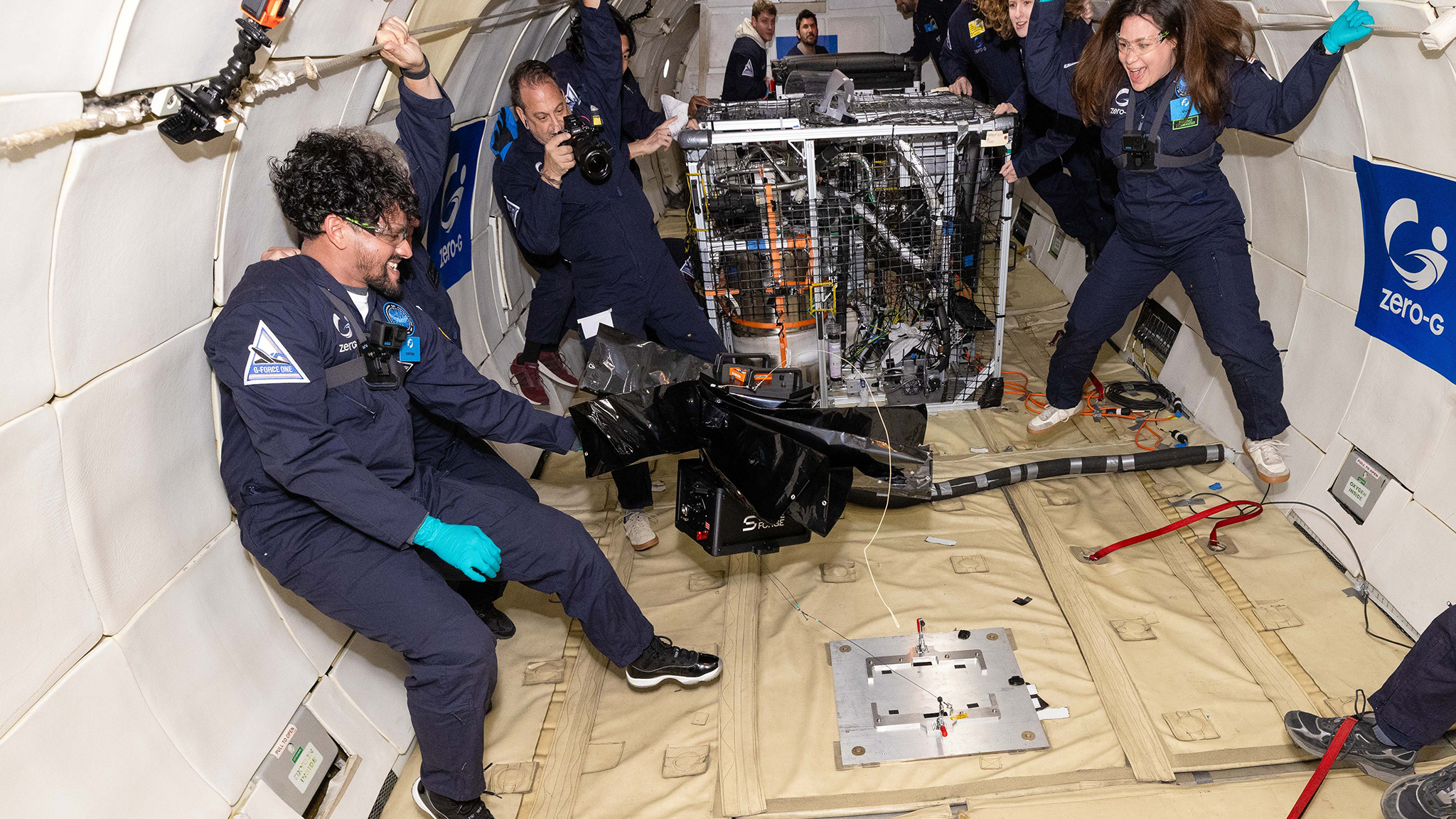
“Deploying Pridwen in microgravity with ZeroG is a key step in the maturation process. It proves our shield works in the closest environment to space we can reach on Earth, and takes us one step closer to recovering satellites safely and enabling a new era of manufacturing in orbit,” said Neil Monteiro, Microgravity Research Manager at Space Forge.