UK AI hardware startup Fractile has raised $220 million in funding to build so-called “AI inference chips,” specially designed chips that can run entire pre-trained models instead of running stored models off of computer drives. Accel, Factorial Funds, and Founders Fund led the round with participation from Conviction, Gigascale, 01A, Felicis, Buckley Ventures, and 8VC.
The company says current large language model workloads are already reaching tens of millions of tokens for advanced reasoning and agentic tasks. At existing inference speeds of roughly 40 tokens per second, Fractile estimates that some outputs can take weeks or even a month to complete on current hardware. This means current solutions will soon be too slow to do real and complex work like simulations and coding processes.
Fractile is designing its architecture to avoid memory bandwidth and latency constraints, the primary bottlenecks in modern inference systems. The company says compressing a month-long workload into a single day while maintaining support for long context windows and large model complexity.
“The defining work of the 21st century will be marked by the engine of inference delivering immense and diffuse chains of intellectual inquiry, in drug discovery, in software engineering, in materials discovery, in any field where humanity will benefit from sheer intellectual work to resolve complex problems. The workloads that push to the limits of the current frontier are already transformational. The ones that lie beyond that frontier, that we are about to break open, will stretch our imaginations and redefine the entire economy. Fractile is seeking to increase the clock speed of global progress, one chip at a time,” the company wrote.
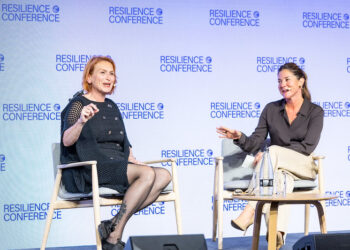
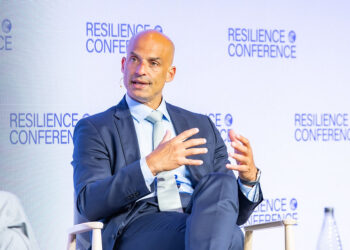
The company argues that inference speed and cost are becoming the main constraints on frontier AI systems as models produce increasingly long and complex outputs. The goal of inference chips is to bring AI capacity to the edge of the network, including inside mobile phones and mobile computers, thereby allowing even handheld devices to become independently “smart.” The company joined us on stage at the 2025 Resilience Conference.
Fractile has been focused on growth since then, with Fractile’s CEO, Walter Goodwin, saying that the future of European tech must be European-made.
“We do have a once-in-a-lifetime opportunity… but the build-out is happening over the next two years. We do need to act now to seize this,” he said last year.
Fractile said it has been developing technology across the full stack, including research, semiconductor design, and chip architecture. The company claims its goal is to move beyond tradeoffs between latency and cost in AI inference infrastructure.
The new funding will support development of Fractile’s first chips and systems as it moves toward commercial deployment. The company is hiring across London, Bristol, San Francisco, and Taipei as it expands engineering and manufacturing operations.