Estonia’s Lendurai, the defence tech developing AI-enabled autonomy solutions for unmanned aerial vehicles (UAVs), has signed a partnership with Israeli smart integrated systems and loitering munitions company Uvision.
Lendurai will develop software capabilities based on its Neocortex autonomy technology and Uvision will lead on integrating these into its advanced unmanned systems.
Why is teaming up with Uvision a big deal for Lendurai? In October last year, Uvision announced that it had, alongside US-based integrator Mistral Inc (NOT to be confused with the French AI company Mistral that recently closed a €3 billion funding round), secured a multi-year Indefinite Delivery, Indefinite Quantity (IDIQ) contract with the US Army.
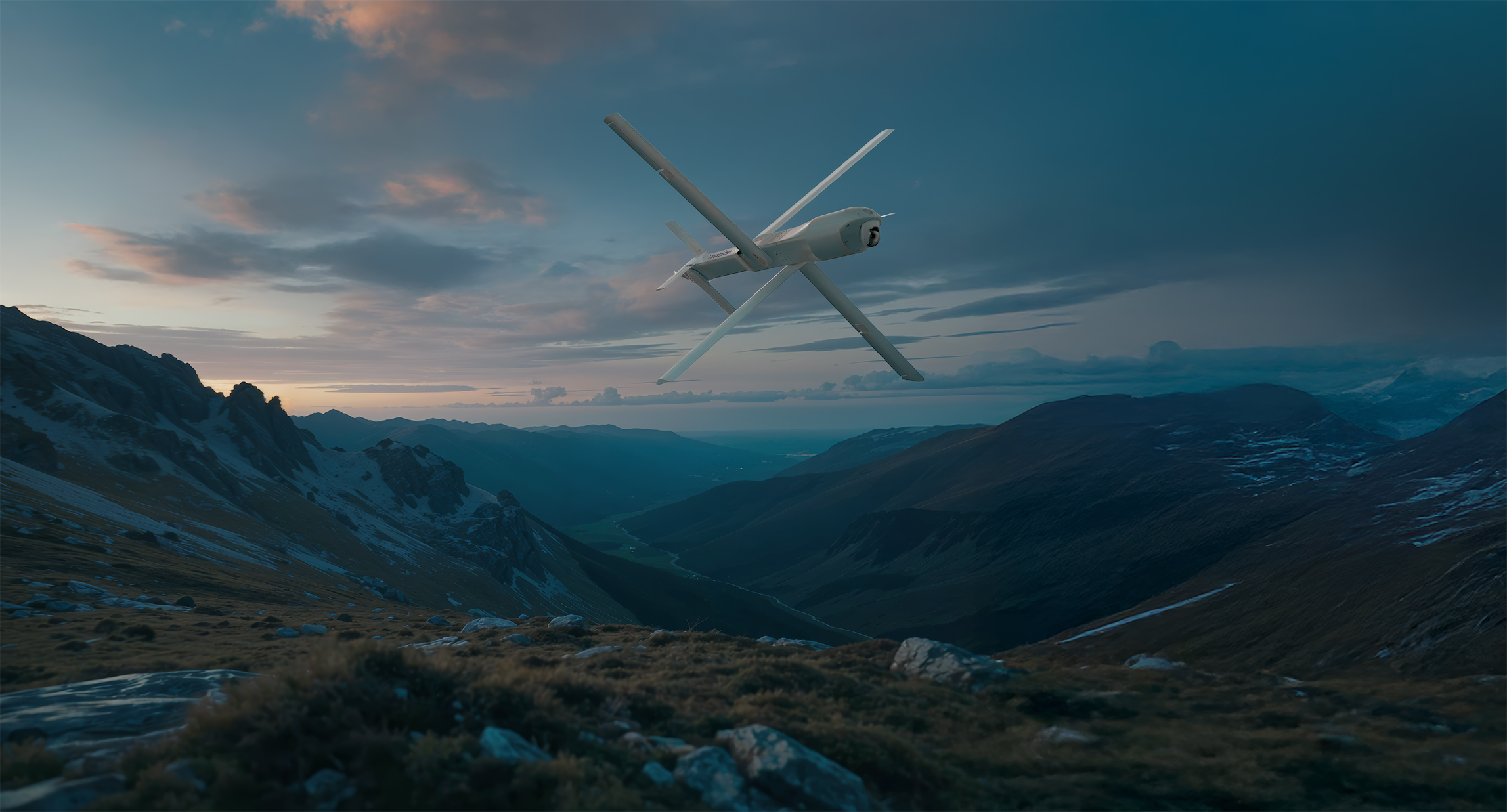
An IDIQ contract is akin to a framework agreement. Valued at up to $982 million, this particular one will let the pair bid for deals within the Army’s Lethal Unmanned System (LUS) programme. In the case of Uvision and Mistral, they will bid to provide services to “procure, field, train and sustain Uvision’s HERO 120 loitering munition system,” which can be integrated to work with ground, water and air-based vehicles.
Now, Lendurai also has a shot at being a part of those deals, which is huge for this small startup.
“[Uvision is] one of the biggest players on the market,” Siim Maivel, CEO of Lendurai, told Resilience Media in an interview. “They have a tested solution that has been acquired by many NATO countries.
“Combining our AI and autonomy expertise with Uvision’s proven unmanned systems creates an opportunity to deliver capabilities tailored to real operational requirements, while laying the groundwork for broader cooperation in the future.”
Lendurai describes its Neocortex autonomy software as having been combat tested in Ukraine. It combines computer vision and machine learning to support target identification, tracking, terminal guidance, and navigation in GNSS- and radio denied conditions. (It is not to be confused with a similarly-named product that Uvision already has in place called Cortex, which it launched in June 2026.)
Last summer, Lendurai — which was founded by Maivel Mark Cowan, and Sergii Kharagorgiiev — raised €5.57 million seed funding from Expeditions Fund, HCVC, and Vsquared Ventures.
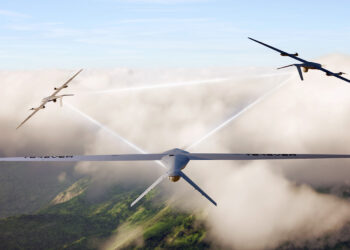
More recently, the Estonian startup has focused on developing Accipiter, a low-cost, human-in-the-loop autonomous interceptor designed to counter Shahed-class and similar attack drones.
Maivel said that Eastern Flank multi-company initiatives to build more effective “drone wall” defences have highlighted the vulnerabilities in the systems. Specifically, traditional assets like ships or and air defence systems actually need as much protection from drones as land masses do. This is where the Accipiter fits in well.
Uvision
In addition to the HERO family of loitering munitions, Uvision’s portfolio includes the VIPER family of autonomous multi-mission systems, and PEREGRINE, designed for tactical kinetic operations. Deals with companies developing more advanced AI capabilities, such as this one with Lendurai, will give Uvision’s autonomous systems an extra layer of intelligence to let them operate even when those systems lose connectivity, a common scenario these days.
“AI-enabled autonomy is becoming increasingly important in addressing the complexity of modern operational environments,” said Ran Gozali, CEO of Uvision, in a statement. “Our collaboration with Lendurai will enable us to integrate advanced capabilities into our systems in support of the evolving needs of NATO Forces.”