Valkyrie Dynamics, a Ukrainian-Lithuanian defence startup that is building radar-based interceptors, has raised €1 million in pre-seed funding. Hexa, a venture studio based in Paris, is leading the round which includes participation from Better Angle, Kima Ventures, Helvetic Venture and Next Front Ventures. Valkyrie is also part of Hexa Sprint Defence, the studio’s accelerator programme for early stage dual-use companies.
Everyone talks about how important the feedback loop is when building for Ukraine, but Valkyrie’s CEO and founder Marcin Kovalevskij didn’t even have to get to the frontlines to give him the ‘solve’ for his company. At an European Defence Tech Hub hackathon in London where he did not win, Kovalevskij asked a Ukrainian officer with 3rd Army Corps, who was judging, why he missed out. He was told quite simply that what he had built was not solving any problem Ukrainian forces were facing.
After a thirty minute chat, Kovalevskij understood the gap: UA drone operators need solutions for sight in poor weather conditions such as heavy rain, fog, smoke and snow. The optical and thermal cameras they did have were not cutting it.
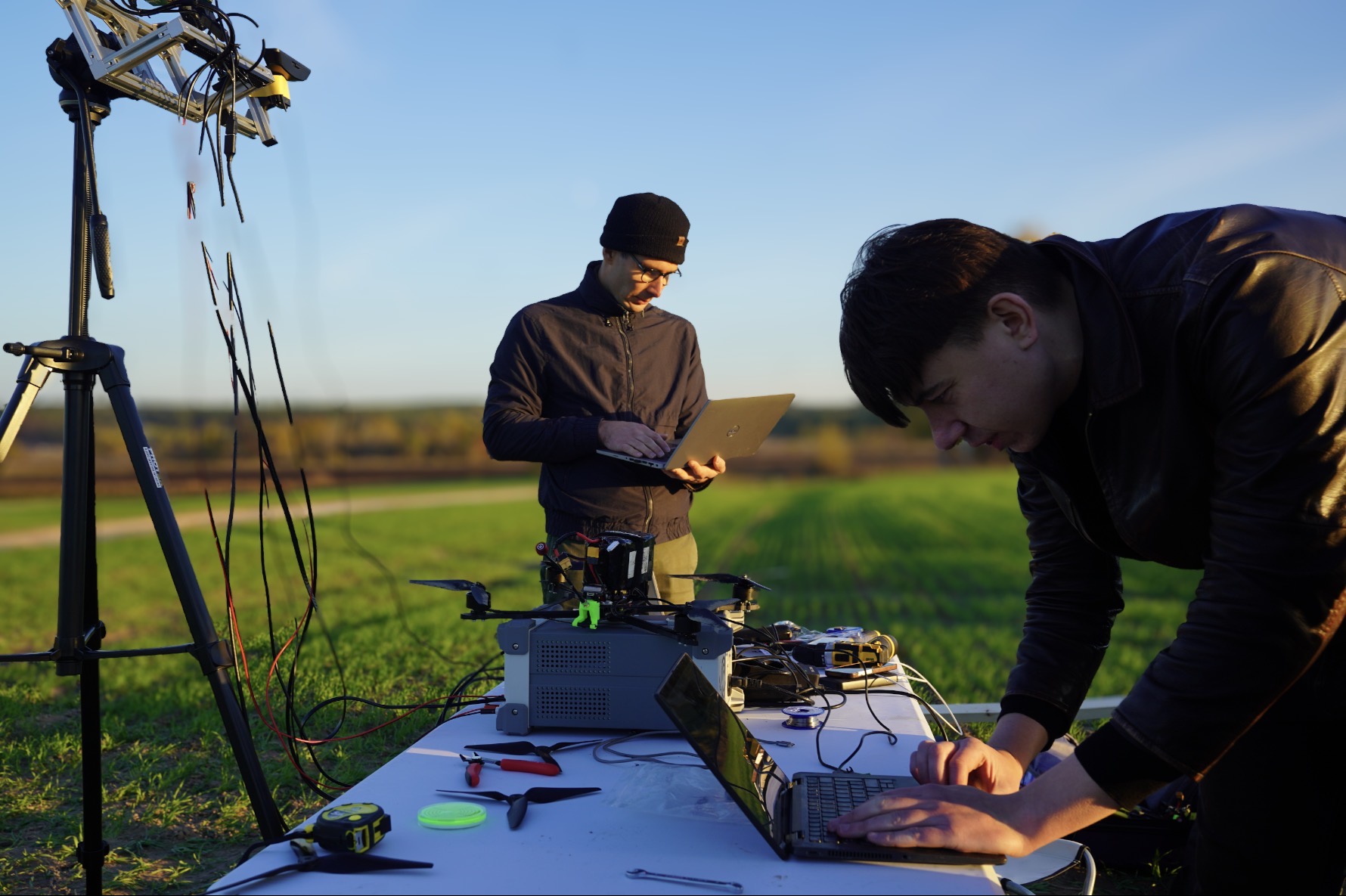
So Kovalevskij put his physics education and engineering background to use, assembled a team of engineers, got to work and then headed for Kyiv.
He claims he spent five months sleeping on a factory floor. Then, in October 2026, Valkyrie had its first prototype.
“If you really want to understand what’s happening and build the right solutions, not solve phoney problems, then you really want to have skin in the game,” he said about his decision to move to Kyiv. “For me, it really matters. You really have to live the problem.”
Not only has it given him the opportunity to tighten that feedback loop but he has seen how quickly warfare moves — for example, how the shaheds suddenly switched to being jet powered and faster than before. “From one day to another, a switch has flipped,” he said.
Norse inspiration
Heimdall is Valkyrie’s main product. Named for the mythological Norse “watchman of the gods” that had superior powers of sight, it is an onboard terminal guidance radar seeker that sits in the interceptor’s nose cone.
It’s designed specifically for FPV interceptors and autonomous interception platforms and uses radar radio-frequency waves to penetrate conditions where traditional cameras lose sight.
“We want to replace $3 million missiles with low-cost drone interceptors guided by more accessible radar technology. [But] giving these systems better sensors, and eventually fusing those with other components, is what will push the next stage of drone interception. It will make interceptors more autonomous and able to keep up with faster, jet-powered threats,” he said.
In the future, the startup wants to also integrate its radars into ground vehicles and other unmanned platforms, the company said.
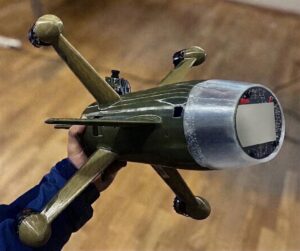
The company develops the radar component using European manufacturers to integrate into other company’s products.
Indeed, the plan currently is to build through partnerships. It recently partnered with Korven Systems, a Ukrainian-Estonian developer of autonomy systems for interceptor drones, to conduct some testing. Valkyrie will also be involved in testing with the Ukrainian military later this week.
When asked about his competitors, he replied “other teams are still on the design table, from what we know.”
Expansion
The funding will see the company expand with an additional R&D office in Vilnius, Lithuania where the company is headquartered. Its current R&D lab is in Kyiv but Kovalevskij told Resilience Media that there are a number of reasons why they are expanding beyond that: among them, the obvious safety risks; the slow pace for hiring in wartime where able-bodied people are also getting recruited into the military; and the timeline for shipping and importing goods.
The French connection
Kovalevskij’s relationship to France and decision to take part in a Paris-based venture studio accelerator programme stems from his pre-founder days. Kovalevskij spent some years in France at Université Paris Cité studying physics, and he also worked in engineering roles in CNRS and Exotrail. ESA, Astrolight and the San Francisco startup find-gs also feature on his CV.
“At Hexa Sprint Defense we build companies alongside founders, from the first customer to the first factory. Valkyrie is solving a problem every European army is about to face: drones that hide in the weather. They’re building it from Kyiv, where the feedback loop is measured in days, not years. We’re proud to have them as the first Ukrainian team in the programme,” said Guillaume Lerouge, a partner at Hexa VC, in a statement.
Updated to correct the name of one of the investors.