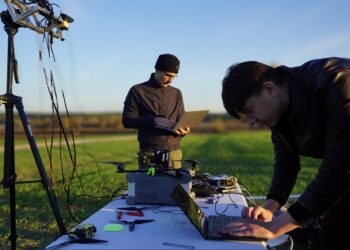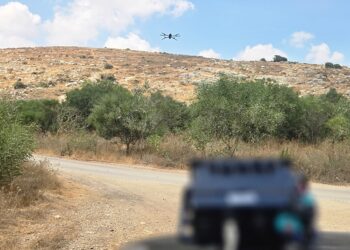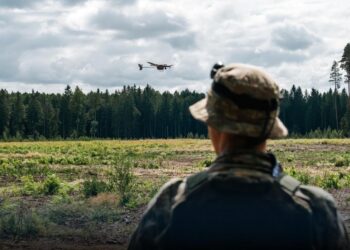
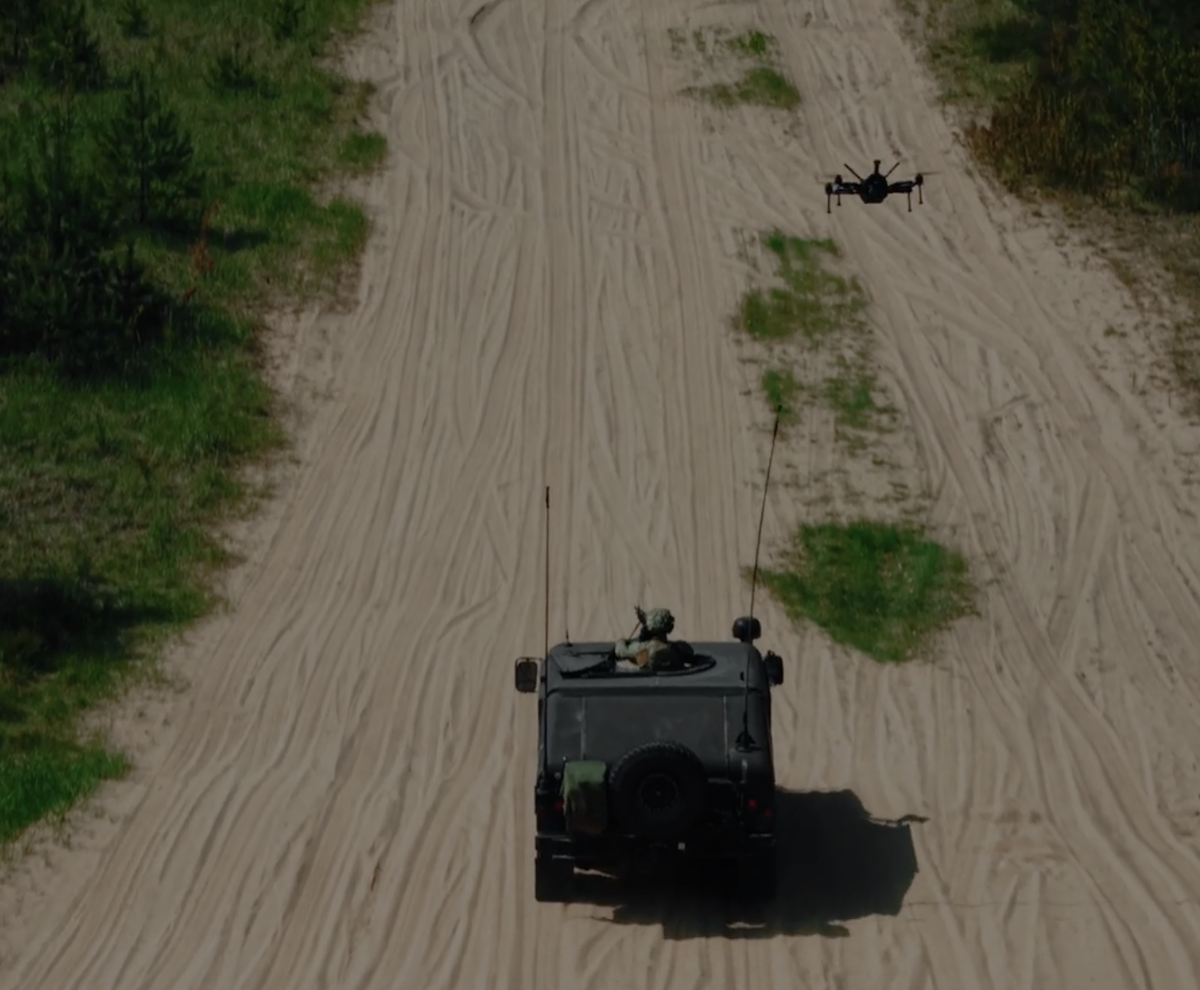
Military drones are becoming cheaper, more capable and easier to manufacture. But as armies race to deploy hundreds of thousands of unmanned systems, a new problem is emerging: who will operate them?
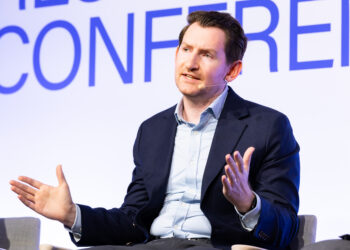
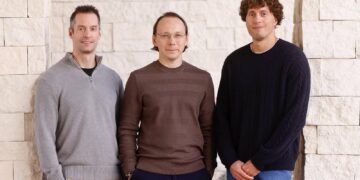
XTEND, a robotics software company led by CEO and co-founder Aviv Shapira, believes the answer lies in changing how humans interact with machines. Rather than training an operator to fly each drone, the company has developed an operating system that allows users to assign tasks to autonomous systems and supervise their execution.
“We are building an operating system for robotics for the past eight years,” Shapira said in a wide-ranging interview, available below. “Think about us as the Android of robotics.”
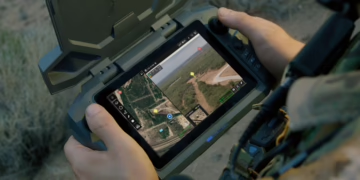
The company’s software is designed to work across different platforms, allowing operators to manage drones remotely without having to control every movement. The system combines autonomy with human supervision, particularly in situations where conditions change quickly.
Shapira points to entering a burning building as an example. A robot may have a defined mission, but neither the machine nor its operator knows exactly what it will encounter. The software must allow the robot to respond to changing conditions while keeping a human involved in important decisions.
“We’re not really operating them manually but actually telling them what to do,” Shapira said. The drone, he said, can work out its own strategies for exploring the environment and taking control of the situation. The objective is to reduce the training and personnel requirements associated with operating large numbers of drones while keeping people away from dangerous environments.
The need for systems capable of managing large drone fleets has become increasingly apparent as military procurement shifts toward mass production. Shapira cited the US government’s Drone Dominance initiative, which he said involves building approximately 300,000 drones with participation from XTEND and other companies.
“How can you actually train three hundred thousand people? It doesn’t make any sense,” he said.
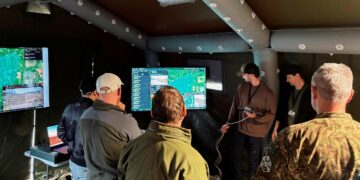
XTEND’s approach is to reduce the need for individual drone pilots. Its software allows operators to supervise multiple systems, with much of the direct control handled by the machines themselves.
Shapira argues that this model could allow a single person to manage very large numbers of drones remotely. The practical limits of that approach will depend on mission requirements, communications and the degree of autonomy available.
The company is also developing its technology for police, firefighting and search-and-rescue operations, where remotely operated machines can enter dangerous areas before human personnel.
“The whole goal of putting someone away from danger and allowing him to operate from remote as if they are is inside the environment operating,” Shapira said.
A software platform rather than another drone
XTEND’s business model is based on the idea that the software controlling a robot can be more important than the hardware itself.
The company’s operating system supports several common computing platforms, including Raspberry Pi, Qualcomm and NVIDIA hardware. Shapira said NVIDIA is the preferred option because its processing capabilities and software ecosystem support more demanding applications. The company has also developed an application marketplace that allows customers to add capabilities to existing systems without replacing the underlying hardware.
“Every one of our end users can download new applications,” Shapira said. “As the threat or as the mission is changing, they basically download the right application.”
For defense users, this could help address one of the industry’s most persistent problems: the time required to acquire new capabilities. Military threats can change in days or weeks, while procurement programs frequently take months or years. A software-based approach could allow operators to respond to some of those changes without waiting for an entirely new generation of equipment.
“The piece of hardware, the drone itself, is more or less a commodity, but the software and the applications is actually what makes that drone more and more capable,” Shapira said.
That strategy also creates a potential source of recurring business for XTEND as customers add applications and expand their use of the platform.
From battlefield testing to global operations
XTEND operates through six subsidiaries, including businesses in the United States, Israel and Latvia. Shapira is based in Tampa, Florida, while the company’s Israeli operations have supported the Israel Defense Forces since XTEND’s early years.
Shapira said Israel’s defense technology sector operates differently from many other markets because new systems can move into operational testing much more quickly.
In other countries, developers may spend years attempting to reach high levels of technical readiness before equipment reaches users. In Israel, he said, technologies are often tested in real combat conditions much earlier. That experience feeds into XTEND’s development work elsewhere, including its US operations.
This international structure is intended to reduce dependence on any single government or market.
Shapira noted that political changes in Washington can affect the pace of US defense spending, but demand from European countries facing the threat from Russia follows a different set of priorities.
Going public through a reverse merger
XTEND recently entered the US public markets through a reverse merger with an existing company, rather than a traditional initial public offering or a special purpose acquisition company. Shapira said the transaction shortened the process of becoming publicly traded by approximately half, taking around six months.
The merger also brought together two different businesses. The existing company, which Shapira described as a construction business, is now involved in building some of XTEND’s US factories.
For Shapira, who previously sold two companies, becoming publicly traded represents a change in how he wants to build a business. He argued that venture capital investors and founders do not always share the same long-term goals. Investors may want an exit, while entrepreneurs may want to continue expanding their companies.
“This is the first time in my life that I can actually build a big company and I don’t have to think about giving money back to the VCs,” he said.
The public listing also places new expectations on XTEND. The company must now demonstrate that its technology, contracts and manufacturing operations can support a lasting business.
The challenge of scaling military autonomy
XTEND’s ambitions come at a time when defense organizations are rethinking how they acquire and operate unmanned systems. The war in Ukraine has demonstrated the importance of producing drones at scale, but production alone does not solve the problems of training, coordination and mission control. XTEND is betting that a common operating system can address those problems across different manufacturers and types of robotic equipment. Its software marketplace could also give defense customers a way to update capabilities more quickly than traditional procurement programs allow.
There are still important questions about how effectively one operator can supervise large numbers of autonomous systems, particularly in contested environments where communications may be disrupted and missions change without warning. The company will also need to prove that its software can become a widely adopted platform rather than remaining tied to a limited number of manufacturers and government contracts.
Shapira believes the industry’s existing development model is too slow for the threats it now faces.
He pointed out that major defense programs can still take five or ten years to move from specifications to delivery, even as battlefield requirements change continuously.
XTEND’s proposed answer is to separate the evolution of robotic capabilities from the production cycle of the machines themselves. If that model works, manufacturers could focus on building large numbers of relatively inexpensive systems while software developers provide the capabilities needed for particular missions. The only thing they’d need, said Shapira, is a unified operating system.