We’re at a high watermark for defence tech investing across Europe, with startups in the region expected to raise more than $1.5 billion this year per our recent report.
Having backed a number of defence tech companies primarily in the US, mega VC Bessemer Venture Partners wants to make more inroads into the sector in Europe — an approach it has outlined in a recent report.
Some observers believe we’re already in a bubble when it comes to drones. Yes, there is a strong need for these unmanned aerial vehicles — Ukraine itself aims to produce 4.5 million this year — but is that demand being met or even outpaced by the number of drone startups that have set up shop?
But while that’s an issue that’s sure to see more debate over the coming years, one key takeaway from Bessemer’s report is that the funnel of technologies and startups that are being assessed is actually much larger than just this. According to the list of technologies and businesses that Bessemer aims to target, the category extends to space tech, industrial manufacturing, aerial defence, and software and hardware used to build command and control systems to run bigger campaigns and strategic work on the front lines, and beyond.
That spells a much bigger opportunity for a wider range of founders and startups out there.
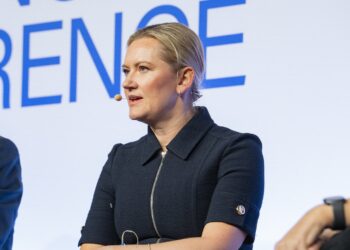
Alex Ferrara, the Bessemer partner who leads its European business out of London, told Resilience Media in an interview that his firm is actively looking to invest in startups that help speak to the wider need for sovereignty and resilience. (Ferrara also explicitly said in the interview that you should reach out to him if one of these categories applies to you.)
Attracted to magnets
Industrial is a potentially massive part of the thesis, covering everything from manufacturing parts through to the materials used to build hardware and weapons.
“We’re looking at some companies in the area of advanced industrial manufacturing, and we hope we can make some investments there,” Ferrara said, noting advances in 3D printing and high-precision manufacturing as essential in their own rights, and also for helping to fill out large order contracts for the products like drones where those components will be used.
He added that his firm is also “starting spend some time” exploring early-stage startups that are looking to make a contribution in the area of materials, specifically rare earth metals and magnets.
Rare earth metals is a great example of how important deep tech is to the concept of resilience overall. They are an essential component of how chips and hardware are made, and a focus on it right now is especially timely: at present, supply is almost completely controlled by China, and we’re seeing the fallout of that, both in Europe and the US.
But any work on this space, at the moment, is still very early and not yet proven out, or the companies themselves are not exactly set up like startups, which will make fitting them into an investment thesis challenging in a different way.
“Some of them are really more like just industrial manufacturing businesses,” Ferrara said. “We’re trying to figure out if there are any ‘venture-backable’ companies using innovative technologies to solve this rare earth problem.”
Investing is in the air
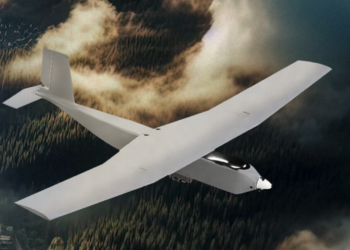
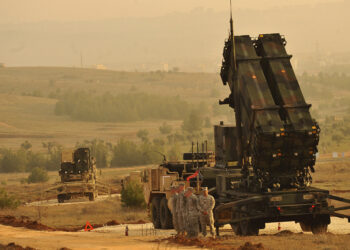
Aerial defence is another area where Bessemer is evaluating startups. But it is up in the air, so to speak, when it comes to how it might be implemented over time. A lot of governments are following events in Ukraine closely, and especially those on the borders of that country are keen to develop so-called drone walls to better protect their territories from incursions of drones and missiles from adversaries. There are, however, a lot of question marks over cost, who would pay, and even what such a defence would look like.
VCs looking at investing in this space are doing their homework and looking at a number of bigger companies like Tytan, Frankenburg, Origin Robotics, LMT and Cambridge Aerospace. Many of these are already forging early tie-ups to explore working with ministries of defence, and they are already raising impressive sums of money to build out their R&D. There are a range of technological approaches, and that could speak to a lot of fluidity in what ends up dominating this market, but the salient economics are part of what compels a firm like Bessemer to consider it.
“They seem to have figured out a way to use very low-cost drones on the order of like $25,000 or less to take out higher-value drones, the order of $250,000,” Ferrara said of one company. “The whole drone wall thing is very interesting.”
Drones still matter (despite ‘bubble’ worries)
All of this does not mean that Bessemer is ignoring the potential “bubble” category… that is, drones themselves, as shown by its latest $130 million investment in Auterion.
That, in fact, is a good example of how dual-use and pivoting startups are capturing some of the dollars being allocated by VCs for defence tech.
The war in Ukraine has presented a very real and urgent need for more modern defence and related systems to help the fight against Russia’s invasion. You can think of it as the most immediate market for defence tech in Europe right now. But the war has also led to countries across the rest of Europe — both those in the border regions of Russia and Ukraine and further afield — to reassess their own defences.
In short, everyone is weaponising technology, and this has given rise to a new wave of startups building to that end.
Some VCs have previously turned away from startups building for military and defence use cases, but now events are forcing them to change their tune. And that has also played out among startups themselves, leading to a second life raising a lot of money as “defence” specialists. Bessemer has been one of the investors to capture that shift.
Drone technology maker Auterion had been around for years, quietly building out a reputation for itself in open source drone systems and forging deals for drone delivery services. But it was a pivot to defence tech that saw the startup take off like a rocket ship. Its hardware/software tech stack, it turned out, was particularly useful for drone swarms, which have become a key component of how Ukraine and Russia have been fighting against each other.
Auterion’s tech is not only battle-tested at the front line, but has cultivated a strong profile for being a “sovereign” (European-made) option for European buyers at a time when European ministries are increasingly looking to reduce reliance on foreign providers amid geopolitical instability. Auterion has leaned into that, spelling out its position as a credible alternative to products from market leader DJI and others from China.
Ferrara said that the company was not on its radar when it was focused on use cases like drone delivery for supermarkets. It was the momentum that it started to pick up in the wake of the war in Ukraine, when co-founder and CEO Lorenz Meier saw an opportunity to help the country in its drone-based defence strategy, both directly and by way of countries that were assisting it.
He’s all in on the concept now, based on our fireside discussion at the Resilience Conference, where Meier said prefers to use, instead of “defence tech”, the term “war tech” — a positioning that hopefully will not be another 21st century example of nominative determinism.