Tuesday 12 May, 2026
[email protected]
Resilience Media
  • About
  • News
  • Resilience Conference
    • Resilience Conference Warsaw 2026
    • Resilience Conference Copenhagen 2026
    • Resilience Conference London 2026
  • Guest Posts
    • Author a Post
  • Subscribe
No Result
View All Result
  • About
  • News
  • Resilience Conference
    • Resilience Conference Warsaw 2026
    • Resilience Conference Copenhagen 2026
    • Resilience Conference London 2026
  • Guest Posts
    • Author a Post
  • Subscribe
No Result
View All Result
Resilience Media
No Result
View All Result

In it to swim it

A new JV between Kraken Technology and NVL will supercharges how the naval prime will tap into autonomy and AI to build a new generation of maritime vessels

Ingrid LundenbyIngrid Lunden
August 22, 2025
in News, Startups
Share on Linkedin

One of the primary ways that younger defence startups scale to win major deals is by teaming up with bigger legacy players that want to incorporate more cutting-edge technology into its own stack.

You Might Also Like

Munich facility gives Spire a base for sovereign space capabilities

Ukrainian Magura sea drone found in Greek cave near Lefkada

Two drones entering from Russia and armed with warheads land in Latvia

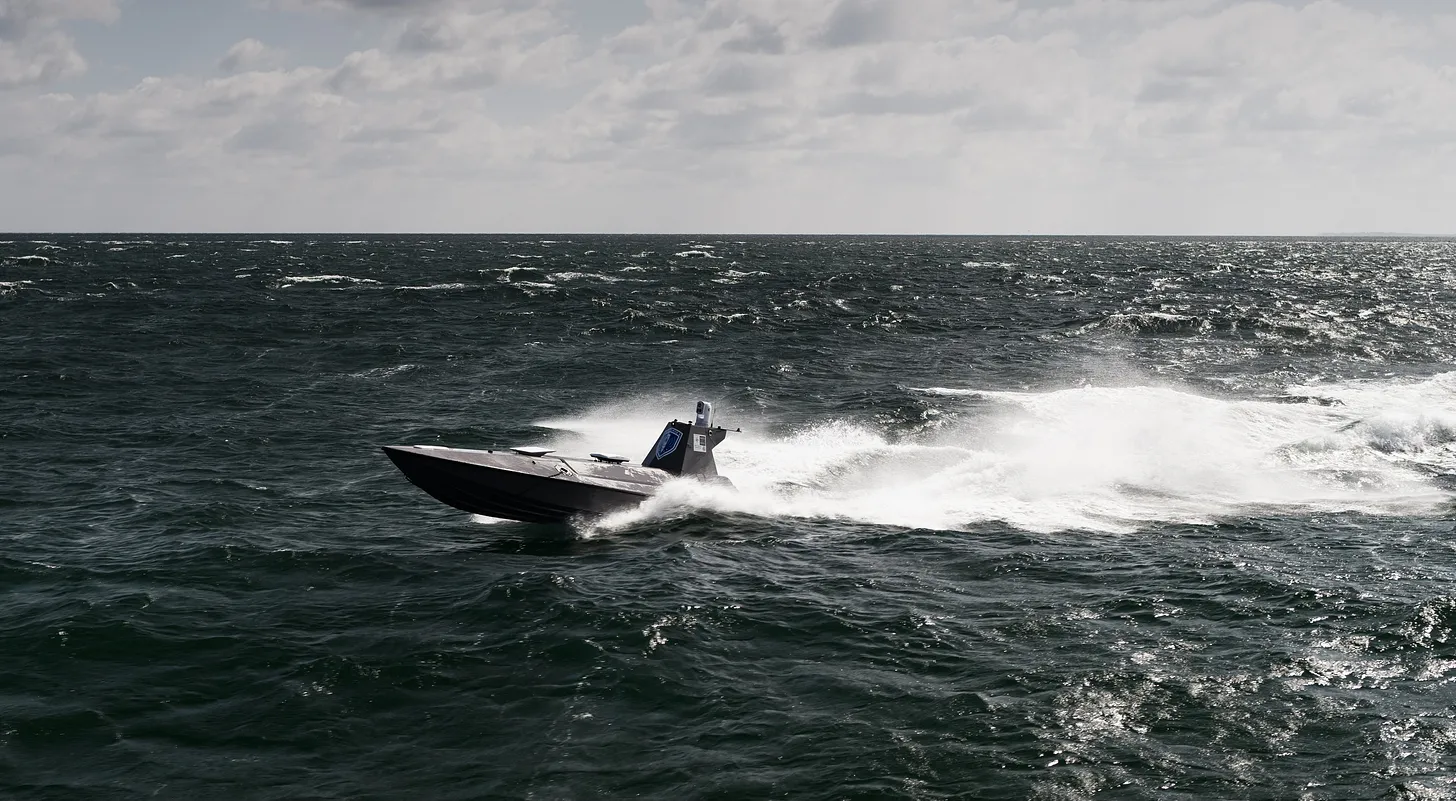
The latest partnership on that front was announced earlier today. Kraken Technology, a UK startup building autonomous and uncrewed maritime defence systems, and Germany’s NVL are forming a joint venture to develop a new wave of autonomous marine defence systems.

NVL is one of the oldest names in naval shipbuilding, formed out of Lürssen, founded in the 19th century. Its footprint includes a number of major shipyards in Germany, and it has contracts for providing major naval vessels for a range of countries.

The deal not only underscores a route for how smaller defence startups are able to scale up to target the defence and industrial markets; it also speaks to how primes are tapping innovative, faster-moving smaller startups to ramp up their innovation profile faster.

(Case in point: NVL has an R&D arm that was already developing autonomous solutions, specifically around the concept of “manned-unmanned teaming”, it said, yet Kraken, at a fraction of the size of NVL, is doing and developing more.)

The two companies were actually already known to each other. NVL disclosed today that it is also a strategic investor in the company by way of participation in a funding round that Kraken announced in June 2025. (At the time the round was made public only investors disclosed were the NATO Innovation Fund, the UK government-backed NSSIF, and Estonian VC firm Superangel. It’s not clear if there are other investors in that round that are still undisclosed, and Kraken has never disclosed how much it has raised.)

NVL has options to participate in Kraken’s next round — valuation again undisclosed — which the startup is in the process of raising right now.

On NVL’s side, the deal gives the company a big bargaining chip when it’s going into bids for new business: it’s now able to say it’s doubling down on the AI-fuelled new wave of technology that’s driving digital transformation across the enterprise. In the military and industrial sectors, this includes a large opportunity to build unmanned, autonomous systems.

The JV will see NVL building craft (specifically platforms that can be modified and loaded to customer needs) out of one of its shipyards — Blohm+Voss in Hamburg — to fill out what it described as “globally growing demand” for uncrewed maritime systems both for military and non-military uses such as securing critical infrastructure.

On Kraken’s side, the JV gives the smaller startup a much bigger platform for manufacturing. From what we understand, Kraken prior to this deal was manufacturing its hardware directly — it has announced three different products to date. It already had deals in place with a few of departments of defence including the UK and select allies. However, the JV with NVL is a major step up in terms of what it can produce and thus which contracts it can bid for.


Kraken declined to comment on whether it has other manufacturing partners, and it declined to comment on whether its relationship with NVL is exclusive.

The companies said the partnership plans to offer end-to-end services, including crewed naval vessels combined with autonomous and individually configurable deployment systems. Manufacturing will start in Q4 2025 and will focus first on smaller vessels before ultimately tackling larger uncrewed vessels.

“The joint venture with Kraken offers us the opportunity to rapidly react to the latest requirements of our customers and to provide market-ready autonomous systems quickly and in high volumes,” said Tim Wagner, CEO of NVL, in a statement. “At the same time, by taking this step, we are expanding our role as a pioneer in the development of manned/unmanned teaming (MUM-T) concepts and are creating the right conditions for launching additional innovative solutions in this field. This also includes, for instance, our design concepts for the naval tender vessel NTV 130 as a drone mothership that could succeed the six tender vessels (the ELBE class) currently operated by the German Navy.”

“We are honoured to partner with NVL as we expand our ability to provide fully sovereign, autonomous maritime capabilities to our Allied nations. Working with NVL will allow exponential scaling of production and supply chain to meet growing threats through deployment of high-performance, multi-role, mass capabilities across our seas,” added Mal Crease, CEO of Kraken Technology Group. “NVL are unquestionably the gold standard of maritime production and being able to draw and develop from such expertise and repurpose it for use in smaller, uncrewed platforms will bring a vital and much-needed step-change to the European maritime defence industry.”


Tags: Kraken TechnologyMal CreaseNVL
Previous Post

Ukraine’s Drone Economy and the Fight for a Secure Supply Chain

Next Post

Ukraine’s Homegrown Flamingo Missile Has a 3,000 Kilometre Range

Ingrid Lunden

Ingrid Lunden

Ingrid is an editor and writer. Born in Moscow, brought up in the U.S. and now based out of London, from February 2012 to May 2025, she worked at leading technology publication TechCrunch, initially as a writer and eventually as one of TechCrunch’s managing editors, leading the company’s international editorial operation and working as part of TechCrunch’s senior leadership team. She speaks Russian, French and Spanish and takes a keen interest in the intersection of technology with geopolitics.

Related News

Munich facility gives Spire a base for sovereign space capabilities

Munich facility gives Spire a base for sovereign space capabilities

byJohn Biggs
May 8, 2026

Spire Global has opened a satellite manufacturing facility in Munich as European governments push to expand sovereign space and intelligence...

Ukrainian Magura sea drone found in Greek cave near Lefkada

Ukrainian Magura sea drone found in Greek cave near Lefkada

byJohn Biggs
May 8, 2026

Greek authorities are investigating the discovery of an unmanned surface vehicle (USV), known as a Magura V5 waterborne drone, off...

‘One alone isn’t a fighter’: Latvia opens up to allies as NATO DIANA supersizes

Two drones entering from Russia and armed with warheads land in Latvia

byJulia Gifford
May 8, 2026

Update: Late Sunday, 10 May, Latvia's Minister for Defence, Andris Sprūds, resigned from his role. Resilience Media reported earlier that...

black and white computer keyboard

Analysis: Europe’s chip ambitions risk going stale

byPaddy Stephens
May 8, 2026

Headlines warn that helium shortages – caused by the ongoing war in Iran and the wider region – are threatening...

ARX expands Ukraine presence as uncrewed ground robot demand surges

ARX expands Ukraine presence as uncrewed ground robot demand surges

byJohn Biggs
May 7, 2026

The robotic ground war is heating up in Ukraine with companies are sending hundreds of uncrewed ground vehicles (UGVs) to...

(L-to-R): James Palles-Dimmock (CEO) with co-founders Prof John Morton (CTO) and Prof Simon Benjamin (CSO)

Quantum Motion raises $160M for silicon-based quantum computers that fit in a server rack

byPaul Sawers
May 7, 2026

Large-scale quantum computers remain an elusive goal, but with multiple nations hustling to be the first to build and use...

L-to-R: Joakim Sjöblom (co-founder & CEO), Sebastian Reismer (head of construction), Carl Duforce (co-founder & COO)

Swebal raises $35M to rekindle Europe’s TNT supply chain

byPaul Sawers
May 7, 2026

NATO is facing a shortage of TNT, an essential explosive in the manufacturing of weapons. Now, startups are setting up...

Estonia is setting up a new ‘rare drone’ tech testing lab to ease the European bottleneck

Estonia is setting up a new ‘rare drone’ tech testing lab to ease the European bottleneck

byFiona Alston
May 6, 2026

Estonia has unveiled plans for a new lab designed to test the next wave of defence technology, a facility that...

Load More
Next Post
Ukraine’s Homegrown Flamingo Missile Has a 3,000 Kilometre Range

Ukraine's Homegrown Flamingo Missile Has a 3,000 Kilometre Range

Kraken and NVL Strike Deal to Develop Autonomous Marine Defence Systems, Ukraine’s FirePoint’s Flamingo Missile Flies 3,000km, Early Bird Ticket Prices Return Through August 29

Kraken and NVL Strike Deal to Develop Autonomous Marine Defence Systems, Ukraine's FirePoint's Flamingo Missile Flies 3,000km, Early Bird Ticket Prices Return Through August 29

Most viewed

InVeris announces fats Drone, an integrated, multi-party drone flight simulator

Uforce raises $50M at a $1B+ valuation to build defence tech for Ukraine

Auterion, the drone software startup, eyes raising $200M at a $1.2B+ valuation

Palantir and Ukraine’s Brave1 have built a new AI “Dataroom”

Senai exits stealth to help governments harness online video intelligence

Twentyfour Industries emerges from stealth with $11.8M for mass-produced drones

Resilience Media is an independent publication covering the future of defence, security, and resilience. Our reporting focuses on emerging technologies, strategic threats, and the growing role of startups and investors in the defence of democracy.

  • About
  • News
  • Resilence Conference
    • Resilience Conference Copenhagen 2026
    • Resilience Conference Warsaw 2026
    • Resilience Conference 2026
  • Guest Posts
  • Subscribe
  • Privacy Policy
  • Terms & Conditions

© 2026 Resilience Media

No Result
View All Result
  • Home
  • Subscribe
  • About
  • Events
  • Guest Posts
  • Interview
  • News
  • Resilience Conference London 2026
  • Resilience Conference Copenhagen 2026
  • Resilience Conference Warsaw 2026
  • Startups
  • Venture
  • Weekly Digest

© 2026 Resilience Media

This website uses cookies. By continuing to use this website you are giving consent to cookies being used. Visit our Privacy and Cookie Policy.