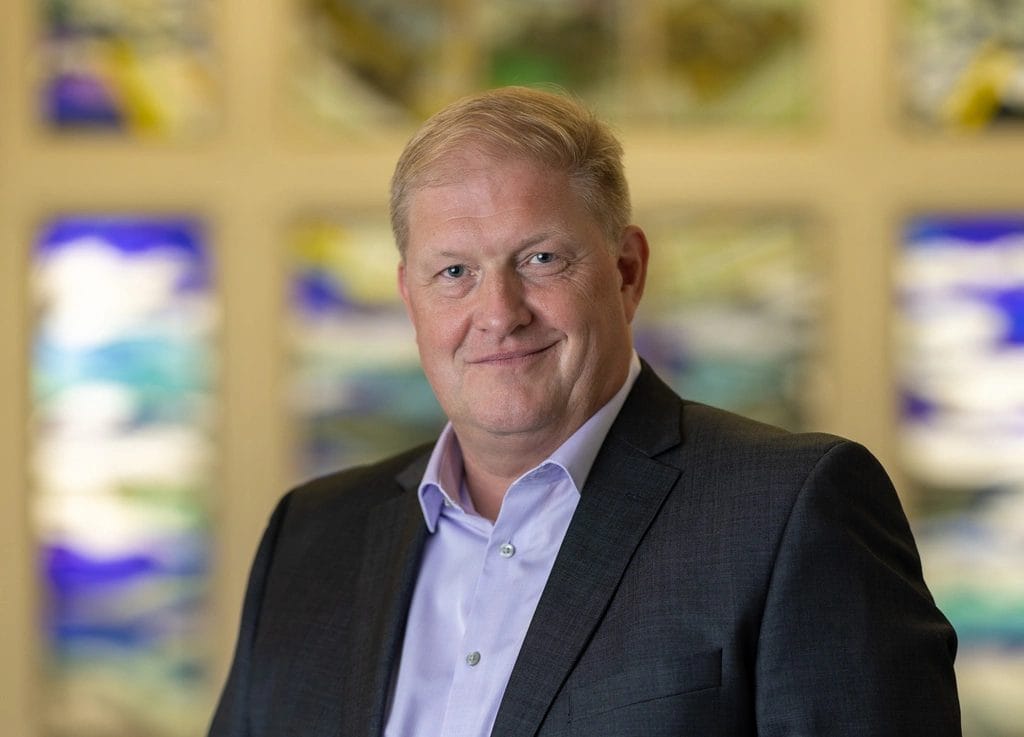
The NATO Innovation Fund, the VC formed out of the strategic alliance of NATO countries that counts most (but not all) of those countries as LPs, is making a change to its leadership structure today. It has appointed Dr. Ari Kristinn Jónsson (pictured above) as president, to help NIF portfolio companies get more business, and NIF to get a better understand of what alliance countries need.
This is an entirely new role for the firm as it continues to make strategic investments in defence, security and resilience out of its first $1 billion fund.
The role is new, but person filling the role is not: Jónsson has been on the board of NIF for the last three years. Jónsson hails from Iceland and has been based there working as the CEO of image recognition startup Videntifier; he is now relocating to Amsterdam to take on the role of president full-time.
NIF has done a lot of investing in deep tech, and Jónsson, in addition to his experience in startups, brings direct deep tech experience, too: he spent more than a decade in the US getting a PhD from Stanford focused on artificial intelligence and then worked for NASA as a research scientist.
He is taking on the role at a prime moment for the fund and defence tech in general. 2022 marked a sea change in Europe, with Ukraine’s tensions with Russia tipping into a full-blown war, which has direct impacts not just in non-NATO Ukraine for for the wider NATO footprint across Europe.
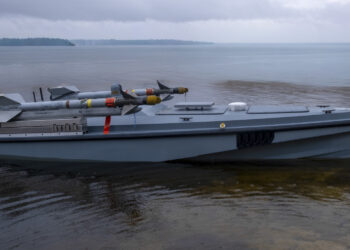
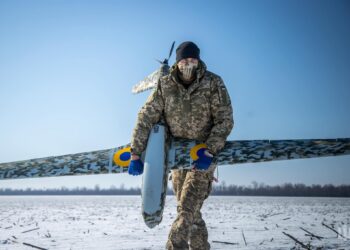
Ukraine is outnumbered in virtually every regard by its Russian invaders. But necessity is the mother of invention, and that has led to two outcomes: Ukraine has had to be especially scrappy in building its defences domestically; and it’s created an interesting supply chain with a number of defence newcomers from outside the country. Companies building on the battlefield have ended up leading the way in a wide range of technologies like drones, autonomy and electronic warfare that are cheaper and faster to produce than incumbent analogues and often more effective in modern warfare.
All of that has created a profusion of defence tech companies, plus an appetite for buying their products, plus an appetite for investing in them. NIF has gone from being on the fringes of what’s cool or interesting to be investing in to the very heart of the action.
And that brings us to Jónsson’s appointment: his role is not to be another active investor partner in the fund but to work with partners and portfolio companies, as well as potential customers, to get more end users adopting new technology, as well to help partners and portfolio companies understand what end users need.
In short, the aim of the president will be to take startup product and turn that into business deals. This can be a challenge in the extended business cycles in ministries of defence and wider government, but it’s critical to ensuring that defence tech is not the next technology bubble.
“We’re starting to see how we do adoption and capacity building,” Jónsson said in an interview with Resilience Media. “We need to, in the next years, do this really at scale. You know, we need to move from [showing] everybody that there can be really positive impact on the DSR investment environment, to [helping] our companies deploy and get contracts.”
As a fund working in defence, there are some notable details to point out.
For starters, two substantial North American members of NATO — the United States and Canada — are not LPs in NIF. And neither is one of the biggest economies in Europe, France.
Jónsson made clear to say that this doesn’t impact its portfolio companies doing business in those countries, but it means that NIF is currently not making investments in some of the most active countries when it comes to defence tech startups (the US alone outnumbers all of Europe put together in terms of collective valuations). And that also includes not investing in arguably the only country in Europe hosting a large, sovereign foundational AI company — potentially another important cornerstone of the resilience thesis, if you buy into the AI pitch.
Another detail: for the time being, NIF is not investing in startups that are purely defence startups; they need to have dual-use strategies (services also for civilian or commercial customers) alongside the defence propositions. At a time when we are seeing a large profusion of defence tech companies emerging, NIF is not engaging in that stream of deal activity or company building.
NIF has seen a lot of personnel shifts at NIF over the past year, including a new chair, and new partners. There is still a lot left to invest out of its first $1 billion fund, and Jónsson would not be drawn out on where it is with fundraising for a future fund. All this means there are a lot of ways that the fund could develop in the future, giving Jónsson a lot of space to make a mark in how that progresses.