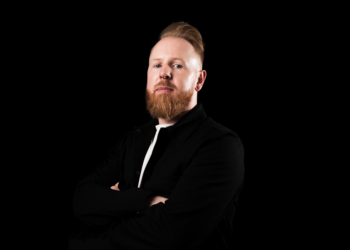
Ukraine on Wednesday made a significant shift in its leadership that signals just how central technology is to the country in its war against Russia. This afternoon, the country’s parliament unanimously voted to make Mykhailo Fedorov the new minister of defence, with 277 lawmakers in favour and none opposed. Fedorov, notably, made his name over the years overseeing the country’s technology implementations – most recently as the country’s minister for digital transformation – across a wide range of social and government services, and, as the war has dragged on, an increasing number of defence uses, including drones, AI and communications resilience.
At 34, he’s the youngest person to serve as Ukraine’s Defence Minister, and the fourth person in the role since Russia’s full-scale invasion of the country began on 24 February 2022.
The appointment comes amid a number of government leadership changes prompted by Ukrainian President Volodymyr Zelenskiy, who in a sense is fighting a two-fronted war: the relentless onslaught of Russia from the outside; and cleaning up corruption on the inside.
Fedorov pledged to join both these fronts. Ahead of his confirmation to his new role, he announced that he would immediately launch a “deep audit” of the Ministry of Defence and the military.
“Our goal is to change the system: to reform the army, improve infrastructure on the front lines, eradicate lies and corruption, and make leadership and trust a new culture,” he said.
Some backstory on the appointment
Zelenskiy had proposed Fedorov as the new defence minister at the start of January to replace Denys Shmyhal.
That in itself was surprising, since Shmyhal had only been in the job for six months and Ukraine is at war. The plan appeared to be to put Shmyhal into the role of energy minister, to head up a department and sector that has been battered not just by corruption allegations but extensive physical damage, outages and cyberattacks due to the war.
The energy minister role is thus a tricky one and tellingly the position has been vacant for months.
Tuesday, following the vote that formally dismissed Shmyhal as defence minister and Fedorov as technology minister, according to The Kyiv Independent, Shmyhal didn’t get enough votes to approve him as energy minister. But on the second attempt Wednesday, he was appointed to the position, with 248 votes in favour.
Meanwhile, over at the defence ministry
Fedorov’s appointment nearly feels like it has been in the making for a while.
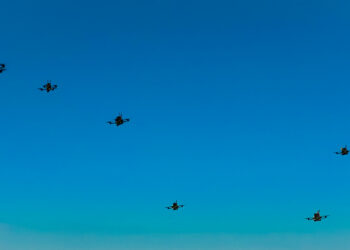
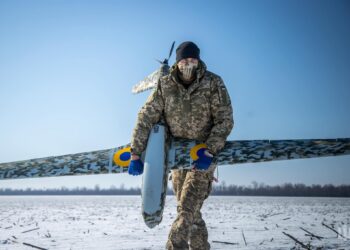
Drones fell under Fedorov’s “digital transformation” remit and so he and his ministry have been closely linked with their production, procurement, investment and more. Drones dominate how Ukraine’s very tech-forward population has oriented itself, and they also dominate how Ukraine has been managing to put up a strong fight against an invading adversary that is much bigger than Ukraine’s forces, giving Fedorov a defence halo-effect in the process.
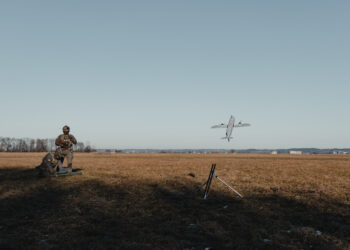
Under his guidance, the country’s domestic drone producers expanded from just a handful before the invasion to over 200 companies by 2025. Collectively, they’ve delivered hundreds of thousands of drones to the Armed Forces, from the small FPV reconnaissance drones like the Molfar to long-range strike UAVs such as the Punisher series.
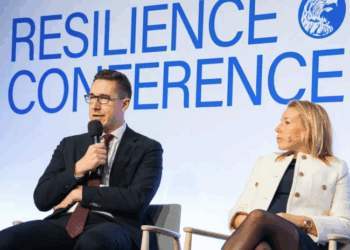
Beyond that, Fedorov himself has increasingly focused his attention and talking points on the wider intersection of technology with the country’s larger military posture. This nets in strategies around AI and other autonomy innovations and to build more resilientce communications. As Fedorov noted in an interview with Resilience Media in October 2025, the war Ukraine is fighting is a “tech war.”
Some may note that Fedorov has no direct military experience himself
…Nor has he shown much interest in the more legacy aspects of the conflict. Fedorov’s previous ministry espoused the belief that automated missions were just around the corner. As a Fedorov-led presentation laid out in October, “Our goal is a fully automated frontline, not held by people but by robots.” (It’s a sentiment that rings with the world of defence tech: Helsing’s leadership have expounded on this very topic a number of times.)
He reiterated this ambition ahead of today’s vote. “We are moving towards full autonomy on the battlefield — from machine vision and data analytics to drone swarms,” he said. “Our ambitious goal is to make Ukraine the first country in the world that can predict and neutralise enemy attacks using AI.”
But as minister of defence, he’ll be tasked with confronting the messier, expensive reality of war, which is that the majority of the battle is based around legacy assets.
These form the backbone of how much of the fighting and defending is carried out, such as the estimate last year that some 900,000 soldiers fire around 2 million ammunition shells annually. It will be worth watching how those aspects of defence are prioritised for updating and rebuilding under a new minister whose strongest defence suit so far has been a digital one.
We have reached out to Fedorov and the ministry for comment and will update this story as we learn more.