Friday 29 May, 2026
[email protected]
Resilience Media
  • News
    • Events
    • Interview
    • Startups
    • Venture
    • Weekly Digest
  • Resilience Conference
    • Resilience Conference Warsaw 2026
    • Resilience Conference Copenhagen 2026
    • Resilience Conference London 2026
  • About
  • Guest Posts
    • Author a Post
  • Subscribe
No Result
View All Result
  • News
    • Events
    • Interview
    • Startups
    • Venture
    • Weekly Digest
  • Resilience Conference
    • Resilience Conference Warsaw 2026
    • Resilience Conference Copenhagen 2026
    • Resilience Conference London 2026
  • About
  • Guest Posts
    • Author a Post
  • Subscribe
No Result
View All Result
Resilience Media
No Result
View All Result

Defense Unicorns lives up to its name: $136M round lifts valuation past $1B

The Series B, led by Bain Capital, makes Defense Unicorns the latest defence tech startup to reach unicorn status

Carly PagebyCarly Page
January 13, 2026
in News
Share on Linkedin

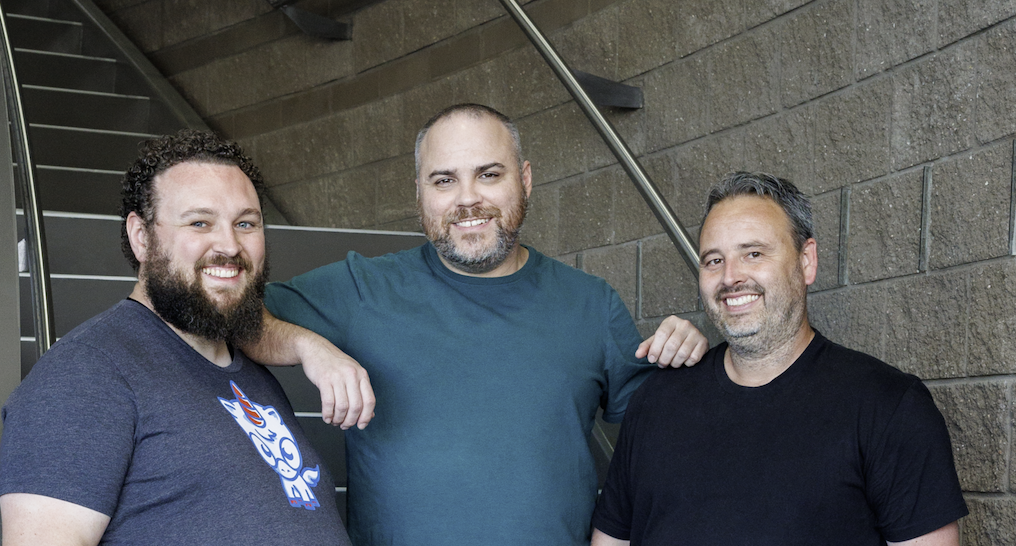
Defense Unicorns, the US startup that builds environments for defence and other industries to build and use open source and other software in cloud and air-gapped environments, has raised $136 million in a Series B round. The investment pushes its valuation past the $1 billion mark, finally making its boldly named ambition official.

You Might Also Like

Hermeus logs first supersonic flight for the uncrewed Quarterhorse Mk 2.1 jet

Understanding China’s cyberthreat to Taiwan’s infrastructure

Orbital Industries, an “AlphaFold” for materials science, raises $50M

The round was led by Bain Capital’s Tech Opportunities Fund, with participation from existing investors Ansa Capital, Sapphire Ventures, Valor Equity Partners, AVP, Uncorrelated Ventures, and retired US Army general and former CIA director David H. Petraeus. The funding cements Defense Unicorns’ position among a small but growing club of venture-backed defence technology firms that have crossed the unicorn threshold.

Founded in 2021 and headquartered in San Antonio, Texas, the company builds open source, air-gap-native software designed to get modern code into the kinds of disconnected, contested environments where militaries actually operate. Its tooling is used across multiple branches of the US Department of Defense, including the Navy, Army, Air Force, and Space Force, to deliver updates to mission systems that have historically lagged far behind commercial software.

Defense Unicorns and competitors like Second Front are building next-generation software platforms for organisations that have traditionally been slow to adopt more modern computing due to security risks. That , logic has started to hit a wall in the worlds of military and defence, however, due to the rapidly evolving demands of warfare and the tools that adversaries are developing.

Announcing the raise, co-founder and CEO Rob Slaughter pitched the company’s technology as a strategic necessity rather than a nice-to-have.

“Defense Unicorns gives our nation a wartime software advantage,” Slaughter said. “The US has significant commercial software advantages, but the systems we go to war with are typically outdated. At Defense Unicorns, we make software a strategic deterrent by making it easy to deploy and operate software in any mission environment.”

The new capital will be used to expand the firm’s core platforms, including its so-called flagship Unicorn Delivery Service (UDS), a secure and portable system for shipping software into classified or disconnected networks.

The company is also scaling its UDS Registry and UDS Army offerings, which are designed to standardise secure DevSecOps pipelines across Army programmes and reduce the friction involved in fielding new digital capabilities.

From the investor side, Bain Capital partner Dewey Awad framed the deal as a bet on software’s growing role in military readiness.

“Defense Unicorns plays a vital role in helping the military modernise mission systems, enabling capabilities that directly improve readiness, resilience, and operational advantage in the field,” he said.

Defence Unicorns’ entry into the billion-dollar club comes amid a broader surge in VCl interest in defence tech startups.

In Europe this week, Paris-based Harmattan AI also achieved unicorn status, raising $200 million at a $1.4 billion valuation in a Series B round led by Dassault Aviation. The French company develops autonomous drones and AI-enabled mission systems and has already attracted strategic backing from national defence ministries.

With fresh funding and expanded backing, Defence Unicorns is poised to deepen its footprint across mission domains where secure, scalable software delivery can deliver real field advantage.


Tags: startupsunicorn
Previous Post

Touchwaves brings wearable haptics to the military cockpit

Next Post

Tech champion Mykhailo Fedorov named new defence minister of Ukraine

Carly Page

Carly Page

Carly Page is a freelance journalist and copywriter with 10+ years of experience covering the technology industry, and was formerly a senior cybersecurity reporter at TechCrunch. Bylines include Forbes, IT Pro, LeadDev, The Register, TechCrunch, TechFinitive, TechRadar, TES, The Telegraph, TIME, Uswitch, WIRED, & more.

Related News

Hermeus logs first supersonic flight for the uncrewed Quarterhorse Mk 2.1 jet

Hermeus logs first supersonic flight for the uncrewed Quarterhorse Mk 2.1 jet

byJohn Biggs
May 29, 2026

Atlanta-based Hermeus announced that its Quarterhorse Mk 2.1 experimental aircraft has completed its first supersonic flight, reaching Mach 1.21 during...

city building during daytime

Understanding China’s cyberthreat to Taiwan’s infrastructure

byPaddy Stephens
May 29, 2026

Discussions about Taiwan’s security often focus on the military domain, but in any crisis, the resilience of Taiwan’s critical infrastructure...

a computer chip with the letter a on top of it

Orbital Industries, an “AlphaFold” for materials science, raises $50M

byIngrid Lunden
May 28, 2026

A startup called Orbital Industries believes it can make meaningful, less resource intensive, breakthroughs in materials science using AI to...

text

The defence tech boom is creating a cybersecurity industry for machines

byCarly Page
May 28, 2026

The defence tech boom is quietly spawning an entirely new category of cybersecurity startup, one less concerned with phishing emails...

UK’s intelligence chief eyes Russia and China as the major cyberthreats of our time

UK’s intelligence chief eyes Russia and China as the major cyberthreats of our time

byIngrid Lunden
May 27, 2026

While Russia continues its assault on Ukraine, it’s also developed an aggressive posture on the frontlines of a different war:...

Quaze deal gives Red Cat wireless power for drones and robots

Quaze deal gives Red Cat wireless power for drones and robots

byJohn Biggs
May 27, 2026

Red Cat Holdings has acquired Québec-based Quaze Technologies, adding wireless charging capability to its growing portfolio of autonomous systems. The...

New cameras from Odd Systems are making drones faster, smarter, and more accurate

New cameras from Odd Systems are making drones faster, smarter, and more accurate

byJohn Biggs
May 27, 2026

https://youtu.be/-uqLiaA65Pk   Ukrainian defence startup Odd Systems is building a line of mission-specific camera systems designed for drones operating in...

turned on monitor displaying programming language

RevEng.AI lands $15M to defend against the unintended risks of AI

byCarly Pageand1 others
May 27, 2026

Organisations are ramping up their AI adoption, with more than two-thirds of respondents in a McKinsey survey noting pilots or...

Load More
Next Post
Defence Tech Valley 2025: Kicking Around Military Innovation at a Football Pitch

Tech champion Mykhailo Fedorov named new defence minister of Ukraine

Weekly Digest: From the living room to the war room at CES 2026

CES isn’t just consumer tech anymore

Most viewed

InVeris announces fats Drone, an integrated, multi-party drone flight simulator

Uforce raises $50M at a $1B+ valuation to build defence tech for Ukraine

Auterion, the drone software startup, eyes raising $200M at a $1.2B+ valuation

Palantir and Ukraine’s Brave1 have built a new AI “Dataroom”

Twentyfour Industries emerges from stealth with $11.8M for mass-produced drones

Senai exits stealth to help governments harness online video intelligence

Resilience Media is an independent publication covering the future of defence, security, and resilience. Our reporting focuses on emerging technologies, strategic threats, and the growing role of startups and investors in the defence of democracy.

  • About
  • News
  • Resilence Conference
    • Resilience Conference Copenhagen 2026
    • Resilience Conference Warsaw 2026
    • Resilience Conference 2026
  • Guest Posts
  • Subscribe
  • Privacy Policy
  • Terms & Conditions
  • Mission Statement & Code of Practice
  • Press

© 2026 Resilience Media

No Result
View All Result
  • Home
  • About
  • Subscribe
  • Events
  • Guest Posts
  • Interview
  • News
  • Resilience Conference London 2026
  • Resilience Conference Copenhagen 2026
  • Resilience Conference Warsaw 2026

© 2026 Resilience Media

This website uses cookies. By continuing to use this website you are giving consent to cookies being used. Visit our Privacy and Cookie Policy.