Saturday 14 February, 2026
[email protected]
Resilience Media
  • About
  • News
  • Resilience Conference
    • Resilience Conference Warsaw 2026
    • Resilience Conference Copenhagen 2026
    • Resilience Conference London 2026
  • Guest Posts
    • Author a Post
  • Subscribe
No Result
View All Result
  • About
  • News
  • Resilience Conference
    • Resilience Conference Warsaw 2026
    • Resilience Conference Copenhagen 2026
    • Resilience Conference London 2026
  • Guest Posts
    • Author a Post
  • Subscribe
No Result
View All Result
Resilience Media
No Result
View All Result

Touchwaves brings wearable haptics to the military cockpit

Dutch startup secures pre-seed funding for touch-based garments that support pilots in the battlespace

Paul SawersbyPaul Sawers
January 13, 2026
in News, Startups, Venture
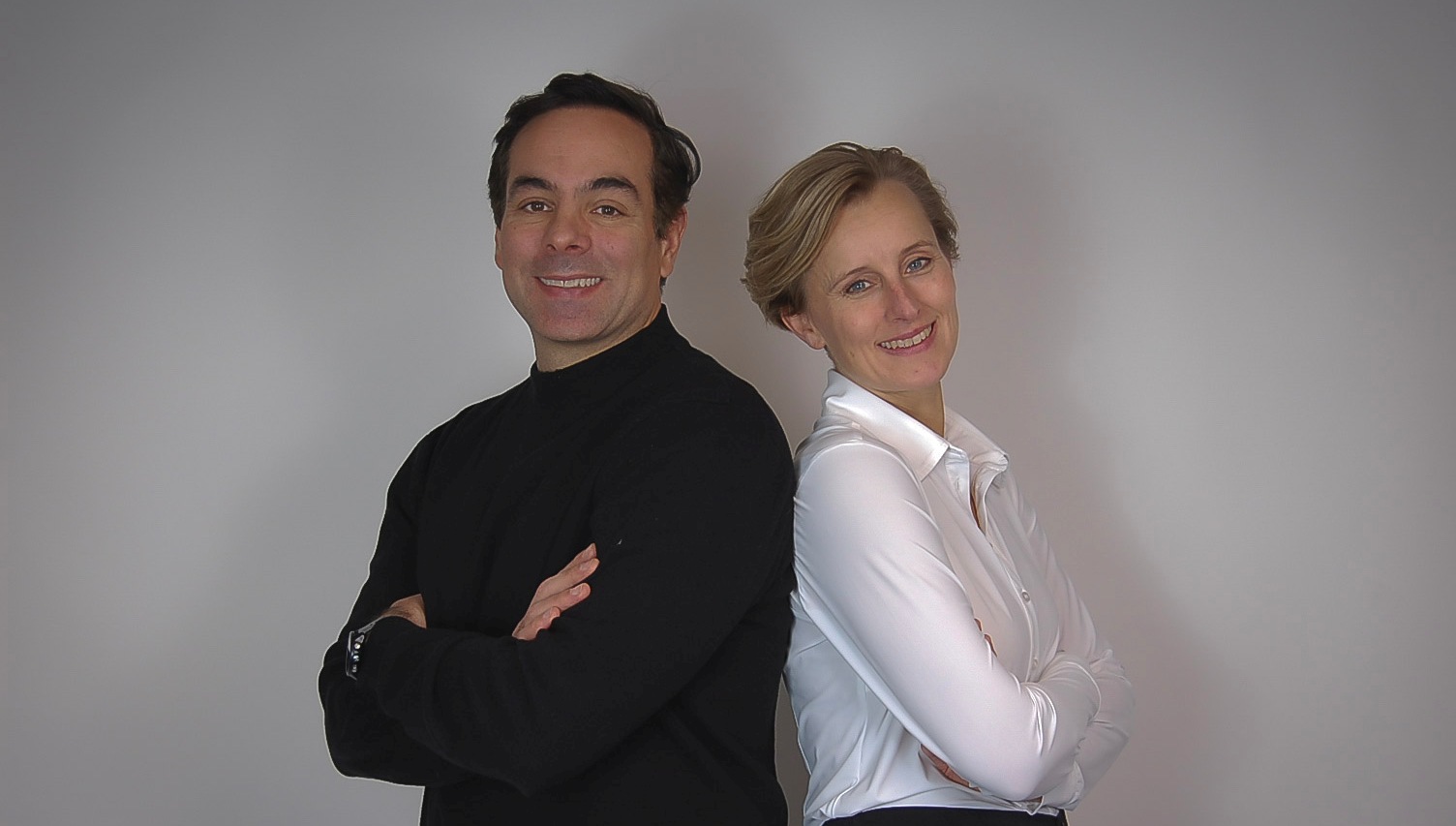
Touchwaves' founders Martin Romero and Charlotte Kjellander

Touchwaves' founders Martin Romero and Charlotte Kjellander

Share on Linkedin

From fighter jet cockpits to surgical theaters, humans remain a critical point of failure in high-stress, high-stakes environments. Cognitive overload, physiological strain, and sensory saturation can erode performance when it’s needed most, a challenge that persists even as machines become more technologically advanced.

You Might Also Like

German–Ukrainian venture delivers first drone as Zelenskyy visits Munich facility

Auterion and Airlogix ink deal to mass-produce AI-guided aerial systems

Taiwan gets serious about tech at sea

Dutch deep-tech startup Touchwaves is striving to address that imbalance by turning the body itself into an intuitive feedback loop through wearable haptic systems that communicate information via touch rather than sight or sound.

Founded out of Eindhoven in 2023 by Charlotte Kjellander and Martin Romero, Touchwaves is a spin-off from the Netherlands Organisation for Applied Scientific Research (TNO) and is rooted in research from the Holst Centre. Touchwaves’ systems deliver tactile cues through flexible electronics embedded in garments, communicating information directly to the wearer’s somatic sense.

By operating through touch, the approach is intended to reduce cognitive load and support faster, more grounded decision-making when milliseconds matter.

“In high-stress environments, visual and auditory channels tend to saturate first; screens, alarms, and radio traffic quickly become overwhelming,” Kjellander, Touchwaves’ CEO, explained to Resilience Media. “Tactile communication, however, remains remarkably robust under stress.”

For example, physiological changes, such as early signs of hypoxia detected through a drop in blood oxygen saturation (SpO₂), could trigger tactile alerts that prompt corrective actions like a specific breathing adjustment. The same mechanism can be used for spatial awareness, with vibration patterns indicating direction or signaling potential threats such as incoming missiles, allowing pilots to stay focused on the mission without shifting their gaze or attention.

Although NATO Air Forces represent Touchwaves’ core target user base initially, the underlying challenges extend across the defence realm and beyond.

“These use-cases are not limited to fighter jet pilots,” Kjellander continued. “Similar challenges exist for helicopter pilots, transport and cargo pilots, and other defence aviation crews operating in demanding, noisy, and cognitively loaded environments. Haptics allow us to create an intuitive ‘tactile language’ that supports decision-making and physiological regulation precisely when other channels are overloaded.”
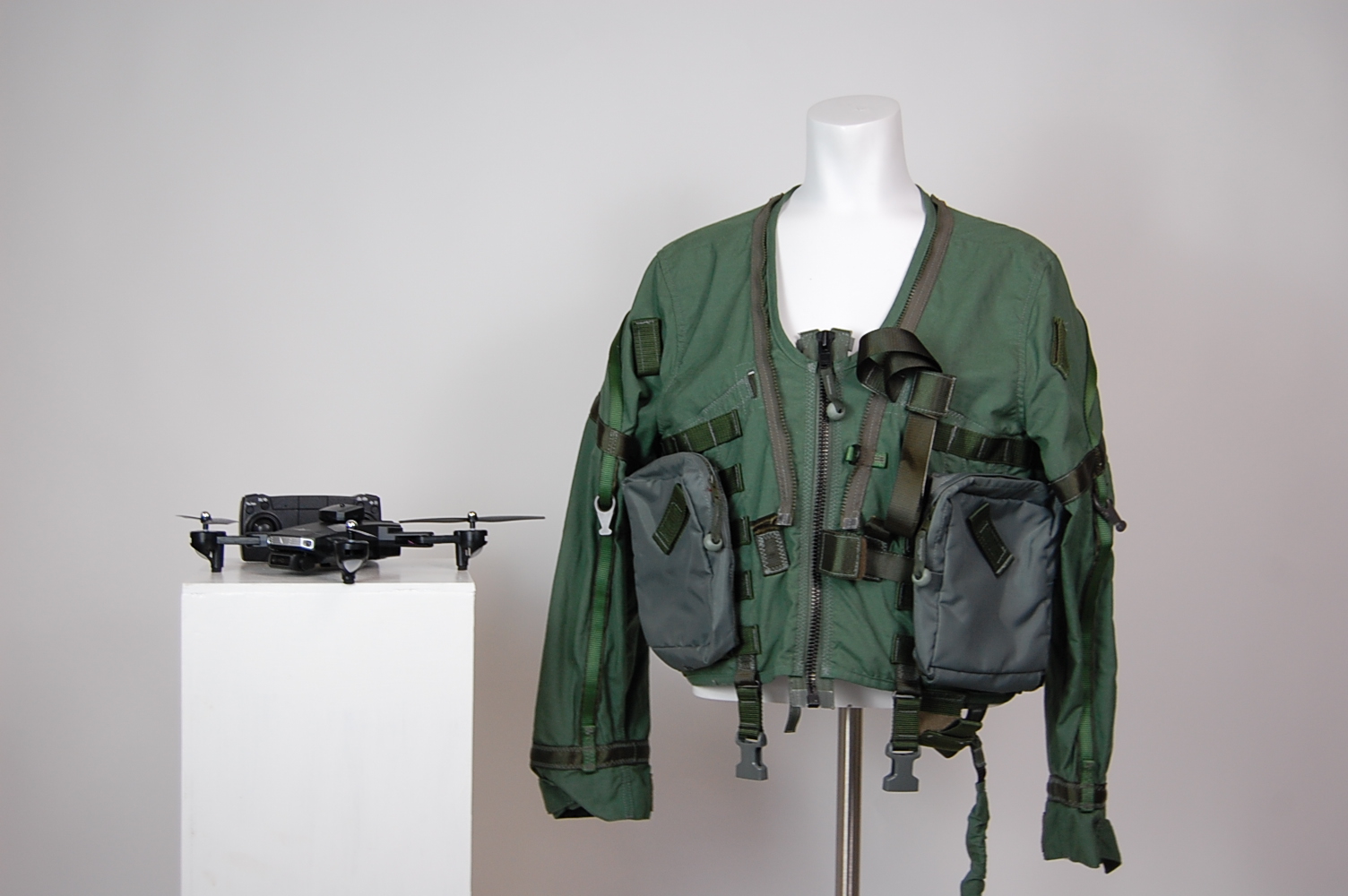
Touchwaves is developing "next-gen" wearables for NATO Air Forces
Touchwaves is developing “next-gen” wearables for NATO Air Forces

Touching the battlespace

Touchwaves’ technology is yet to reach operational deployment, but it is currently being tested and validated with various defence partners, including the Royal Netherlands Air and Space Forces and the Center for Man in Aviation. This phase, ultimately, is all about ensuring the wearables function reliably before they’re put into battle.

“At this stage, the focus is on refining both the software and the hardware, validating human responses, and ensuring the system performs reliably under operationally relevant conditions,” Kjellander explained.

That work is now being supported by fresh capital, with Touchwaves today announcing €1.5 million in a pre-seed round of funding to accelerate development and move the technology toward broader deployment. The round was led by SecFund, a Dutch early-stage defence fund with a strong dual-use focus, with participation from TNO Ventures, Brabant Startup Fonds, Imec.istart, and Joanna Invests. Additional support came from the Dutch Research Council’s NWO Take-off 2 program.

SecFund’s emphasis on dual-use technologies reflects a growing interest in systems that can move between defence and civilian contexts, particularly where high reliability and human performance are critical. For Touchwaves, that means technology developed for the most demanding military environments can later be adapted for use in other high-stress domains.

“We see strong relevance for haptic technologies beyond defence, particularly in healthcare and elite sports, where stress regulation, workload management, and body awareness are equally critical,” Romero explained. “From an impact standpoint, dual-use means that technology developed for the most demanding environments, such as fighter jets, can later be deployed in other domains faster and more cost-effectively. Defence environments force extremely high standards for reliability, safety, and performance. Once those standards are met, adoption in civilian sectors becomes much easier. This approach accelerates innovation while ensuring the technology delivers real, measurable benefits across domains.”

Translating science into systems

Prior to Touchwaves, Kjellander completed a PhD in materials science and spent more than a decade at TNO working on wearable technologies at the intersection of materials, sensing, and human performance. Her work included contributions to the development of the Flight Sensing Shirt, a wearable system designed to monitor the physiological state of aircrew.

“Across these projects, the focus was always on translating scientific research into systems that could realistically be used by operators in demanding environments, an approach that continues at Touchwaves,” she said.

Prior to now, Touchwaves was largely supported through research grants, innovation subsidies, and its participation in the Imec.istart accelerator programme, which backed the company between 2023 and 2024. That funding supported its early development work and collaboration with defence partners. With an additional €1.5 million now in the bank, the company plans to grow its team from six to around ten people by March, with a particular focus on engineering hires.

Romero, meanwhile, brings a background in finance and business development, with experience scaling software companies in Europe and Latin America, including multiple exits. At Touchwaves, which he joined in late 2024, Romero sees a future in which military aviation is defined by the convergence of technologies such as AI, VR, and haptics.

“In a complex and increasingly challenging future battlespace, pilots need every possible advantage,” Romero said.
Tags: HapticsTouchwavesWearables
Previous Post

Berlin power grid attack underscores fragility of Europe’s critical networks

Next Post

Defense Unicorns lives up to its name: $136M round lifts valuation past $1B

Paul Sawers

Paul Sawers

A seasoned technology journalist, most recently Senior Writer at TechCrunch where his work centered on European startups with a distinctly enterprise flavour. At Resilience Media, Paul focuses substantively on the worlds of open source and infrastructure, looking at technology that helps people and society live outside the sticky ecosystems of Big Tech.

Related News

German–Ukrainian venture delivers first drone as Zelenskyy visits Munich facility

German–Ukrainian venture delivers first drone as Zelenskyy visits Munich facility

byJohn Biggs
February 13, 2026

On the eve of the Munich Security Conference, Ukraine and Germany marked a solid step in defense industrial cooperation. President...

green wheat field under blue sky during daytime

Auterion and Airlogix ink deal to mass-produce AI-guided aerial systems

byIngrid Lunden
February 13, 2026

The latest chapter in Ukrainian defence tech startups getting more active outside of the country’s borders was unveiled today. Airlogix,...

a small boat floating on top of a large body of water

Taiwan gets serious about tech at sea

byPaddy Stephens
February 13, 2026

Among the lessons the world has drawn from the Ukraine war, the utility of aerial drones in asymmetric warfare is...

Wrecking-ball politics and the end of mutually-assured stability

Europe recommits to itself as US uncertainty looms over Munich Security Conference

byLeslie Hitchcock
February 12, 2026

This is a copy of our Weekly Digest newsletter, a free newsletter sent once per week from Resilience Media. Subscribe...

Dronamics partners with HENSOLDT to build a heavy defence drone with 24-hour endurance

Dronamics partners with HENSOLDT to build a heavy defence drone with 24-hour endurance

byJohn Biggs
February 12, 2026

This week, Sofia-based Dronamics announced the launch of its Detect and Defend version of the Black Swan, a long range...

an aerial view of a snowy city at night

Estonia needs to stay on guard, says Estonian Foreign Intelligence Service

byFiona Alston
February 12, 2026

The Estonian Foreign Intelligence Service produced their 2026 public report this week. Main takeaways suggest Estonia is safe from a...

Stark inks Virtus deal with NATO member in Northern Europe, one week after expanding to Sweden

Germany awards Stark and Helsing contracts to deliver next-generation strike drones

byCarly Page
February 12, 2026

Germany is preparing to introduce loitering strike drones into frontline service after awarding contracts to two venture-backed defence startups linked...

Stanhope AI raises $8M for new approach of AI for physical applications

Stanhope AI raises $8M for new approach of AI for physical applications

byIngrid Lunden
February 12, 2026

A startup spun out of UCL research into how the brain works is building a new kind of AI model...

Load More
Next Post
Defense Unicorns lives up to its name: $136M round lifts valuation past $1B

Defense Unicorns lives up to its name: $136M round lifts valuation past $1B

Defence Tech Valley 2025: Kicking Around Military Innovation at a Football Pitch

Tech champion Mykhailo Fedorov named new defence minister of Ukraine

Most viewed

InVeris announces fats Drone, an integrated, multi-party drone flight simulator

Twentyfour Industries emerges from stealth with $11.8M for mass-produced drones

Harmattan AI raises $200M at a $1.4B valuation from Dassault

Senai exits stealth to help governments harness online video intelligence

Palantir and Ukraine’s Brave1 have built a new AI “Dataroom”

Frankenburg has raised up to $50M at a $400M valuation, say sources

Resilience Media is an independent publication covering the future of defence, security, and resilience. Our reporting focuses on emerging technologies, strategic threats, and the growing role of startups and investors in the defence of democracy.

  • About
  • News
  • Resilence Conference
    • Resilience Conference Copenhagen 2026
    • Resilience Conference Warsaw 2026
    • Resilience Conference 2026
  • Guest Posts
  • Subscribe
  • Privacy Policy
  • Terms & Conditions

© 2026 Resilience Media

No Result
View All Result
  • About
  • News
  • Resilence Conference
    • Resilience Conference Copenhagen 2026
    • Resilience Conference Warsaw 2026
    • Resilience Conference 2026
  • Guest Posts
  • Subscribe
  • Privacy Policy
  • Terms & Conditions

© 2026 Resilience Media

This website uses cookies. By continuing to use this website you are giving consent to cookies being used. Visit our Privacy and Cookie Policy.