Thursday 18 June, 2026
[email protected]
Resilience Media
  • News
    • Events
    • Interview
    • Startups
    • Venture
    • Weekly Digest
  • Resilience Conference
    • Resilience Conference Warsaw 2026
    • Resilience Conference Copenhagen 2026
    • Resilience Conference London 2026
  • About
  • Guest Posts
    • Author a Post
  • Subscribe
No Result
View All Result
  • News
    • Events
    • Interview
    • Startups
    • Venture
    • Weekly Digest
  • Resilience Conference
    • Resilience Conference Warsaw 2026
    • Resilience Conference Copenhagen 2026
    • Resilience Conference London 2026
  • About
  • Guest Posts
    • Author a Post
  • Subscribe
No Result
View All Result
Resilience Media
No Result
View All Result

STV and Post-Quantum Join Forces On Quantum-safe Defence Communications

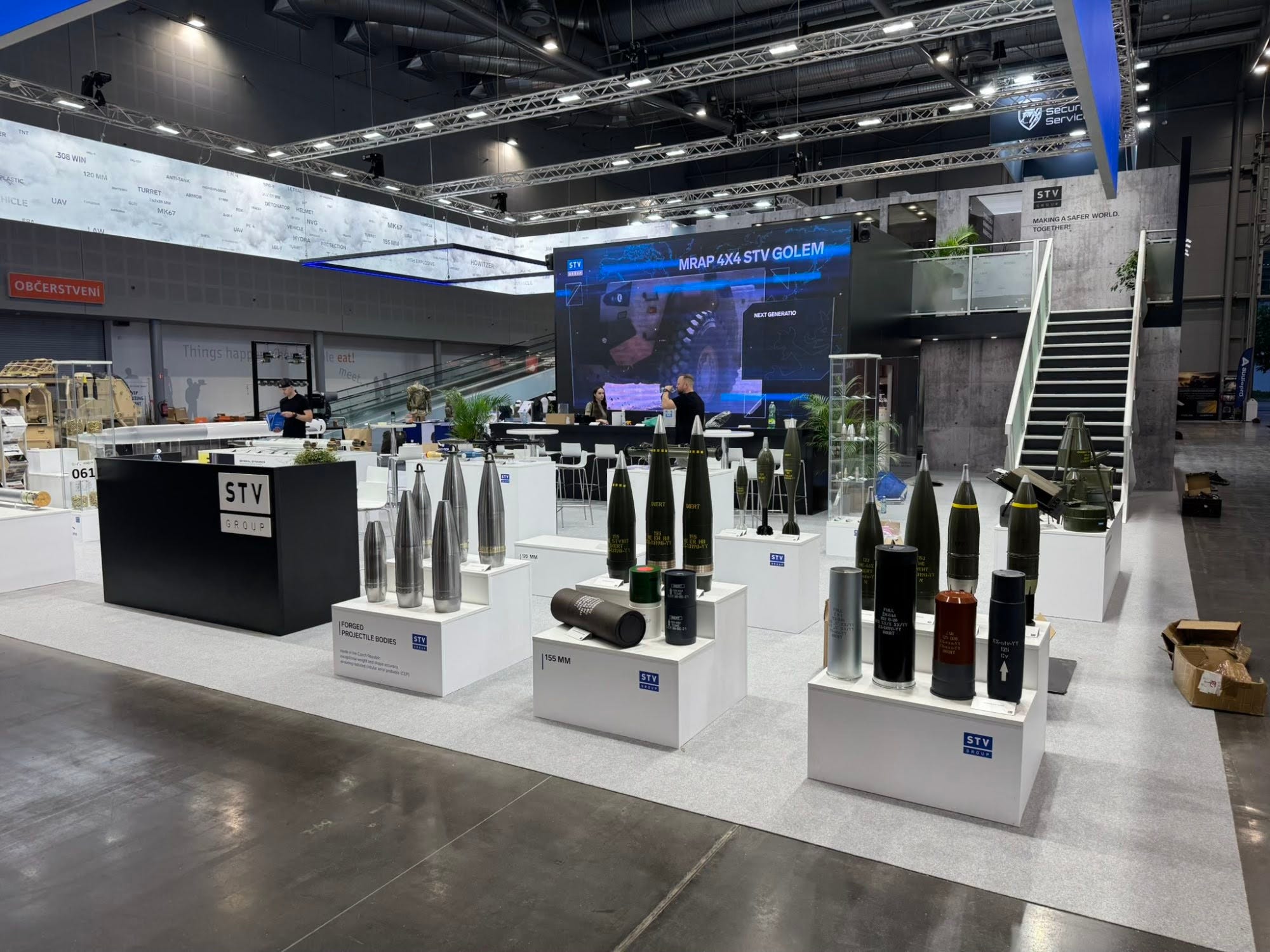
STV Group has joined forces with UK firm Post-Quantum to bring quantum-safe communications to NATO and allied defence networks

Carly PagebyCarly Page
November 4, 2025
in News, Startups
Share on Linkedin

Quantum computers and the vast computing power that they will unleash is largely still a theoretical concept, but many believe that the reality is no longer an if but a when. To that end, today, the Czech-based defence prime STV Group has now inked a multi-year deal with UK cybersecurity firm Post-Quantum. Notably, the deal is one of the first major post-quantum cryptography partnerships in the defence industry.

You Might Also Like

The war you don’t see

UK backs Ukraine’s drone industry with 150,000-drone order

The Next Defence Primes: Kela, Dominion Dynamics and Terra Leaders Join Resilience Conference London

The deal is structured as a licensing partnership, where STV will integrate Post-Quantum’s technology into its own product line-up. STV currently has customers across NATO, European, and allied defence network environments. The integration will mean all communications and data passed between and around parties using STV products will be encrypted with tech that is “quantum-ready” — that is, set up to be secure even when malicious hackers armed with the power of quantum computing are trying to break in to access it, a situation in which today’s encryption would be rendered obsolete.

Quantum computers, once powerful enough, are expected to break many of today’s widely used encryption systems, putting decades of sensitive government and military data at risk of retrospective compromise. Post-Quantum’s platform, already tested by NATO, promises to safeguard communications against this “Harvest Now, Decrypt Later” (HNDL) threat by combining quantum-resilient encryption with proven interoperability between systems using different post-quantum algorithms.

For STV, the partnership marks a significant step in expanding its cybersecurity portfolio. Up to now, STV’s strength and main products have been in areas like munitions, armoured platforms, and defence engineering. Pavel Kudrhalt, CEO of STV, said the company was “building an uncompromising, end-to-end secure ecosystem for the future.”

“Our customers demand full supply chain assurance, from manufacturing and tamper-proof transport to deployment and monitoring,” he said. “With the rising threat of HNDL attacks, quantum-safe defences are no longer optional. Post-Quantum’s platform doesn’t just lead the field — it allows STV to be the first mover to redefine the very standards of digital trust in defence solutions.”

The agreement will see Post-Quantum’s modular platform embedded across STV’s secure communications systems, offering protection for everything from command-and-control networks to battlefield drones. Kudrhalt said the collaboration would give NATO allies and EU partners “the strongest possible protection for the quantum era.”

For Post-Quantum, the partnership represents the culmination of more than a decade of work to commercialise post-quantum cryptography (PQC). CEO Rikky Hasan said STV’s experience operating at the front line made it a uniquely capable partner.

“STV has the operational agility to move at the pace required,” Hasan told Resilience Media. “This agility has been forged by STV’s extensive role in Ukraine, standing side-by-side as a key supplier on the ground and moving at the pace demanded by the war. There’s no substitute for this type of real-world agility, and it makes STV the ideal partner to integrate PQC into defence technology.”

Post-Quantum’s technology has already been through NATO testing.

“Back in 2022, NATO’s Cyber Security Centre successfully tested our Hybrid PQ Virtual Private Network,” Hasan said. “The tests demonstrated the ability of our platform to support a variety of different quantum-safe algorithms and to ensure interoperability between parties using different algorithms.”

The protocol, he added, has since been standardised by the Internet Engineering Task Force as the Hybrid Post-Quantum VPN standard – now the global benchmark for secure connectivity. “NATO’s successful tests are a significant proof point for our technology, which has been market-ready for two years already,” Hasan said.

The HNDL problem is becoming an urgent concern for defence organisations worldwide. Adversaries are believed to be capturing encrypted data today in the expectation that future quantum systems will eventually be able to decrypt it. Hasan said this was no longer a theoretical risk.

“HNDL threats are widely understood to be a real and present danger,” he said. “When introducing the Quantum Computing Cybersecurity Preparedness Act in 2022 the US government referred to HNDL threat as ‘existential’, which it most certainly is – particularly in defence, where battlefield plans and R&D information both have a long shelf-life.”

“Our platform provides end-to-end protection against attack by both quantum and classical computers,” Hasan added. “Post-Quantum was the first company in the world to begin R&D into PQC way back in 2009, and we were also the original creators of the Classic McEliece algorithm. It’s been a long, hard road, but now the world has awoken to the risk — it means we are perhaps the only company with real-world PQC products being deployed in real-world operational environments today.”

Founded in London in 2009, Post-Quantum has emerged as a leading player in the development of quantum-resistant encryption and authentication technologies. Its clients include NATO, critical infrastructure operators, and major banks.

For STV, headquartered in Prague, the agreement underscores its evolution from a traditional munitions producer into a full-spectrum defence technology firm. Building on a century of industrial heritage, the company now develops armoured vehicle platforms, loitering systems, and secure communications, while also leading Europe in the safe disposal of surplus ammunition.

Both firms see the deal as a turning point in the adoption of quantum-safe defences.

As Hasan put it: “Together, we are unleashing a new wave of secure, quantum-safe solutions that protect the world’s most sensitive data against today’s adversaries and tomorrow’s quantum threats.”

Tags: Czech RepublicPavel KudrhaltPost-QuantumSTV
Previous Post

Europe Can’t Just Hoard Nvidia Chips, Founders Warn – it Must Build its Own AI Backbone

Next Post

The Long Read: At Haraka Storm, Failure is a ‘Feature, Not a Bug’ for Stark

Carly Page

Carly Page

Carly Page is a freelance journalist and copywriter with 10+ years of experience covering the technology industry, and was formerly a senior cybersecurity reporter at TechCrunch. Bylines include Forbes, IT Pro, LeadDev, The Register, TechCrunch, TechFinitive, TechRadar, TES, The Telegraph, TIME, Uswitch, WIRED, & more.

Related News

Detailed close-up of an illustration from a dollar bill, focusing on intricate line work.

The war you don’t see

byDavid Marksand1 others
June 18, 2026

Anyone who has been caught in a bar fight knows the worst defence is to flail wildly instead of focusing...

blue and yellow striped country flag

UK backs Ukraine’s drone industry with 150,000-drone order

byCarly Page
June 18, 2026

Britain is using money already earmarked for Ukraine to fund a fresh order of 150,000 Ukrainian-made drones, in a move...

Iceye, the Finnish satellite startup, nabs €1B at a €10B valuation amid growing demand for space intel

The Next Defence Primes: Kela, Dominion Dynamics and Terra Leaders Join Resilience Conference London

byLeslie Hitchcock
June 18, 2026

Who will build the next defence primes? The defence industrial base is undergoing a once-in-a-generation transformation. A new cohort of...

A man with a gun standing in the woods

How NATO’s Eastern Flank Deterrence Initiative is turning rhetoric into real capability

byArnel P. Davidand1 others
June 17, 2026

"Innovation" has become one of the most casually abused terms in defence circles. It appears in speeches, strategies, and budget...

Comand AI raises €32M for its C2 software, adds Saab as a strategic backer

Comand AI raises €32M for its C2 software, adds Saab as a strategic backer

byIngrid Lunden
June 17, 2026

Europe is betting big on artificial intelligence playing a significant role in how defence will be planned and executed in...

white red and green map

BAE puts €50M into Lakestar and Expeditions to back defence tech startups

byIngrid Lunden
June 17, 2026

As the UK defence sector braces for the publication of the Defence Investment Plan, the country's biggest defence prime is...

Lithuania’s PDKinematics raises €2M to scale precision guidance systems across NATO

Lithuania’s PDKinematics raises €2M to scale precision guidance systems across NATO

byFiona Alston
June 17, 2026

Lithuanian startup PDKinematics has raised a €2 million seed round to help the company scale manufacturing as it targets NATO...

Can AI save a satellite before it fails? PiLogic thinks so

Can AI save a satellite before it fails? PiLogic thinks so

byJohn Biggs
June 16, 2026

https://youtu.be/xSj3z-7nzqA Artificial intelligence is rapidly finding its way into defence and aerospace systems, but many of today's AI tools come...

Load More
Next Post
The Long Read: At Haraka Storm, Failure is a ‘Feature, Not a Bug’ for Stark

The Long Read: At Haraka Storm, Failure is a 'Feature, Not a Bug' for Stark

Anduril Begins Flight Testing Of the Semi-Autonomous YFQ-44A Combat Aircraft

Most viewed

InVeris announces fats Drone, an integrated, multi-party drone flight simulator

Uforce raises $50M at a $1B+ valuation to build defence tech for Ukraine

Auterion, the drone software startup, eyes raising $200M at a $1.2B+ valuation

Palantir and Ukraine’s Brave1 have built a new AI “Dataroom”

Twentyfour Industries emerges from stealth with $11.8M for mass-produced drones

Senai exits stealth to help governments harness online video intelligence

Resilience Media is an independent publication covering the future of defence, security, and resilience. Our reporting focuses on emerging technologies, strategic threats, and the growing role of startups and investors in the defence of democracy.

  • About
  • News
  • Resilence Conference
    • Resilience Conference Copenhagen 2026
    • Resilience Conference Warsaw 2026
    • Resilience Conference 2026
  • Guest Posts
  • Subscribe
  • Privacy Policy
  • Terms & Conditions
  • Mission Statement & Code of Practice
  • Press

© 2026 Resilience Media

No Result
View All Result
  • Home
  • About
  • Subscribe
  • Events
  • Guest Posts
  • Interview
  • News
  • Resilience Conference London 2026
  • Resilience Conference Copenhagen 2026
  • Resilience Conference Warsaw 2026

© 2026 Resilience Media

This website uses cookies. By continuing to use this website you are giving consent to cookies being used. Visit our Privacy and Cookie Policy.