Tuesday 5 May, 2026
[email protected]
Resilience Media
  • About
  • News
  • Resilience Conference
    • Resilience Conference Warsaw 2026
    • Resilience Conference Copenhagen 2026
    • Resilience Conference London 2026
  • Guest Posts
    • Author a Post
  • Subscribe
No Result
View All Result
  • About
  • News
  • Resilience Conference
    • Resilience Conference Warsaw 2026
    • Resilience Conference Copenhagen 2026
    • Resilience Conference London 2026
  • Guest Posts
    • Author a Post
  • Subscribe
No Result
View All Result
Resilience Media
No Result
View All Result

Inside Tiberius Aerospace With CSO Andy Baynes

Resilience MediabyResilience Media
October 21, 2025
in Interview, News, Startups
Share on Linkedin


You Might Also Like

Europe greenlights defence tech funding in new Brave1 partnership

UK MoD tests British-built anti-Shahed system in Jordan

Launching drones at sea has a landing problem. Waiv Robotics thinks it’s solved it.

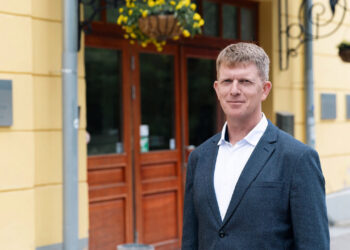
Tiberius Aerospace wants to change how we build and field weapons. I spoke with Andy Baynes, chief strategy officer and co-founder. He comes out of Apple and Nest, then time in Ukraine building an AI company. He has seen fast hardware cycles up close. He is now trying to bring that pace to defense.

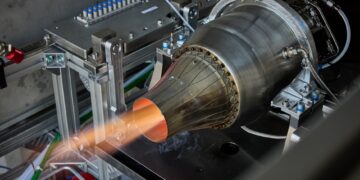
The first line is concrete. Tiberius’ initial innovation was a liquid fuel ramjet missile that launches from a howitzer. They’ve also built a solid fuel ramjet with guidance and a stated 200 kilometer reach. Both sit inside an open architecture. Thanks to their Generative Real-Time Artificial Intelligence Lethality (GRAIL) technology, parts can be swapped, tested, certified, then pushed into production on tight cycles. If a better piece shows up from a third party, it should slot in without drama. Further, thanks to Baynes’ experience at Apple, he knows how to make software ecosystems that allow the weapons to modified in the field in real time.

Baynes calls this a design and delivery model that keeps the best engineers on program. That is normal in phones and cameras. In defense, it still feels rare. The aim is simple, field a working round today, build the next one at the same time, and repeat. Ukraine’s front shows why. Electronic warfare shifts week to week.

That development is not a free-for-all, said Baynes. Hardware modules face certification by the program owner. Targeting, hookups, and settings can be prepared before storage or adjusted forward of the line. Some parts stay locked for safety. Some parts stay writable. The goal is to allow engineers in the field to control their weapons more precisely and with more clarity.

Behind the missiles sits GRAIL, a design and development platform that aims to federate a wide supplier base, both defense and non-defense. The claim is bold, a one stop shop by next year. The point is not only speed. It is also a new contract shape. Separate design from manufacturing. Let primes keep factories hot. Let fast movers handle the R and D loop. Use open standards so the best part wins on merit and test data, not on bundling.

Why did he help built Tiberius? Baynes was building a startup in Ukraine when the war erupted. Knowing the gravity of the situation, he shipped medical kits into Ukraine and he helped move families west. When former Google colleague pulled him toward a novel ramjet line he decided to go back into hardware but in a way that was arguably alien to his consumer roots. He says the stakes at Tiberius are higher than thermostats or cameras. When war broke out he knew he needed to get back to building.

“I was about ready to get back into hardware at that point… I was more interested in the product and [CEO Chad Steelberg], and the vision that he and I shared to really make a game changing difference for war fighters on behalf of democracy in the West,” he said. Check out the rest of his wide-ranging interview above.


Tags: Andy BaynesTiberius AerospaceUkraine
Previous Post

Russia-Linked Hackers Claim Ransomware Attack on MoD contractor, Allege 4TB Data Theft

Next Post

Nabbing a new NAD

Resilience Media

Resilience Media

Start Ups. Security. Defense.

Related News

Occam raises €3M to advance autonomous drone systems

Europe greenlights defence tech funding in new Brave1 partnership

byLuke Smith
May 5, 2026

Brave1 has blazed a trail in Ukraine with a platform to source and back defence technology innovations, fast-tracking them to...

UK MoD tests British-built anti-Shahed system in Jordan

UK MoD tests British-built anti-Shahed system in Jordan

byJohn Biggs
May 5, 2026

The UK Ministry of Defence has tested its British-built Skyhammer interceptor missile system in Jordan, a trial that demonstrates the...

Waiv Robotics

Launching drones at sea has a landing problem. Waiv Robotics thinks it’s solved it.

byPaul Sawers
May 5, 2026

Operating drones offshore has long been constrained by one glaring issue: the landing surface refuses to stay still. Vessels move...

Spiral Hydrogen raises €2.7M to pilot its new hydrogen tech at the Port of Rotterdam

Spiral Hydrogen raises €2.7M to pilot its new hydrogen tech at the Port of Rotterdam

byFiona Alston
April 30, 2026

Estonian-Dutch dual-use startup Spiral Hydrogen will be taking its centrifugal bubble-free electrolysis technology from the lab to the Port of...

Report maps Russia’s hybrid war on Poland

Report maps Russia’s hybrid war on Poland

byJohn Biggs
April 30, 2026

A new report from Defence24 has outlined the role of Russia in a number of cyberattacks and acts of sabotage....

Line illustration showing trucks, cars and a cyclist, alongside a wind turbine, solar panel, power lines, buildings and a data centre, depicting energy infrastructure

Report: Europe’s reliance on imported energy and technology presents both risk and opportunity

byPaul Sawers
April 29, 2026

Europe’s reliance on external technology and infrastructure faces growing scrutiny, as policymakers and industry leaders confront the risks of depending...

Weekly Digest: The mystery of the British unicorn – the story of our dealings with Roark Aerospace

Inside the case of Roark Aerospace: The British defence unicorn no one can verify

byIngrid Lunden
April 28, 2026

On Boxing Day 2025, we received a press release from Roark Aerospace. The UK startup, which makes anti-drone systems, reported...

German military uniform (Touko Aikioniemi from Unsplash)

Europe’s armed forces are too reliant on US cloud providers, report finds

byPaul Sawers
April 28, 2026

Europe’s defence systems depend heavily on US cloud infrastructure, leaving key military functions exposed to potential service disruptions during geopolitical...

Load More
Next Post
Nabbing a new NAD

Nabbing a new NAD

The SDR, Four Months On

Most viewed

InVeris announces fats Drone, an integrated, multi-party drone flight simulator

Uforce raises $50M at a $1B+ valuation to build defence tech for Ukraine

Auterion, the drone software startup, eyes raising $200M at a $1.2B+ valuation

Palantir and Ukraine’s Brave1 have built a new AI “Dataroom”

Senai exits stealth to help governments harness online video intelligence

Twentyfour Industries emerges from stealth with $11.8M for mass-produced drones

Resilience Media is an independent publication covering the future of defence, security, and resilience. Our reporting focuses on emerging technologies, strategic threats, and the growing role of startups and investors in the defence of democracy.

  • About
  • News
  • Resilence Conference
    • Resilience Conference Copenhagen 2026
    • Resilience Conference Warsaw 2026
    • Resilience Conference 2026
  • Guest Posts
  • Subscribe
  • Privacy Policy
  • Terms & Conditions

© 2026 Resilience Media

No Result
View All Result
  • Home
  • Subscribe
  • About
  • Events
  • Guest Posts
  • Interview
  • News
  • Resilience Conference London 2026
  • Resilience Conference Copenhagen 2026
  • Resilience Conference Warsaw 2026
  • Startups
  • Venture
  • Weekly Digest

© 2026 Resilience Media

This website uses cookies. By continuing to use this website you are giving consent to cookies being used. Visit our Privacy and Cookie Policy.