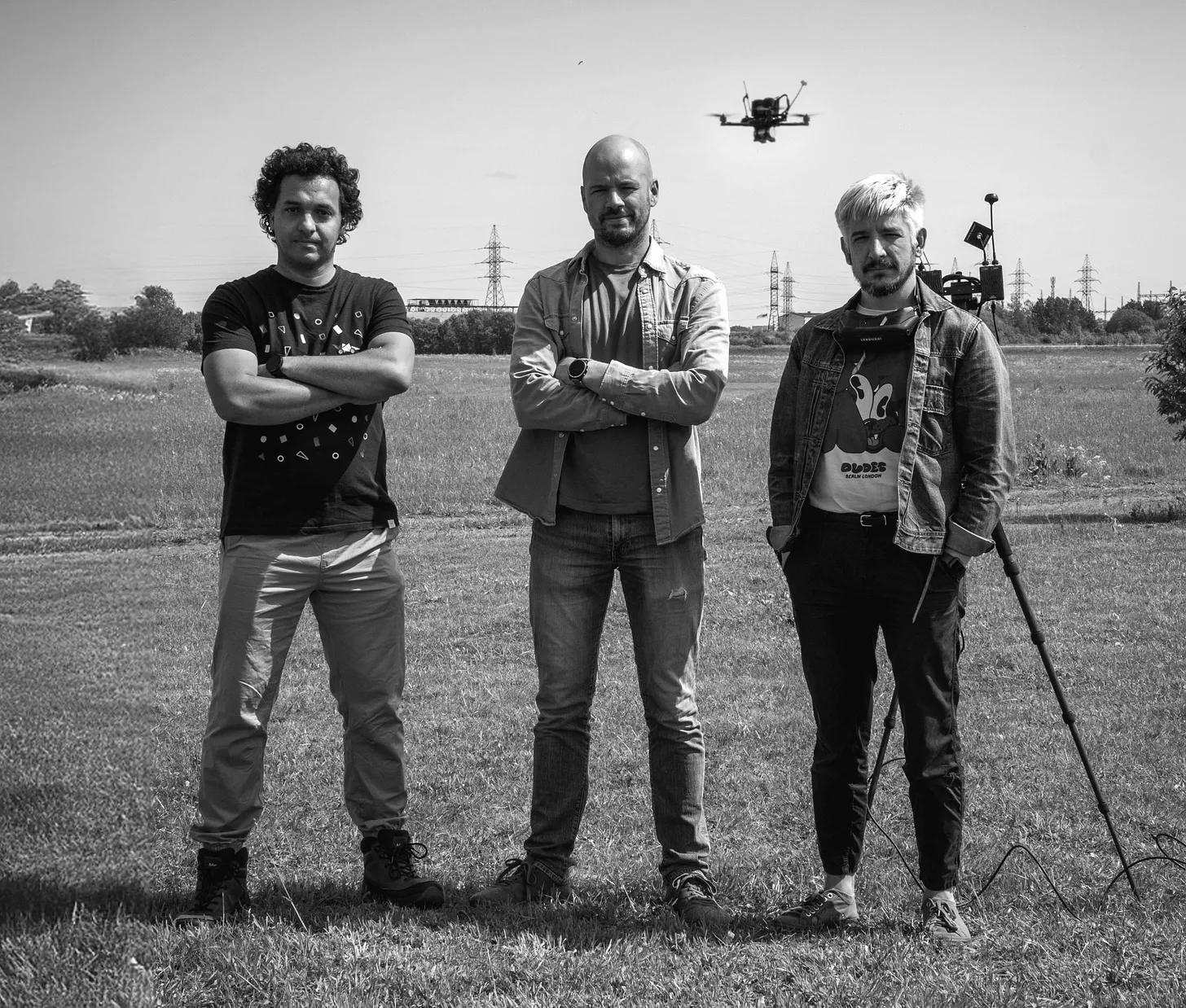
Estonian based dual-use tech start-up Lendurai recently raised a €5.57 million seed funding round to scale its autonomous solutions for UAVs operating in GPS- and radio-denied environments. Investment came from Expeditions Fund, HCVC, and Vsquared Ventures.
Sharing his thoughts on the future of Lendurai, and the motivation to build and adapt in the defence tech environment, co-founder and CEO Siim Maivel sat down with Resilience Media’s Fiona Alston.
The co-founding team are the result of the strong talent pool Estonian tech companies are nurturing. Maivel worked with Mark Cowan in mobility company Bolt, where Cowan was building the machine learning infrastructure, having previously worked in UK Space tech company Open Cosmos. Sergii Kharagorgiiev, who is Ukrainian, came from autonomous delivery company Starship Technologies where he headed up the computer vision department.
When Maivel moved on from Bolt he was curious about the autonomous driving space and was keen to start something new. This makes him a second time founder, he previously founded Investly, a payments company in the UK, prior to his stint at Bolt. Research from the University of Zurich caught his eye, “they had a drone with a fully onboard computer fly through a forest at 40Km per hour – there had been a lot of advances in perception, control and computer vision that made it possible to add those autonomous features on board those very small devices so we started looking into that space and defence was obvious to us, it was mission driven.”
“There are probably better ways to earn money than defence — if you use AI in marketing or advertising you probably get higher returns, but because of the close emotional connection to what was happening in Ukraine, we started on that defence path, and first started collaborating with Estonian armed forces,” says Maivel.
“Very quickly, we got introduced to operators in Ukraine, where we did a lot of discovery and the first product concepts. After that it was clear that there was an opportunity and that we could deliver so we started the company,” he explains.
The company was founded at the beginning of 2024.
“This was a time at war where FPV drones were scaled very heavily, and the main way to defend against them was through electronic warfare, jamming, essentially. It still is. The first opportunity that we realised was that we could also ship very quickly a solution that would help to get past those jammers,” Maivel says.
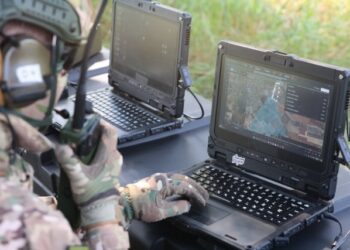
“The solutions that we build rely mostly on camera input — like computer vision — the computer understands where the drone is located, and is able to then plan the path on the field, as required. The key thing there is that it doesn’t depend on radio or GPS, because both of those can be jammed, and then you’re not able to conduct the mission that you need to,” he explains.
Speaking about testing he says the majority of this is done at home in Estonia, where Lendurai’s products are manufactured, with the ‘end-user’ test being done in Ukraine.
“We use the Ukrainian testing capacity for that so we don’t end up wasting the time and money or resources of the people who help us there,” he says. “We collaborate directly with some of the brigades and some of the drone schools. So it’s a very active community. They share a lot of knowledge. For military tests, these are very specific relationships with the particular units that do the testing.”
He says that Lendurai products have been used in warfare activity and the feedback is driving the product development strategy but the ever changing environments are a challenge for a start-up.
“When you solve one problem, there’s the next one, and what is also very actually difficult to navigate,” he says. “The conditions on the front line are changing rapidly. The war goes through different phases. For example, initially there was much more armoured equipment on the field. Now there’s almost none. Initially, the share of using drones against equipment was much higher. Now it’s much more against trenches and infantry, and also the radio the electronic warfare is developing so rapidly.”
“The other side is innovating, but also Ukraine is innovating so your products need to be compatible with that. The reality is that you need to be in that loop and do regular updates, otherwise your product becomes irrelevant very quickly. And we don’t try to compete where Ukraine is doing really well, we’re trying to look at where the areas are that we could supplement and help Ukrainian forces and producers to advance their products,” he notes.
Lendurai’s dual-use platform also supports interchangeable payloads, increasing flexibility and survivability in complex operational environments. Its proprietary autonomy stack runs advanced AI fully on-board, packing high-end autonomy into a compact, flexible and survivable platform.
“It has been said that military innovation has brought a lot of solutions into consumer markets like GPS and the Internet, now it is actually the other way around. It’s the cheap consumer technologies, that maybe don’t satisfy all of the NATO standards and whatever other standards, but they get the work done,” he says.
“And this is what Ukraine has demonstrated very clearly, and this is the way we achieve the cost effectiveness. Another very important thing is traditional military systems have been growing in terms of features and functionality and superiority, which makes the unit price very expensive. But what we do is we really try to narrow down the scope of the particular drone, what it needs to achieve and what it doesn’t need to achieve, and then design the solution for that so you don’t have one solution that is great in all types of missions, because that will be more expensive,” he explains.
Innovating not only so the cost of actual the products remains low but also the running costs to operate them. Where usually there are four operators to a drone, the mission is to have one operator per drone. Also where drone operators require six weeks of training Lendurai’s technology requires a mere two days of training to get a handle on.
The fresh funding round will see Lendurai scale its operations and the search for robotics talent is on.
“As I mentioned earlier, having a key focus on one thing and being really good at this is really important. Maybe we can now be good at two things or three things, so we have resources to start building things in parallel, and this is what we’re hiring for, especially in the autonomy part like control engineers because our AI and simulation technologies are something that we’re going to scale up,” says Maivel.
“But the second really important thing is we have identified product market fit, and now we are scaling out the business development side because we really believe that the solutions that will be cost efficient and effective here in Eastern Europe will eventually be systems that Australia or Korea or Canada or US would need if they face an adversary that we are likely to face. The products that have been proven here, I think would be a great fit for those countries as well,” he adds.